Denosumab's Role in Osteoarthritis: Bridging Mechanistic Insights to Clinical Application
-
By
-
Jiaoniu Duan
-
Gailian Zhang
-
Liyun Zhang
-
May 25, 2026
Clinical Report: Denosumab's Role in Osteoarthritis
Overview
Denosumab shows potential as a disease-modifying osteoarthritis drug (DMOAD) based on mechanistic insights and early clinical evidence. Its ability to inhibit RANKL signaling may address key pathways in osteoarthritis pathogenesis, warranting further investigation.
Background
Osteoarthritis (OA) is a prevalent joint disorder with no approved DMOADs to modify its progression, leading to increased rates of joint replacement. Current treatments are largely symptomatic and ineffective in altering disease course. Understanding OA as a systemic disease opens avenues for repurposing existing therapies like denosumab.
Data Highlights
No numerical data available in the provided material.
Key Findings
- Denosumab inhibits RANKL-induced osteoclastogenesis and reduces chondrocyte apoptosis.
- It upregulates anabolic genes and suppresses hypertrophic markers in chondrocytes.
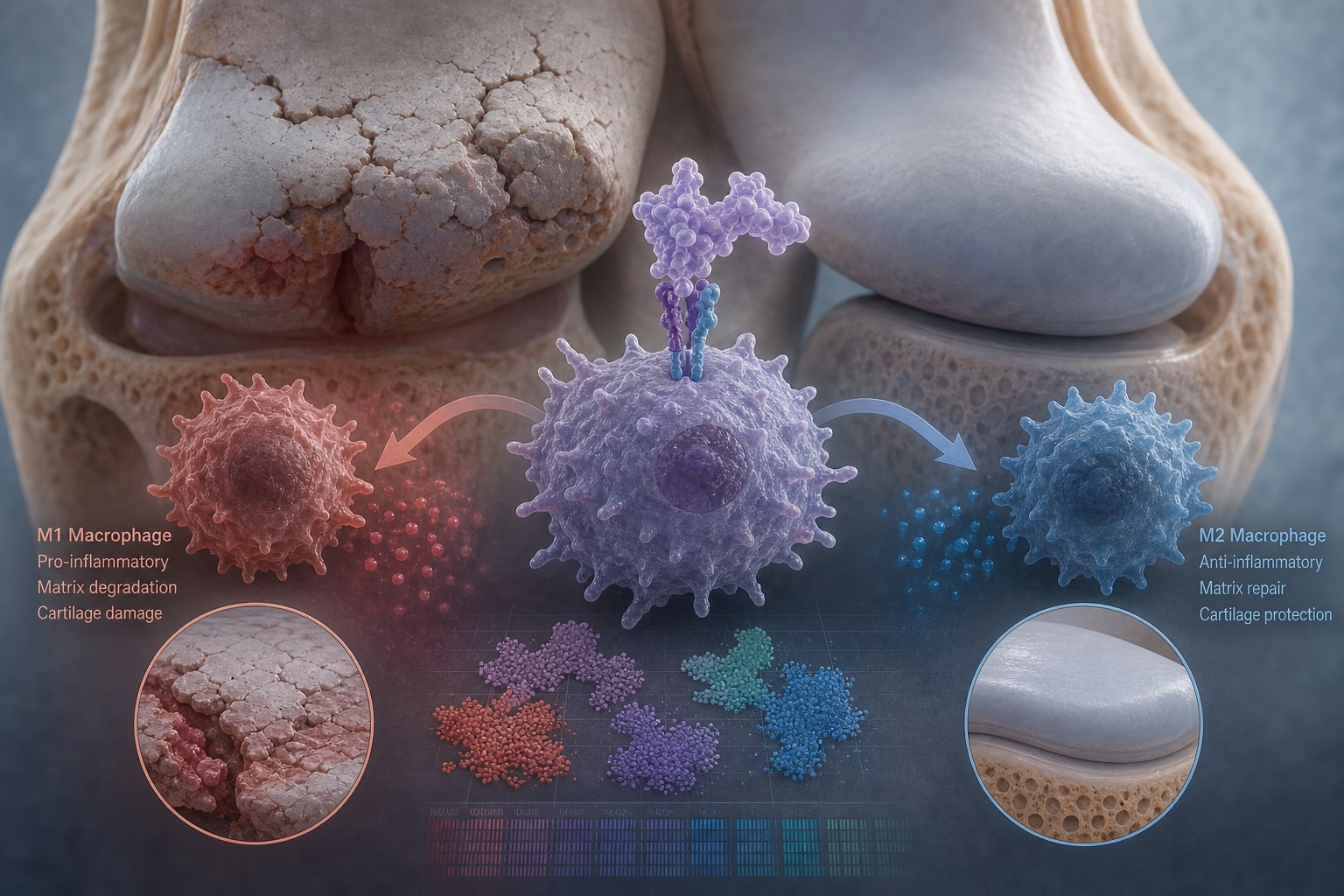
- Denosumab disrupts inflammatory pathways in fibroblast-like synoviocytes, reducing macrophage activation.
- Clinical trials indicate denosumab may improve radiographic outcomes in erosive hand OA.
- Safety profile of denosumab in OA appears comparable to its use in osteoporosis.
Clinical Implications
Denosumab may represent a novel therapeutic option for specific OA phenotypes, particularly in erosive hand OA. Clinicians should consider its potential benefits while awaiting further phase 3 trial results to confirm efficacy and safety.
Conclusion
Denosumab's mechanistic insights and preliminary clinical evidence suggest it could play a role in OA management, but further research is essential to establish its place in therapy.
Related Resources & Content
- EULAR recommendations for the non-pharmacological core management of hip and knee osteoarthritis: 2023 update - PMC
- RANKL blockade for erosive hand osteoarthritis: a randomized placebo-controlled phase 2a trial | Nature Medicine
- the asco post — Nonmetastatic Breast Cancer: Treatment Strategies After Denosumab Discontinuation in Patients Treated With Aromatase Inhibitors
- The ASCO Post — Nonmetastatic Breast Cancer: Treatment Strategies After Denosumab Discontinuation in Patients Treated With Aromatase Inhibitors
- The ASCO Post — Nonmetastatic Breast Cancer: Treatment Strategies After Denosumab Discontinuation in Patients Treated With Aromatase Inhibitors
- The ASCO Post — Denosumab in Adults and Skeletally Mature Adolescents with Giant Cell Tumor of Bone
- Nonmetastatic Breast Cancer: Treatment Strategies After Denosumab Discontinuation in Patients Treated With Aromatase Inhibitors
- EULAR recommendations for the non-pharmacological core management of hip and knee osteoarthritis: 2023 update - PMC
- RANKL blockade for erosive hand osteoarthritis: a randomized placebo-controlled phase 2a trial | Nature Medicine
- Prolia (denosumab): Drug Safety Communication - FDA Adds Boxed Warning for Increased Risk of Severe Hypocalcemia in Patients with Advanced Chronic Kidney Disease | FDA
Based on findings from:
Denosumab in osteoarthritis: from mechanism to clinical translation
Jiaoniu Duan, Gailian Zhang, Liyun Zhang. Frontiers In Immunology, 2026.
https://www.frontiersin.org/journals/immunology/articles/10.3389/fimmu.2026.1822628/full
This content is an AI-generated, fully rewritten summary based on a published scholarly article. It does not reproduce the original text and is not a substitute for the original publication. Readers are encouraged to consult the source for full context, data, and methodology.