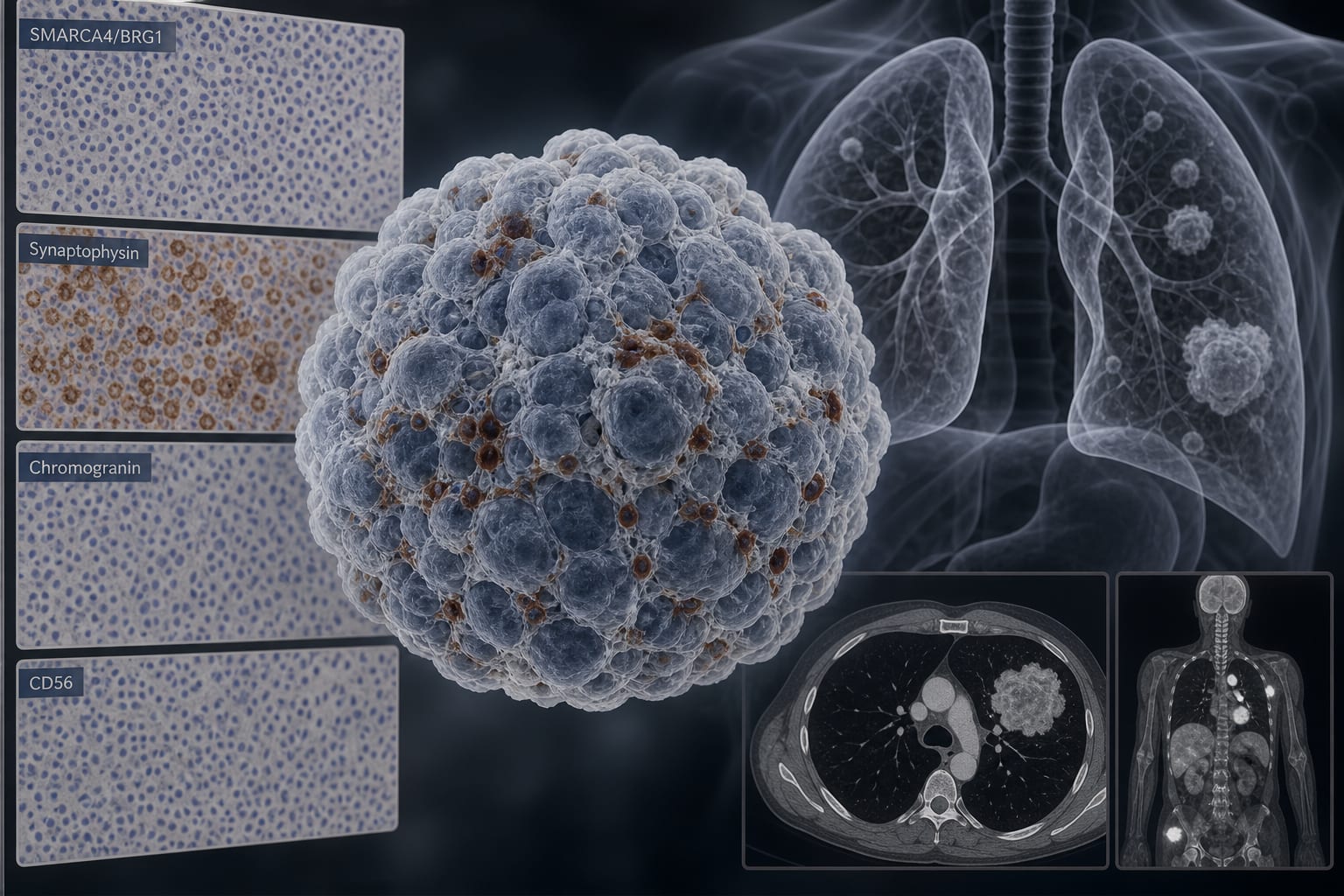
This case study discusses a 43-year-old male with metastatic SMARCA4-deficient undifferentiated thoracic tumor (SMARCA4-UT) who exhibited isolated synaptophysin expression. The patient achieved a durable partial response to platinum-based chemoimmunotherapy, highlighting the potential clinical significance of isolated synaptophysin positivity in this aggressive malignancy.
Background
SMARCA4-UT is a rare and aggressive thoracic malignancy recognized in the WHO Classification of Thoracic Tumours. It predominantly affects male smokers and is characterized by rapid progression and poor prognosis, with median overall survival reported between 4.8 to 7.3 months. The diagnostic challenges are compounded by the tumor's undifferentiated nature and the expression of synaptophysin, which can mimic neuroendocrine tumors.
Data Highlights
No numerical data or trial data presented in the article.
Key Findings
The patient had a complete loss of SMARCA4/BRG1 and a high Ki-67 index of approximately 60%.
Isolated synaptophysin positivity was noted, complicating the differential diagnosis with neuroendocrine tumors.
The patient achieved a durable partial response lasting over 12 months after treatment with nab-paclitaxel, carboplatin, and a PD-1 inhibitor.
Isolated synaptophysin expression may reflect limited lineage de-repression rather than true neuroendocrine differentiation.
Current treatment strategies for SMARCA4-UT may benefit from immune checkpoint inhibitors.
Clinical Implications
Clinicians should be aware of the diagnostic challenges posed by isolated synaptophysin positivity in SMARCA4-UT, as it may lead to misclassification. The case underscores the potential for durable responses to chemoimmunotherapy, suggesting that treatment regimens incorporating immune checkpoint inhibitors may be beneficial for patients with this malignancy.
Conclusion
This case highlights the importance of recognizing the unique characteristics of SMARCA4-UT and the potential therapeutic implications of isolated synaptophysin expression. Further studies are warranted to explore the diagnostic and treatment implications of this phenotype.