Cushing’s syndrome and early growth hormone hypersecretion in a child with Carney complex: a case report - Report - MDSpire

Cushing’s syndrome and early growth hormone hypersecretion in a child with Carney complex: a case report

  • By

  • Gaia Pietropaolo

  • Adalgisa Festa

  • Giulio Rivetti

  • Federica Messa

  • Giovanni Di Iorio

  • Antonella Klain

  • Valeria Pellino

  • Daniela Cioffi

  • Rosario Ferrigno

  • Maria Cristina Savanelli

  • Emanuele Miraglia Del Giudice

  • Anna Grandone

  • June 29, 2026

  • 0 min

Share

Cushing's Syndrome and Prepubertal Growth Hormone Excess in a Pediatric Patient

Overview

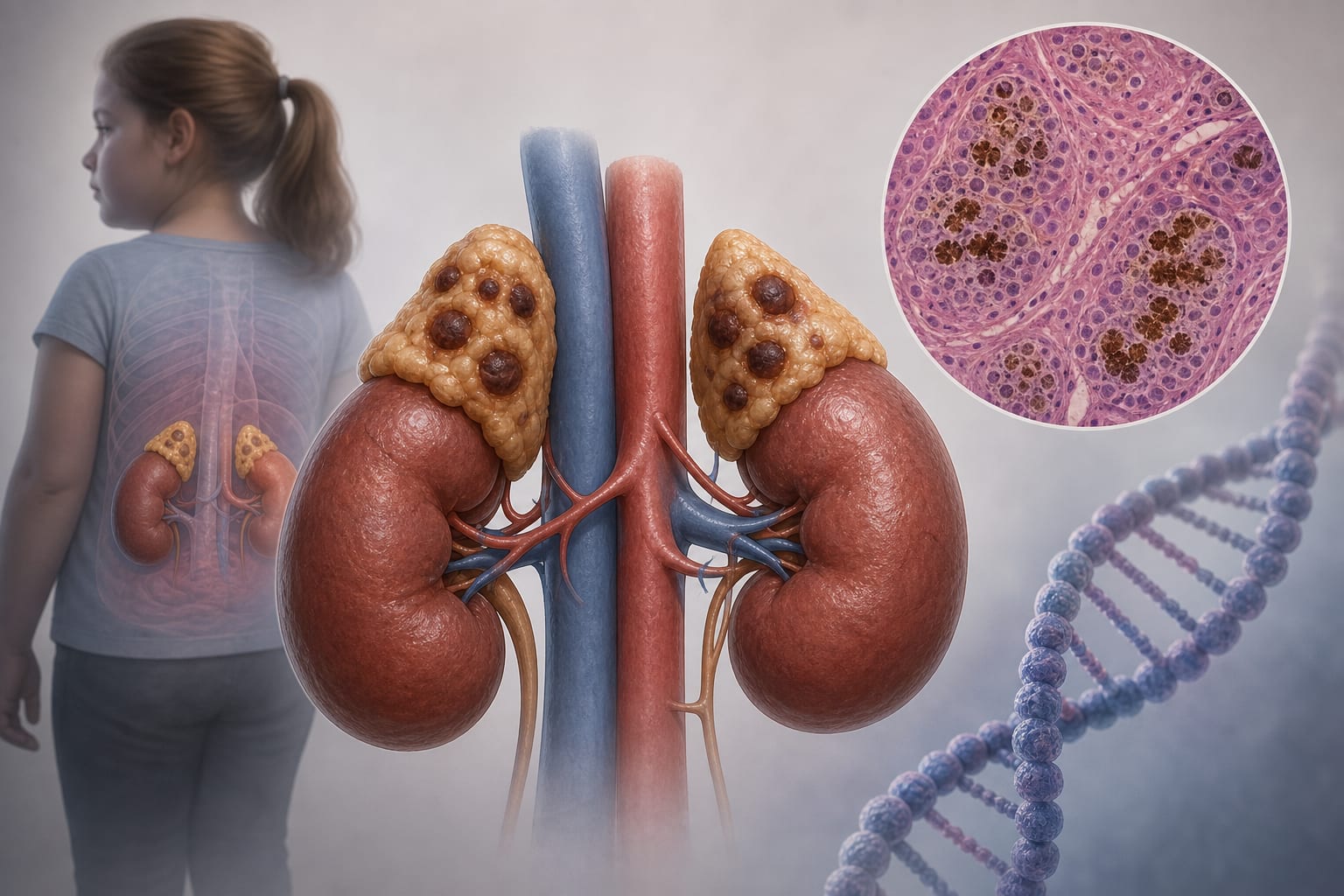
This case study presents a 5-year-old girl with Carney complex who developed ACTH-independent Cushing's syndrome and subsequently exhibited early growth hormone hypersecretion. Genetic testing confirmed a PRKAR1A mutation.

Background

Carney complex (CNC) is a rare autosomal dominant syndrome associated with multiple endocrine tumors, including Cushing's syndrome due to primary pigmented nodular adrenocortical disease (PPNAD). While growth hormone hypersecretion is typically observed in adults, its occurrence in children is rare.

Data Highlights

ParameterValue
Weight24 kg (+1.45 SDS)
Height105 cm (-1.61 SDS)
BMI21 kg/m2 (+3.02)
Blood PressureStage 2 Hypertension (+2.38 SDS)
Free Urinary Cortisol>800 µg/24h
Morning CortisolElevated
ACTH LevelsLow
IGF-1 LevelsElevated

Key Findings

  • The patient was diagnosed with ACTH-independent Cushing's syndrome due to PPNAD.
  • Genetic testing confirmed a PRKAR1A mutation in both the patient and her father.
  • Bilateral adrenalectomy successfully resolved hypercortisolism.
  • At 8.6 years, the patient exhibited accelerated growth velocity and elevated IGF-1 levels.
  • Growth hormone hypersecretion emerged earlier than current screening recommendations suggest.
  • Monitoring of IGF-1 levels and growth velocity was essential during follow-up.

Clinical Implications

Healthcare providers should consider the possibility of Carney complex in pediatric patients presenting with ACTH-independent Cushing's syndrome.

Conclusion

This case highlights the role of genetic testing in pediatric patients with endocrine disorders and the need for monitoring of growth hormone levels in those with Carney complex.

Related Resources & Content

  1. Author(s)/Org, Source, Year -- Title
  2. Frontiers in Endocrinology, 2026 -- Growth patterns in patients with congenital adrenal hyperplasia analyzed by the QEPS growth model
  3. The Journal of Clinical Endocrinology & Metabolism, 2023 -- Addressing the Clinical Challenges Faced by Adolescent and Adult Males with Classic Congenital Adrenal Hyperplasia from 21-Hydroxylase Deficiency
  4. The Journal of Clinical Endocrinology & Metabolism, 2023 -- Cross-Site Evaluation of Cardiometabolic Diagnoses in Young Individuals with Congenital Adrenal Hyperplasia: Insights from a PEDSnet Study
  5. BMC Endocrine Disorders — Association of endogenous hypercortisolism with hepatic hemangiomas in cushing’s disease: a retrospective cohort study
  6. Carney Complex - GeneReviews® - NCBI Bookshelf
  7. Cushing syndrome in paediatric population: who and how to screen
  8. Controlling cortisol excess and comorbidities in Cushing’s syndrome with osilodrostat
  9. Consensus guideline for the diagnosis and management of pituitary adenomas in childhood and adolescence: Part 1, general recommendations | Nature Reviews Endocrinology

Original Source(s)

Related Content