Epidemiological patterns and risk profiling of hospital acquired venous thromboembolism in a tertiary medical center in eastern China: a retrospective cohort study (2023–2024) - Report - MDSpire
Advertisement
Epidemiological patterns and risk profiling of hospital acquired venous thromboembolism in a tertiary medical center in eastern China: a retrospective cohort study (2023–2024)
Epidemiological Trends and Risk Assessment of Hospital-Acquired VTE
Overview
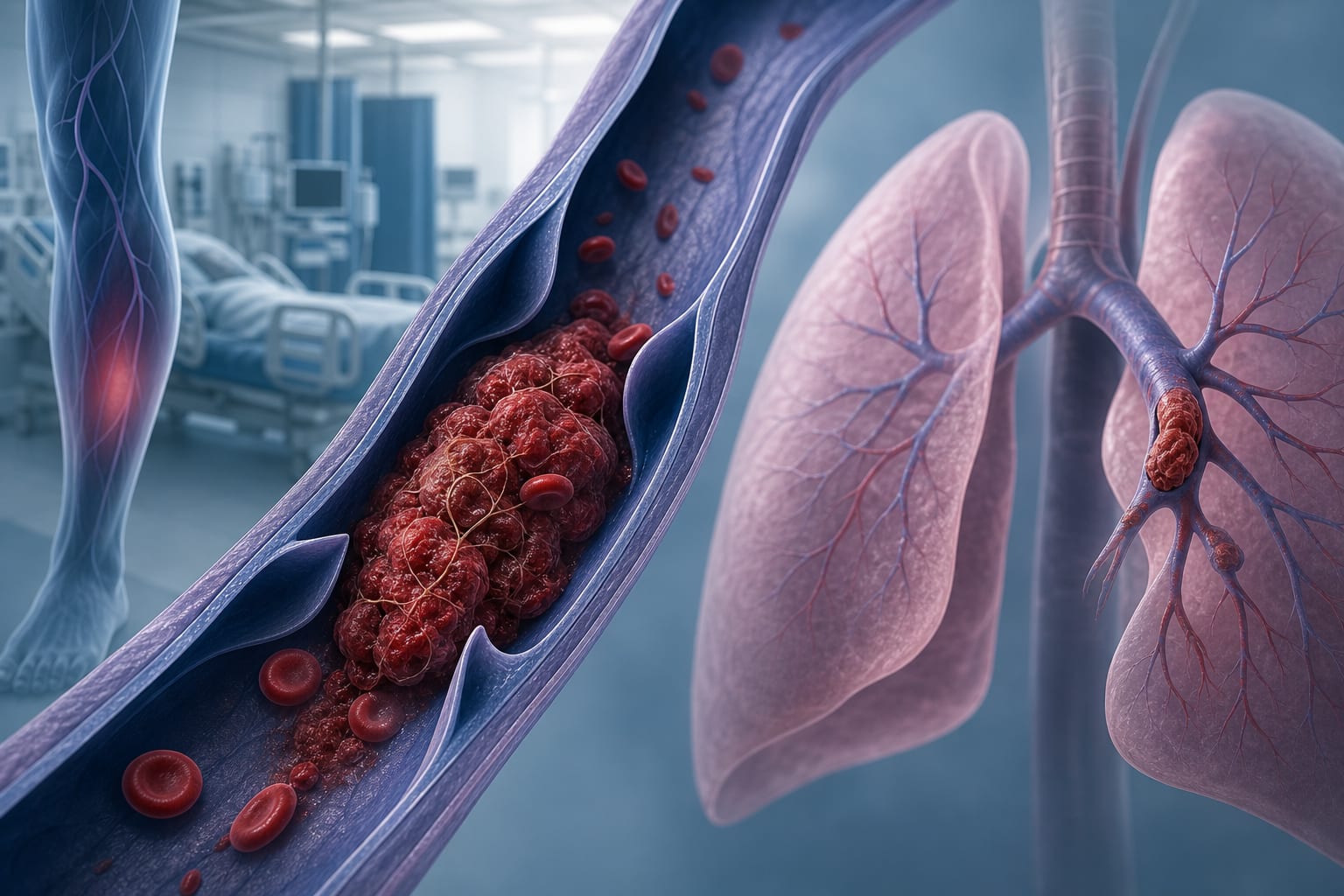
This study investigates the epidemiological patterns and risk factors of hospital-acquired venous thromboembolism (HA-VTE) in a tertiary care facility over two years.
Background
Hospital-acquired venous thromboembolism (HA-VTE) is a significant cause of morbidity and mortality among hospitalized patients. Understanding the epidemiological trends and risk factors is essential for improving patient safety.
Data Highlights
Parameter
Value
Total HA-VTE Cases
393
Isolated HA-DVT
308
Isolated HA-PE
61
Concomitant HA-DVT and HA-PE
24
Key Findings
393 inpatients diagnosed with HA-VTE during the study period.
308 patients had isolated hospital-acquired deep vein thrombosis (HA-DVT).
61 patients had isolated hospital-acquired pulmonary embolism (HA-PE).
Risk factors included older age, malignancy, trauma, ICU stay, and major surgery.
Departments with the highest incidence included Neurosurgery, ICU, and Orthopedics.
Patients with HA-VTE experienced longer hospital stays and higher mortality rates.
Clinical Implications
Clinicians should enhance VTE risk assessment and management, particularly for postoperative, infected, and critically ill patients. Tailored prophylaxis strategies are necessary to address the identified risk factors and reduce mortality associated with HA-VTE.
Conclusion
The study emphasizes the need for targeted prevention strategies for HA-VTE, particularly in high-risk surgical populations. Understanding the interplay of risk factors can guide clinical practice in managing and preventing HA-VTE.