Comparative assessment of tissue cross-reactivity and pharmacokinetic half-life of malaria monoclonal antibodies - Report - MDSpire

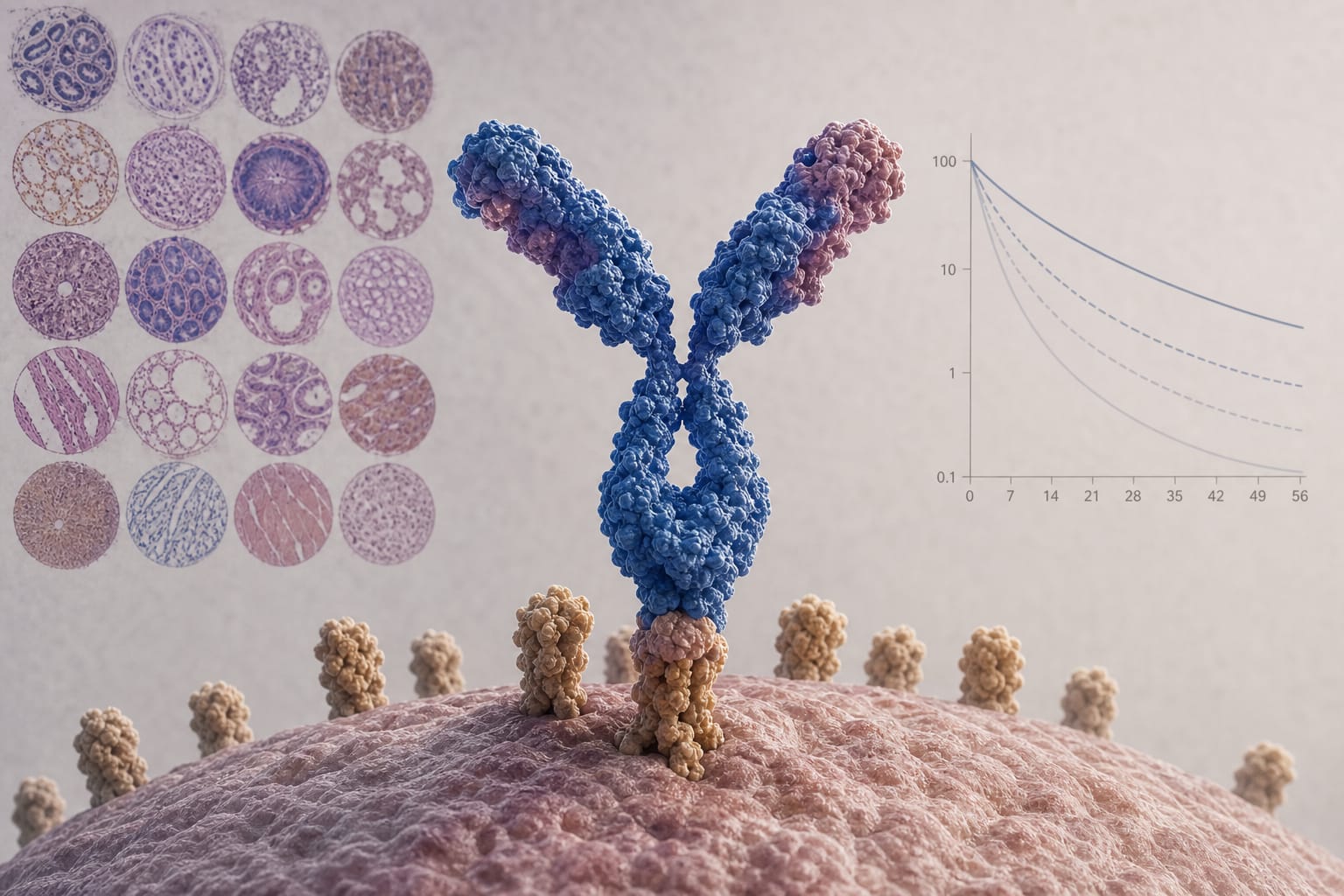
Comparative assessment of tissue cross-reactivity and pharmacokinetic half-life of malaria monoclonal antibodies

  • By

  • William R. Fugina

  • Dallas R. Brown

  • Shelby Foor

  • Emma C. Ryan

  • Samuel Cuevas

  • Shreeram Nallar

  • Dawn Wolf

  • Renita Brown

  • Jesse P. Deluca

  • Geoffrey C. Chin

  • Elizabeth J. Raymond

  • James T. Raymond

  • Phil S. Medlin

  • Sheetij Dutta

  • June 23, 2026

  • 0 min

Share

Clinical Report: Evaluation of Tissue Cross-Reactivity and Pharmacokinetic Longevity of Monoclonal Antibodies Against Malaria

Overview

This study evaluates the tissue cross-reactivity and pharmacokinetics of monoclonal antibodies targeting Plasmodium falciparum circumsporozoite protein.

Background

Malaria remains a significant global health challenge, with millions of cases and deaths reported annually. Monoclonal antibodies (mAbs) targeting the circumsporozoite protein (CSP) of Plasmodium falciparum are being explored as potential preventive measures, especially for vulnerable populations. Understanding the cross-reactivity and pharmacokinetics of these mAbs is crucial for their development and safety assessment.

Data Highlights

AssayFindings
TCR AssayNo membrane binding; mAbs 317 and 311 showed varying cross-reactivity.
PharmacokineticsmAb 311-LS showed improved pharmacokinetic profile compared to 311-WT.

Key Findings

  • mAbs 317 and 311 exhibited varying degrees of positive cross-reactivity to human tissues.
  • mAb CIS43 showed no tissue cross-reactivity.
  • Fc modifications improved the binding affinity of mAb 311 to the human neonatal Fc receptor.
  • mAb 311-LS was found safe in a rhesus PK model.
  • Improved pharmacokinetic profiles were observed for mAb 311-LS compared to wild-type.

Clinical Implications

The evaluation of tissue cross-reactivity is essential in the early stages of monoclonal antibody development to mitigate potential safety risks.

Conclusion

This study highlights advancements in pharmacokinetics and safety assessments.

Related Resources & Content

  1. Archives of Toxicology, 2016 -- Evaluating the Use of Predictive Toxicology Approaches for Monoclonal Antibody Treatments: Current Status and Future Potential
  2. The Journal of Infectious Diseases, 2023 -- A Chimeric Peptide Vaccine Targeting Plasmodium Circumsporozoite Protein and Mosquito Salivary AgTRIO for Malaria Prevention
  3. Infection, 2014 -- Efficacy of Hyperimmune Globulin Formulations Against Multidrug-Resistant Hospital-Acquired Pathogens: In Vitro and In Vivo Studies
  4. Frontiers in Immunology, 2026 -- Transplacental transfer of anti-malarial antibodies: a systematic review
  5. WHO guidelines for malaria, 2025
  6. Safety and Efficacy of a Monoclonal Antibody against Malaria in Mali
  7. S6(R1) Preclinical Safety Evaluation of Biotechnology-Derived Pharmaceuticals | FDA
  8. WHO guidelines for malaria

Original Source(s)

Related Content