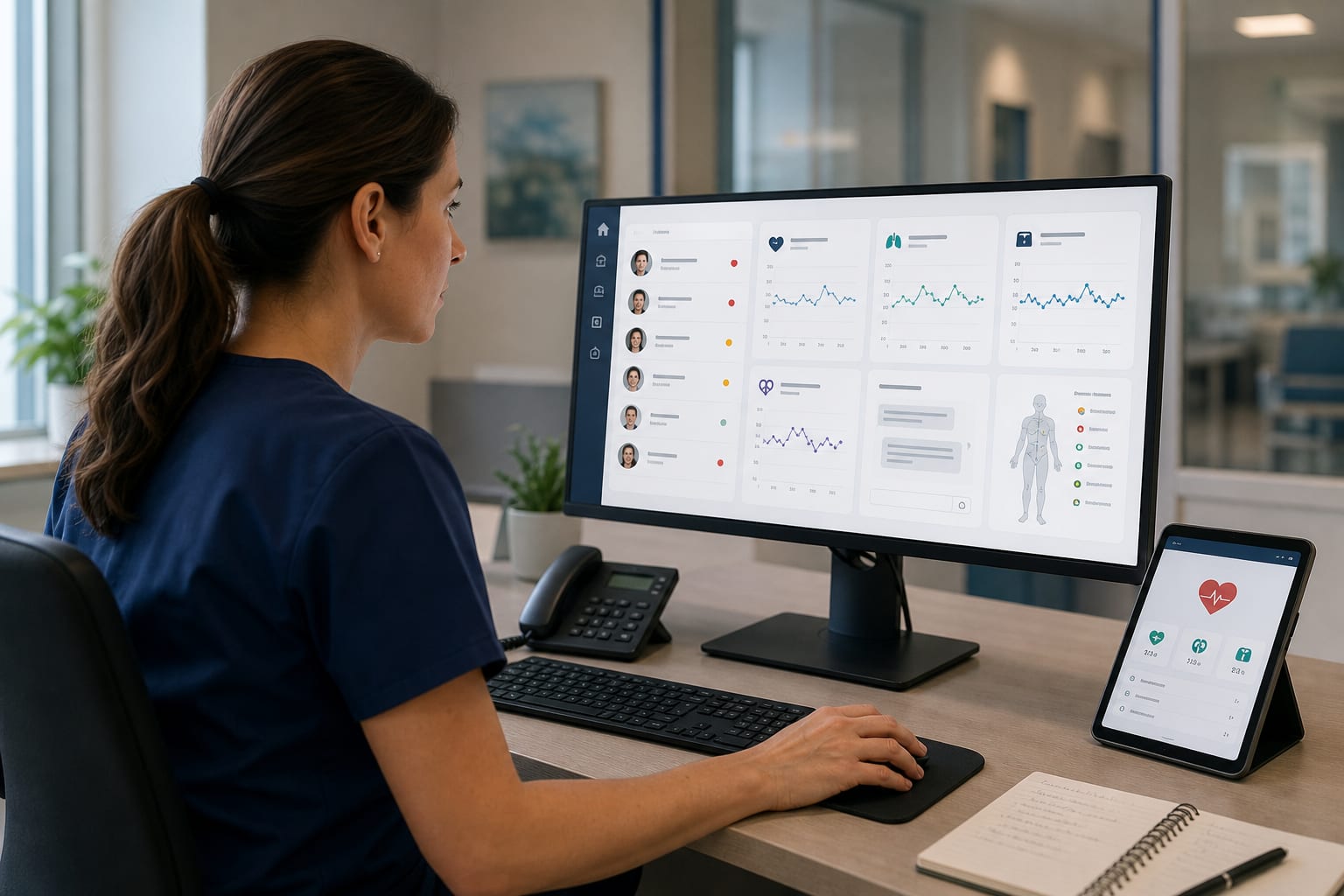
Describing digital nursing work in a remote patient monitoring application: Novel convergent mixed methods secondary analysis of feasibility trial data - Report - MDSpire
Advertisement
Describing digital nursing work in a remote patient monitoring application: Novel convergent mixed methods secondary analysis of feasibility trial data
Clinical Report: Analyzing Nursing Roles in a Remote Patient Monitoring System
Background
The rise of digital health technologies, particularly remote patient monitoring (RPM), is significant as healthcare systems face increasing demands from chronic illnesses. RPM applications facilitate the monitoring of patients' health metrics and enhance communication between healthcare professionals and patients. Understanding the engagement of nurses in RPM is crucial, as their involvement can influence the effectiveness of these technologies in managing chronic conditions.
Data Highlights
No numerical data or trial data provided in the source material.
Key Findings
RPM applications are designed to support chronic illness management post-hospitalization.
Nurses play a role in monitoring patient data and responding to notifications generated by RPM systems.
Engagement with RPM requires additional work from both patients and healthcare professionals.
Barriers to the adoption of RPM in healthcare services include concerns about increased clinical workload and the need for new skills.
Current research on RPM often overlooks the evaluation of healthcare professionals' engagement, particularly nurses.
Clinical Implications
Healthcare professionals, especially nurses, must understand the workflows associated with RPM applications.
Conclusion
Further evaluation of nurses' roles and the overall impact on clinical workload is necessary to enhance the effectiveness of RPM in chronic illness management.
A first-of-its-kind randomized trial in in-hospital cardiac arrest found no statistically significant increase in sustained return of spontaneous circulation with sodium bicarbonate vs placebo.