The effect of Poller screw or monocortical plate augmentation on the stability of intramedullary nailing in proximal extra-articular tibial fractures: a biomechanical study - Report - MDSpire

The effect of Poller screw or monocortical plate augmentation on the stability of intramedullary nailing in proximal extra-articular tibial fractures: a biomechanical study

  • By

  • Mehmet Akif Şahin

  • Fatih Durgut

  • Şeyhmus Yiğit

  • Mehmet Sait Akar

  • Emin Özkul

  • Ramazan Atiç

  • Sadettin Çiftçi

  • May 18, 2026

  • 0 min

Share

Impact of Poller Screw versus Monocortical Plate Augmentation on Intramedullary Nail Stability

Overview

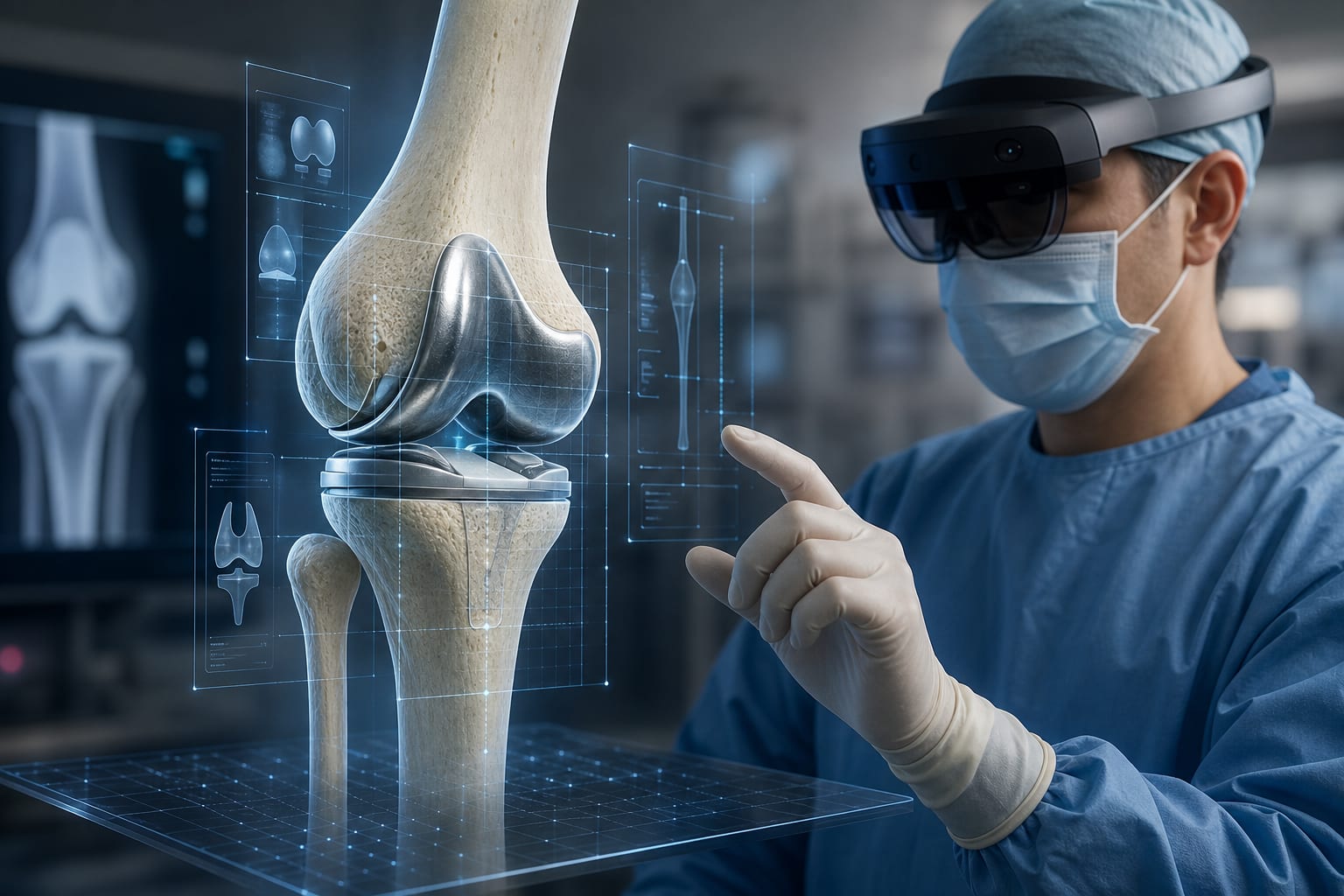
This study compares the biomechanical stability of intramedullary nailing alone versus augmentation with Poller screws or monocortical plates in proximal extra-articular tibial fractures. Findings indicate that both augmentation techniques enhance stability, but the specific advantages of each method require further exploration.

Background

Proximal extra-articular tibial fractures pose significant challenges in achieving stable fixation due to their anatomical complexity and the forces acting on them. Intramedullary nailing is a common treatment, yet it often fails to provide adequate stability on its own. Augmentation techniques, such as Poller screws and monocortical plates, have been introduced to improve outcomes, but comparative studies are limited.

Data Highlights

This study utilized synthetic tibial models to assess the stability of three fixation strategies under standardized conditions.

Key Findings

  • Proximal extra-articular tibial fractures account for 5-11% of all tibial fractures.
  • Intramedullary nailing alone often fails to control deforming forces effectively.
  • Poller screws enhance stability by guiding nail alignment and limiting displacement.
  • Monocortical plates provide additional resistance to axial loading and torsional stress.
  • Standardized biomechanical comparisons of augmentation techniques are rare in the literature.

Clinical Implications

Surgeons should consider augmentation techniques such as Poller screws or monocortical plates when performing intramedullary nailing for proximal tibial fractures to improve stability. Understanding the biomechanical advantages of each method can inform surgical decision-making.

Conclusion

The study highlights the importance of augmentation techniques in enhancing the stability of intramedullary nailing for proximal tibial fractures. Further research is needed to clarify the comparative effectiveness of these methods.

Related Resources & Content

  1. Krettek et al., 2020 -- Poller Screws in Proximal Tibial Fractures
  2. Li et al., 2020 -- Intramedullary Nailing with Augmentation Techniques
  3. AO Surgery Reference -- Proximal Tibia Fractures
  4. Comparative Analysis of Biomechanical Stability Between Short and Long Proximal Femoral Nails in Osteoporotic A3 Reverse-Oblique Subtrochanteric Femoral Fractures: A Cadaver Study
  5. Frontiers in Surgery — Cable-Plate augmentation improves the therapeutic effect of intramedullary nailing for AO/OTA type A2.3 intertrochanteric fractures with large coronal fragments: a double-center retrospective study
  6. Assessment of Local Bone Quality and Prediction of Construct Failure: A Biomechanical Analysis of Distal Femur Fractures
  7. Efficacy and complications of blocking screws fixation in lower limb fractures
  8. Intramedullary nailing versus minimally invasive plate osteosynthesis for proximal tibial fracture
  9. Suprapatellar intramedullary nailing for Complete simple articular fracture with simple metaphyseal components

Original Source(s)

Related Content