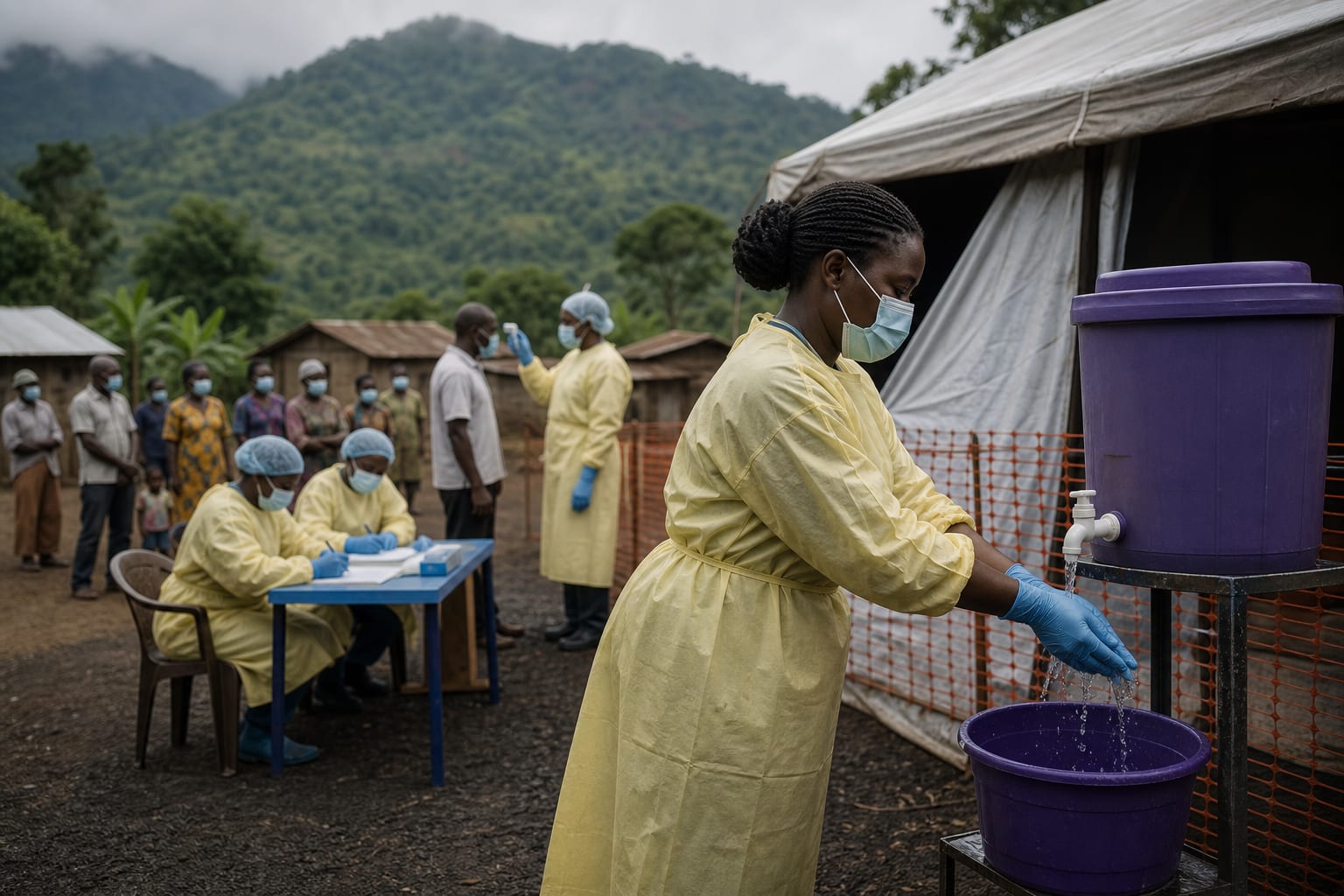
Ebola outbreak reveals weaknesses in the outbreak response framework
Overview
The recent Ebola outbreaks in Uganda and the Democratic Republic of the Congo highlight weaknesses in the global outbreak response framework. The authors note challenges in containment due to dense populations and operational capacity of health organizations.
Background
Ebola outbreaks pose a serious threat to public health, particularly in densely populated regions where containment is challenging. The resurgence of Ebola in conflict-affected areas raises concerns about public health dynamics.
Data Highlights
No numerical data provided in the source material.
Key Findings
The current Ebola outbreak is occurring in densely populated areas, complicating containment efforts.
Key organizations like WHO and CDC are operating at reduced capacity.
There is a risk of ongoing public health challenges related to Ebola.
Specialized treatment facilities in the U.S. are underutilized.
Containment strategies from previous outbreaks may not be applicable to the current situation.
Clinical Implications
Healthcare professionals should be aware of the evolving nature of Ebola outbreaks and the limitations of current response strategies.
Conclusion
The current Ebola outbreaks highlight the need for a reevaluation of outbreak response frameworks.
Heart rate monitoring and atrial fibrillation detection had the strongest supporting evidence, but investigators found limited evidence for broader outpatient self-monitoring applications.