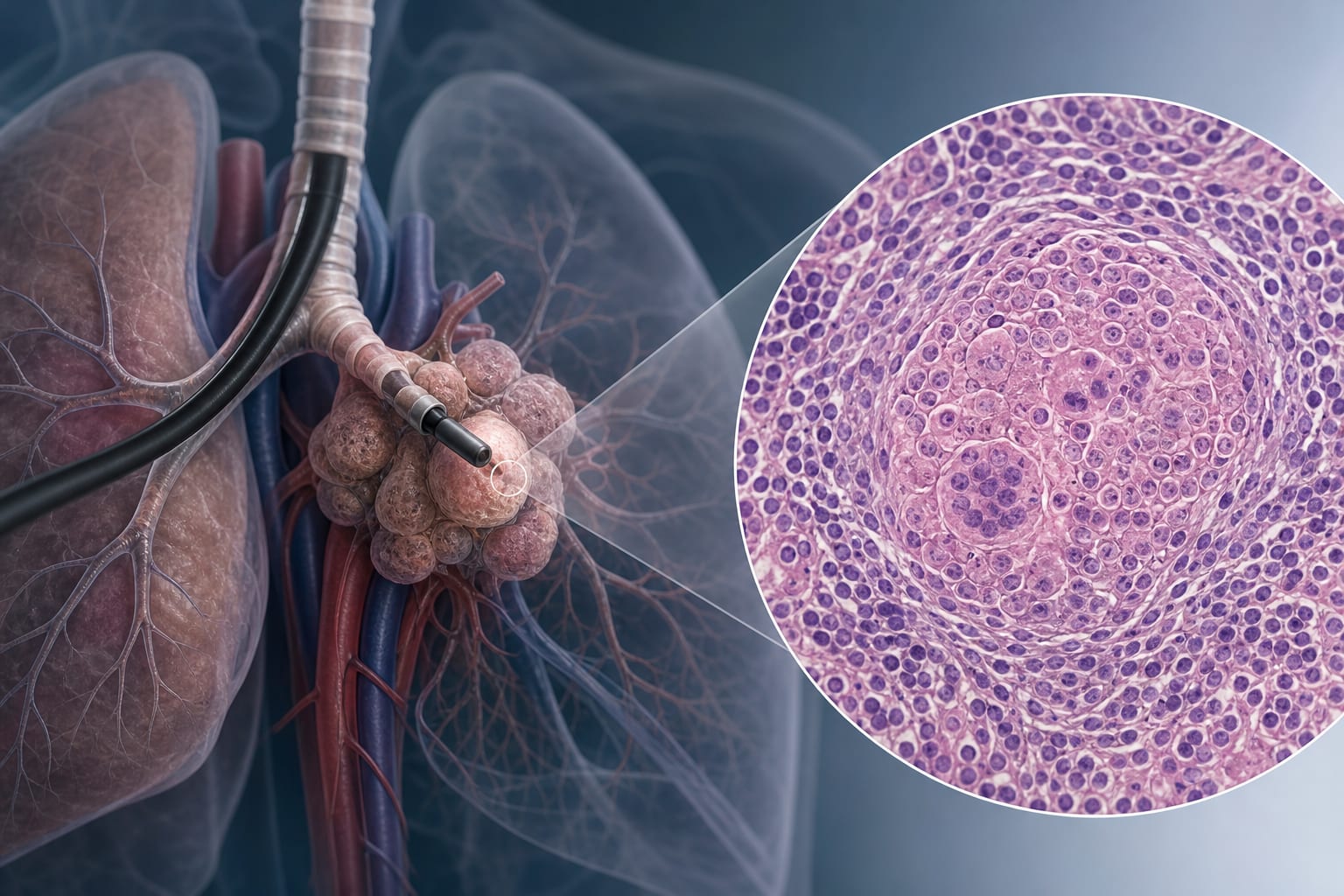
Clinical Report: Unilateral Hilar Sarcoidosis Associated with Anemia and Low T3 Syndrome
Overview
This case report discusses a 53-year-old woman diagnosed with unilateral hilar sarcoidosis, presenting with anemia and low T3 syndrome. The diagnosis was confirmed through repeat endobronchial ultrasound-guided transbronchial needle aspiration, which revealed non-caseating granulomatous inflammation. Treatment with intravenous iron sucrose and inhaled budesonide-formoterol led to regression of lesions and normalization of hemoglobin and T3 levels.
Background
Sarcoidosis is a systemic granulomatous disease that often presents with bilateral hilar lymphadenopathy, making unilateral involvement a diagnostic challenge. Misdiagnosis can lead to inappropriate treatment, as unilateral hilar sarcoidosis may mimic malignancy or infections such as tuberculosis. Understanding the associated hematological and endocrine abnormalities, such as anemia and low T3 syndrome, is crucial for accurate diagnosis and management, as they may reflect systemic inflammation.
Unilateral hilar sarcoidosis can closely mimic malignancy or infection.
Initial EBUS-TBNA may yield non-diagnostic results, necessitating repeat sampling.
The patient exhibited anemia interpreted as mixed absolute iron deficiency and inflammation-related iron restriction.
Low T3 syndrome was observed in the context of systemic inflammation.
Treatment led to regression of lesions and normalization of hemoglobin and T3 levels.
Clinical Implications
Clinicians should maintain a high index of suspicion for sarcoidosis in patients presenting with unilateral hilar masses. Repeat sampling may be necessary when initial diagnostic procedures are inconclusive.
Conclusion
This case highlights the diagnostic challenge of unilateral hilar sarcoidosis and the importance of thorough evaluation in suspected cases.