Combined interventional and craniotomy surgery for meningioma apoplexy complicated by acute subdural hematoma: a case report and literature review - Report - MDSpire
Advertisement
Combined interventional and craniotomy surgery for meningioma apoplexy complicated by acute subdural hematoma: a case report and literature review
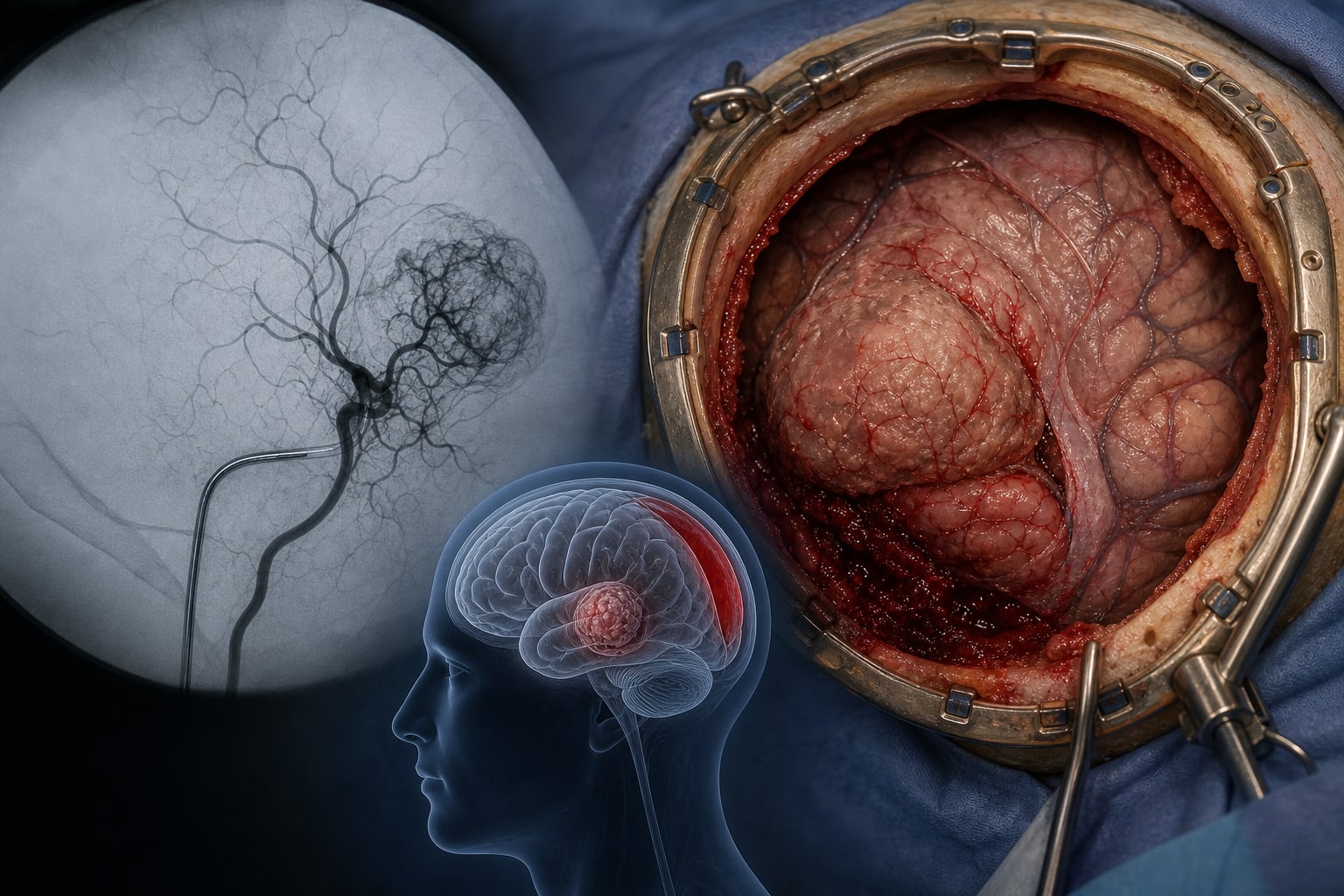
Clinical Report: Hybrid Surgical Approach for Meningioma Apoplexy
Overview
This report discusses a case of meningioma apoplexy complicated by acute subdural hematoma (ASDH) and the successful application of a hybrid surgical approach combining endovascular techniques and craniotomy. The patient achieved gross total resection of the tumor and complete hematoma evacuation with no postoperative complications.
Background
Meningiomas are the most common benign intracranial tumors, yet spontaneous hemorrhage leading to intracranial hematomas is rare, occurring in only 1%-2% of cases. The concurrent occurrence of acute subdural hematoma is even less common and poses significant diagnostic challenges. Understanding effective surgical strategies for these complex cases is crucial for improving patient outcomes.
Data Highlights
No numerical or trial data provided in the article.
Key Findings
Spontaneous hemorrhage from meningiomas leading to ASDH is rare, complicating diagnosis and treatment.
The hybrid surgical approach allows for simultaneous endovascular evaluation and craniotomy, enhancing diagnostic accuracy and treatment efficiency.
The case study involved a 34-year-old female with a left temporal meningioma and ASDH, successfully managed with hybrid surgery.
Postoperative pathology confirmed an angiomatous meningioma (WHO Grade I) with hemorrhage.
The patient had a favorable recovery without complications or recurrence at 1-year follow-up.
Clinical Implications
The hybrid surgical approach can significantly improve the management of meningioma-related strokes complicated by ASDH. Clinicians should consider this strategy for similar cases to enhance diagnostic and therapeutic outcomes while remaining cautious of potential ischemic risks associated with preoperative embolization.
Conclusion
The integration of endovascular techniques with craniotomy represents a promising approach for managing complex cases of meningioma apoplexy and ASDH, potentially improving patient prognosis and surgical outcomes.