Comparative effectiveness and integrated safety of goserelin sustained-release microspheres versus implants in prostate cancer: a patient-based real-world study and systematic review with meta-analysis - Report - MDSpire
Advertisement
Comparative effectiveness and integrated safety of goserelin sustained-release microspheres versus implants in prostate cancer: a patient-based real-world study and systematic review with meta-analysis
Clinical Report: Effectiveness and Safety of Goserelin Microspheres vs Implants
Overview
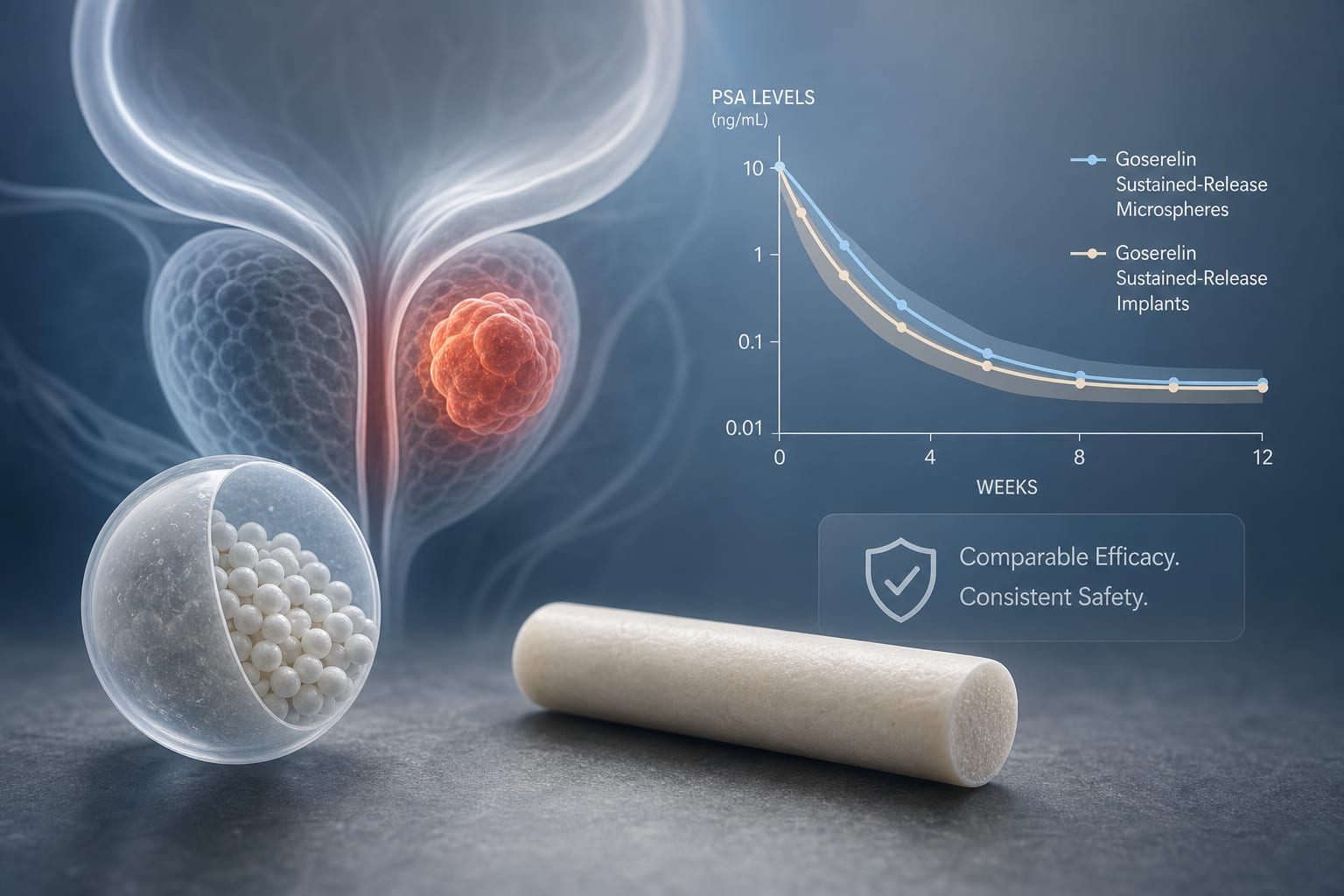
This study evaluates the effectiveness and safety of goserelin sustained-release microspheres compared to implants in prostate cancer patients. Results indicate comparable biochemical activity and safety profiles between the two formulations over a 12-week period.
Background
Prostate cancer is a significant health concern, particularly in older men, and androgen deprivation therapy (ADT) is a cornerstone of treatment. Goserelin, a GnRH agonist, is available in two formulations, and understanding their comparative effectiveness and safety is crucial for optimizing patient care in clinical practice.
Data Highlights
Group
D29 TPSA Response Rate
D85 TPSA Response Rate
Microspheres
81.8%
86.4%
Implants
95.2%
93.0%
Key Findings
At day 29, TPSA response rates were 81.8% for microspheres and 95.2% for implants.
At day 85, TPSA response rates were 86.4% for microspheres and 93.0% for implants.
The study met the prespecified non-inferiority criterion for goserelin microspheres.
Pooled incidence of any-grade adverse events was 59.2% across included studies.
No new safety signals were identified for either formulation.
Baseline disease stage differed, with more metastatic cases in the implant group.
Clinical Implications
Goserelin sustained-release microspheres can be considered a viable alternative to implants for ADT in prostate cancer, offering comparable efficacy and safety. Clinicians should be aware of the differences in early PSA response and baseline disease characteristics when selecting treatment options.
Conclusion
Goserelin microspheres demonstrate comparable effectiveness to implants in real-world settings, supporting their use as an alternative formulation in prostate cancer management.
The Lank Center for Genitourinary Oncology at Dana-Farber Cancer Institute presents a succinct summary of all the prostate cancer clinical updates you need to know from AACR 2026.