Serial lactate–procalcitonin interaction identifies a high-risk phenotype in 24-h conditional survivors of post-cardiac arrest syndrome: a CART-based analysis - Report - MDSpire
Advertisement
Serial lactate–procalcitonin interaction identifies a high-risk phenotype in 24-h conditional survivors of post-cardiac arrest syndrome: a CART-based analysis
Identification of a High-Risk Phenotype in 24-Hour Conditional Survivors of PCAS
Overview
This study identifies a high-risk phenotype in 24-hour conditional survivors of post-cardiac arrest syndrome (PCAS) through the interaction of serial lactate and procalcitonin levels.
Background
Post-cardiac arrest syndrome (PCAS) is associated with high mortality and morbidity. Traditional biomarkers, such as lactate and procalcitonin, have shown potential in predicting outcomes, but their combined effects in a dynamic context remain underexplored. This study aims to enhance risk stratification in this critically ill population.
Data Highlights
Measurement
Time Point
Significance
Lactate
T0
Baseline
Lactate
T48
OR: 1.92; 95% CI: 1.22–3.01, p = 0.003
PCT
T24
High-risk phenotype identified
In-hospital mortality rate
-
70.9%
CART model calibration
-
Brier score: 0.14
Key Findings
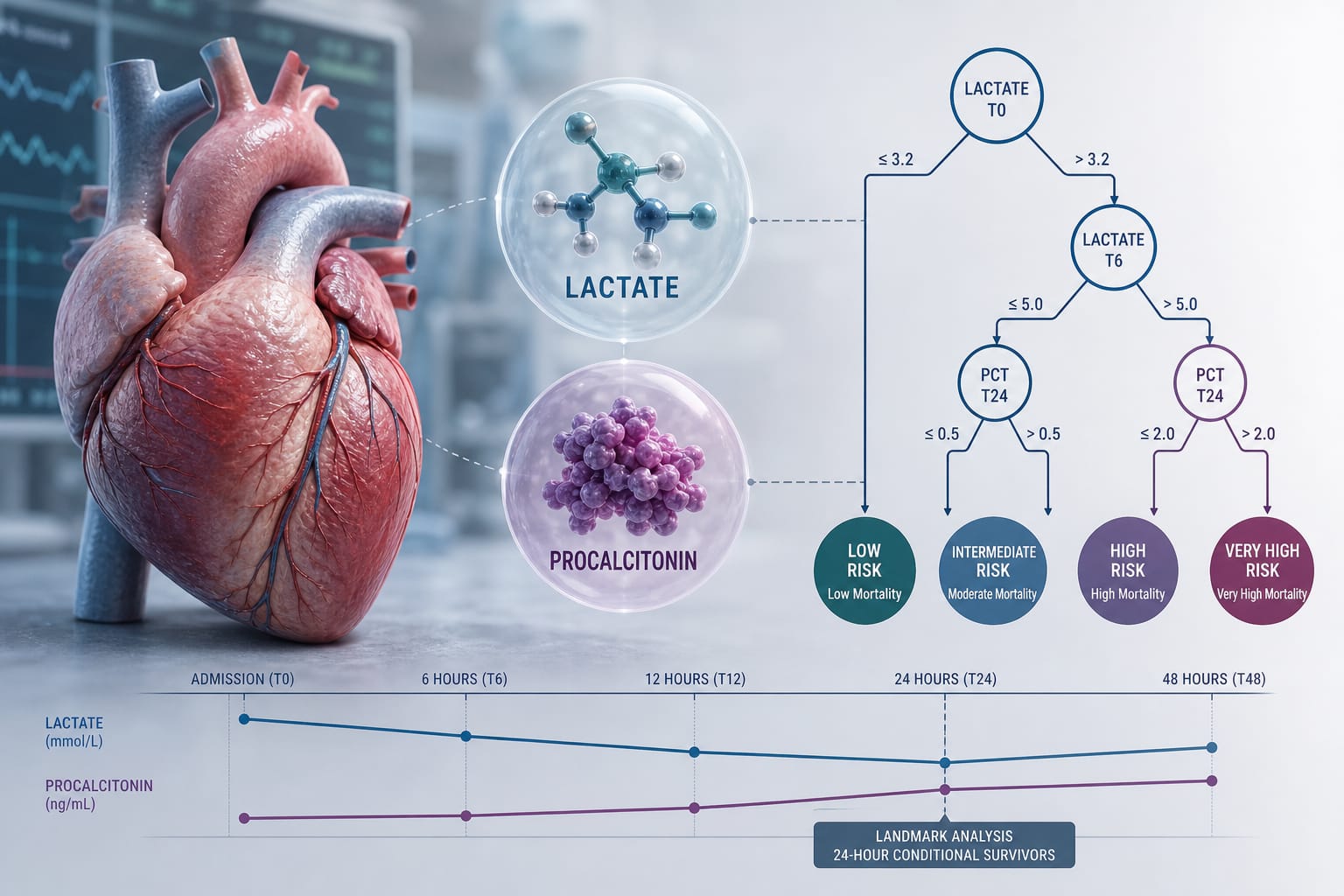
The in-hospital mortality rate among 24-hour conditional survivors of PCAS was 70.9%.
Non-survivors had higher rates of non-shockable rhythms and longer CPR durations.
Persistent hyperlactatemia at 48 hours was an independent predictor of mortality (OR: 1.92).
The CART analysis identified a high-risk phenotype with T0 lactate >5 mmol/L and T24 PCT > 5.5 ng/mL, associated with a 92% mortality risk.
The CART model demonstrated excellent calibration and comparable discrimination to logistic regression.
Clinical Implications
Monitoring serial lactate and procalcitonin levels can aid in identifying high-risk patients in the post-cardiac arrest setting.
Conclusion
The integration of lactate and procalcitonin kinetics through CART analysis provides a tool for identifying high-risk patients among 24-hour conditional survivors of PCAS.
New studies separate host and microbial metabolites, trace secreted proteins, identify a pro-regenerative cardiomyocyte state, and map macrophage lipid metabolism