Clinical Report: Narcolepsy: The Role of Immune Response, Neural Pathways, and Brain Network Adaptation
Overview
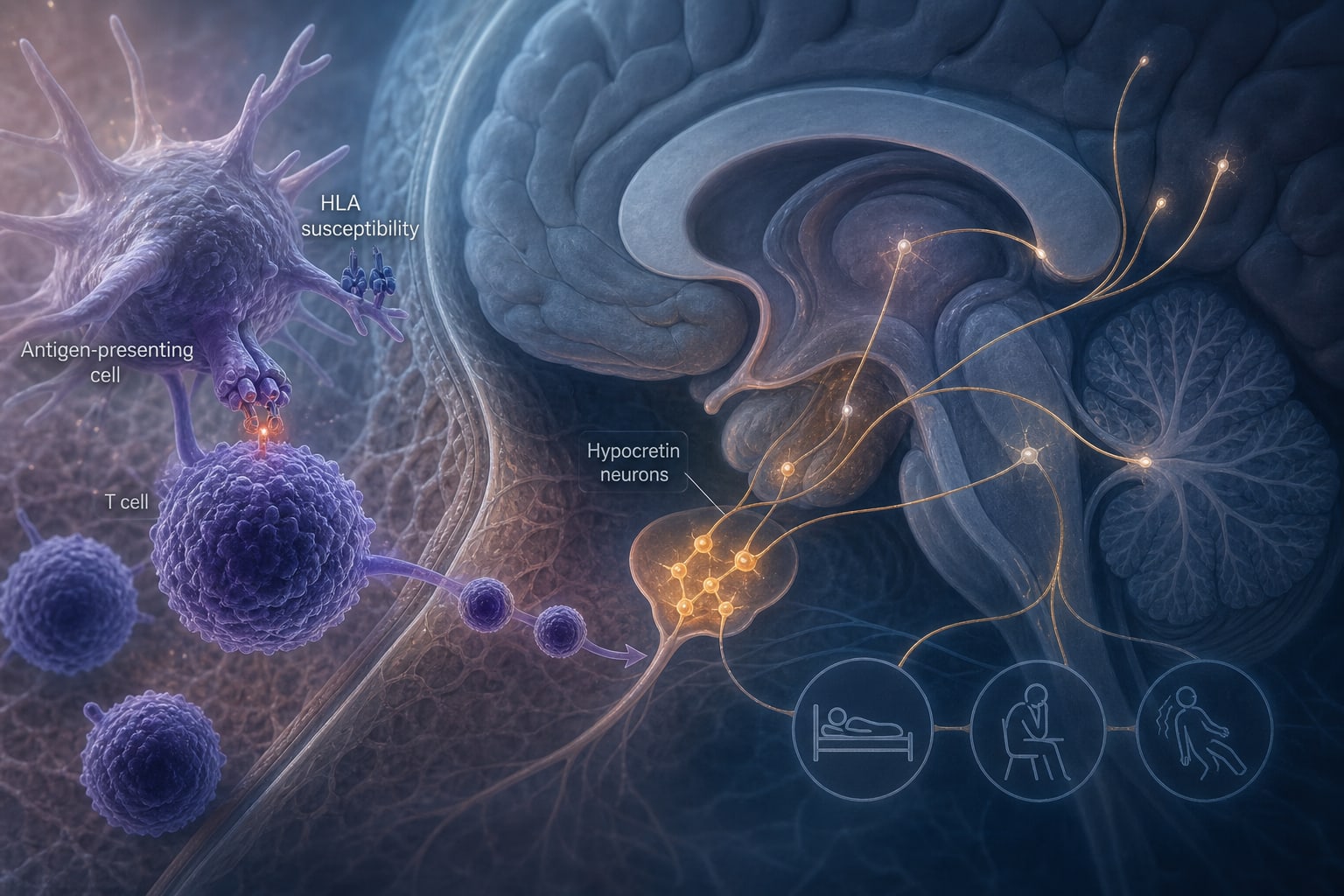
This review outlines the contributions of immune dysregulation, hypocretin neuron depletion, and neural circuitry alterations in narcolepsy.
Background
Narcolepsy is a rare sleep disorder characterized by excessive daytime sleepiness and cataplexy, primarily due to the loss of hypocretin neurons in the hypothalamus. Understanding its pathophysiology is crucial for identifying potential biomarkers and therapeutic targets, particularly for type 1 narcolepsy.
Data Highlights
No numerical or trial data provided in the article.
Key Findings
Narcolepsy is categorized into type 1 (NT1) with cataplexy and hypocretin deficiency, and type 2 (NT2) without cataplexy.
The prevalence of narcolepsy is estimated at 0.02% to 0.05%, with Japan having the highest rates globally.
Immune damage is the primary initiating factor in narcolepsy's pathophysiology.
The loss of hypocretin neurons leads to disruptions in sleep-wake circuitry.
Understanding the interplay of immune response and neural pathways may reveal new diagnostic and therapeutic avenues for narcolepsy.
Clinical Implications
Clinicians should consider the autoimmune aspects of narcolepsy when diagnosing and managing patients.
Conclusion
The review provides an overview of the mechanisms underlying narcolepsy.