The impact of comorbid type 2 diabetes on survival outcomes in patients with solid tumors treated with immune checkpoint inhibitors: a meta-analysis focusing on lung cancer - Report - MDSpire
Advertisement
The impact of comorbid type 2 diabetes on survival outcomes in patients with solid tumors treated with immune checkpoint inhibitors: a meta-analysis focusing on lung cancer
Clinical Report: Effects of Comorbid Type 2 Diabetes on Survival Rates in Solid Tumor Patients
Overview
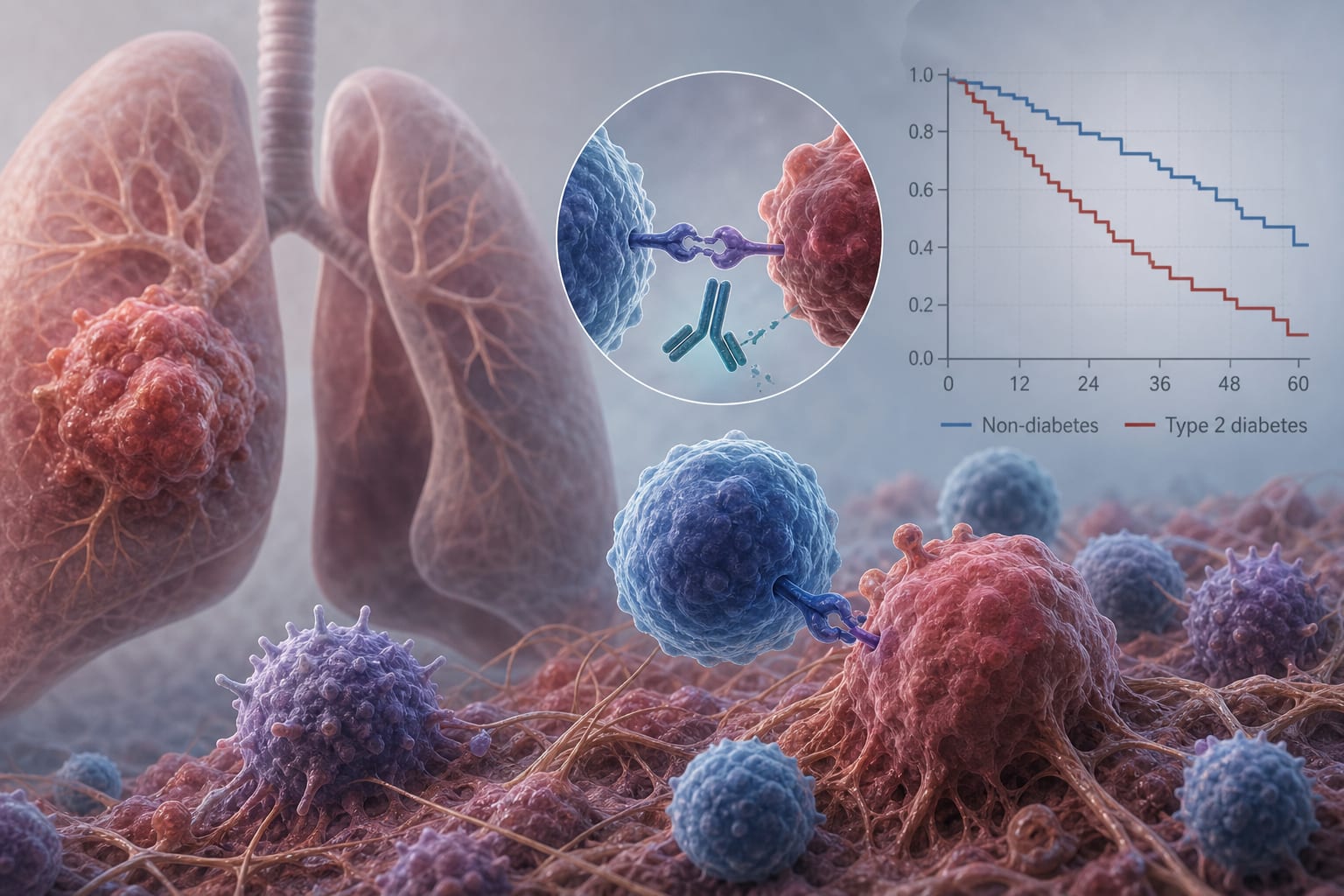
This meta-analysis evaluates the impact of type 2 diabetes mellitus (T2DM) on the prognosis of solid tumor patients undergoing immune checkpoint inhibitor (ICI) therapy. Findings indicate that T2DM is associated with poorer overall survival and progression-free survival in these patients, particularly in lung cancer.
Background
The increasing prevalence of type 2 diabetes mellitus (T2DM) poses significant challenges in cancer treatment, particularly with immune checkpoint inhibitors (ICIs). Patients with T2DM may experience an immunosuppressive tumor microenvironment, potentially leading to diminished efficacy of ICIs. Understanding the relationship between T2DM and cancer treatment outcomes is crucial for optimizing therapeutic strategies.
Data Highlights
Outcome
Hazard Ratio (HR)
95% Confidence Interval (CI)
P-value
Overall Survival (OS)
1.49
1.25-1.77
< 0.00001
Progression-Free Survival (PFS)
1.38
1.04-1.83
0.03
Key Findings
Patients with T2DM receiving ICIs had poorer overall survival (OS) compared to non-T2DM patients (HR = 1.49).
Progression-free survival (PFS) was also negatively impacted in T2DM patients (HR = 1.38).
Subgroup analyses showed consistent poorer OS in T2DM patients regardless of sample size or type of survival analysis.
No significant difference in PFS was observed in larger sample sizes or multivariate analyses.
The findings suggest a need for further research to clarify the impact of glycemic control on ICI efficacy.
Clinical Implications
Highlight the importance of personalized treatment strategies for T2DM patients.
Conclusion
This meta-analysis highlights the association between T2DM and poorer survival outcomes in solid tumor patients treated with ICIs, particularly in lung cancer. However, the limited number of studies and inherent biases necessitate cautious interpretation of these findings.