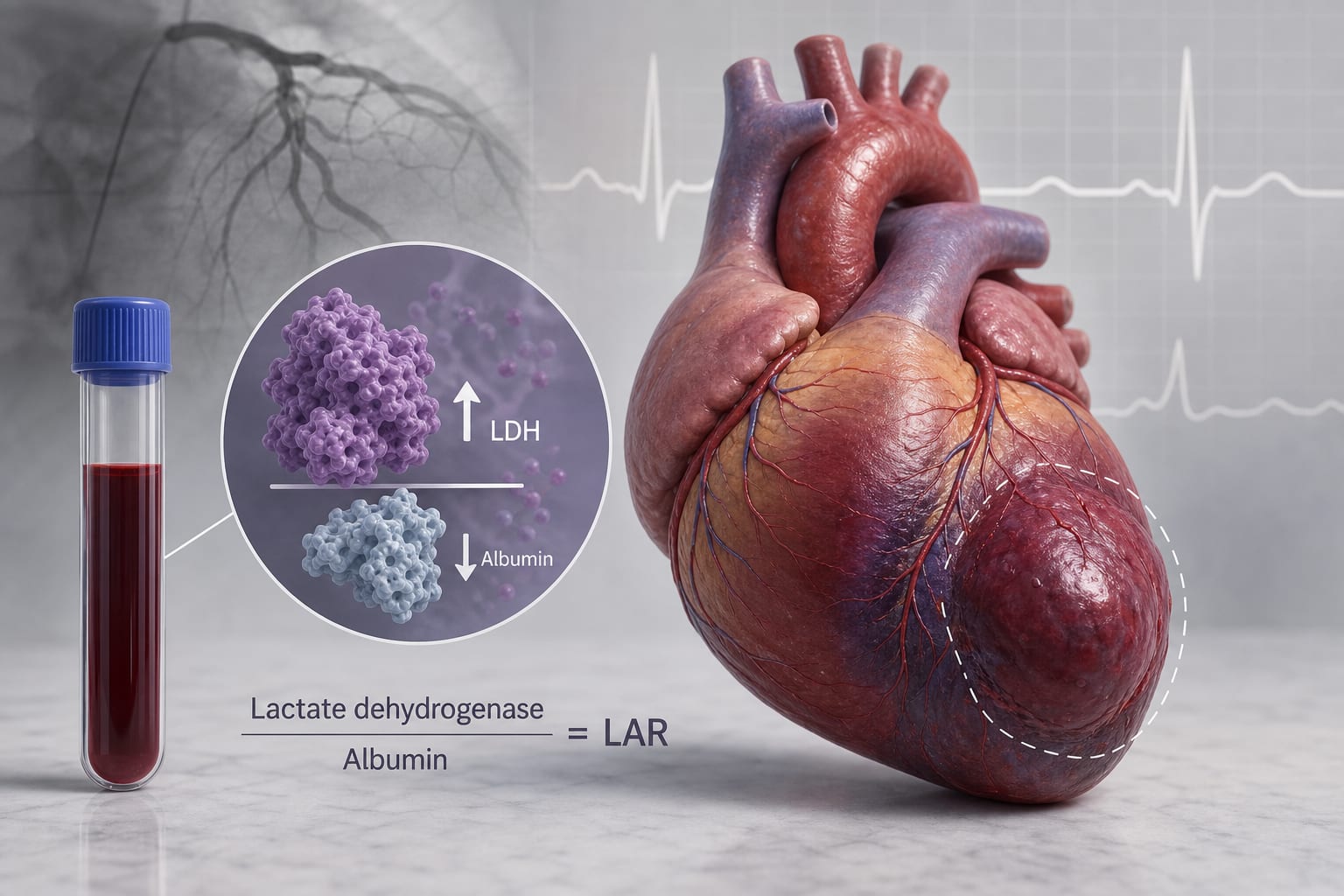
Increased lactate dehydrogenase-to-albumin ratio as a novel independent indicator of ventricular aneurysm risk in patients with STEMI
Overview
Expand on the implications of LAR as a predictor compared to existing biomarkers.
Background
Left ventricular aneurysm (LVA) is a serious complication following STEMI, associated with high morbidity and mortality rates. Identifying reliable biomarkers for predicting LVA risk is crucial for improving patient outcomes. The lactate dehydrogenase to albumin ratio (LAR) has emerged as a potential prognostic marker, linking metabolic and inflammatory processes to cardiovascular events.
Data Highlights
Cohort
Odds Ratio (OR)
95% Confidence Interval (CI)
P-value
First cohort
3.63
1.65 - 7.96
0.001
Second cohort
6.01
2.22 - 16.26
< 0.001
Third cohort
2.41
1.47 - 3.96
< 0.001
Key Findings
The highest quartile of LAR (Q4) significantly increased the likelihood of developing LVA compared to the lowest quartile (Q1).
In the first cohort, the odds ratio for LVA in Q4 was 3.63 (95% CI: 1.65 - 7.96, P = 0.001).
In the second cohort, the odds ratio was 6.01 (95% CI: 2.22 - 16.26, P < 0.001).
In the third cohort, the odds ratio was 2.41 (95% CI: 1.47 - 3.96, P < 0.001).
LAR outperformed both LDH and albumin in predicting LVA risk (P < 0.05).
Subgroup analyses confirmed the robustness of LAR as a predictor across different patient demographics.
Clinical Implications
Clinicians should consider the lactate dehydrogenase to albumin ratio as a valuable biomarker for assessing the risk of left ventricular aneurysm in STEMI patients. Monitoring LAR levels may enhance risk stratification and guide early interventions to mitigate complications associated with LVA.
Conclusion
The lactate dehydrogenase to albumin ratio serves as a novel and independent predictor of left ventricular aneurysm risk in patients with STEMI, highlighting its potential utility in clinical practice.
The organ you forgot, the cells that age unevenly, the AI that admits ignorance, and the diet advice that sounds wrong but isn't: medicine's next moves are hiding in plain sight.