Can Casting Match Surgery for Pediatric Fractures?
-
By
-
Andrea Surnit
-
May 4, 2026
-
3 min
Clinical Report: Can Casting Match Surgery for Pediatric Fractures?
Overview
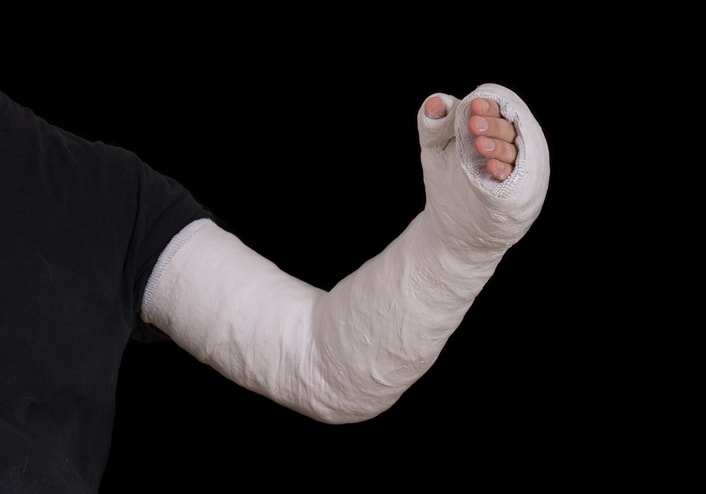
A recent multicenter trial found that nonsurgical casting did not meet non-inferiority criteria compared to surgical reduction for severely displaced distal radial fractures in children. Although initial functional differences favored surgery, these diminished over time, suggesting similar long-term outcomes.
Background
Pediatric fractures, particularly of the distal radius, are common and often require careful management to optimize recovery and function. Understanding the effectiveness of nonsurgical versus surgical interventions is crucial for guiding treatment decisions and improving patient outcomes. This study contributes to the ongoing debate regarding the best approach for managing severely displaced fractures in children.
Data Highlights
{'table': {'columns': ['Outcome', 'Casting Group', 'Surgical Group', 'Mean Difference'], 'rows': [['Function Score at 3 months', 44.9, 46.6, -1.64]]}}Key Findings
- Nonsurgical casting did not meet non-inferiority criteria compared to surgical reduction at 3 months.
- Mean function scores were lower in the casting group (44.9) compared to the surgical group (46.6).
- Differences in function diminished over time, with no significant differences at 6 and 12 months.
- Early complications were more frequent in the surgical group, including wound infections and nerve irritation.
- Nonsurgical casting was associated with lower costs and remained cost-effective.
- Among patients with completely off-ended fractures, casting met non-inferiority criteria against a wider margin.
Clinical Implications
Clinicians should consider the findings of this trial when deciding between nonsurgical casting and surgical reduction for pediatric patients with severely displaced distal radial fractures. The small differences in early function may not justify the increased risks and costs associated with surgical intervention.
Conclusion
The CRAFFT trial indicates that while surgical reduction may offer slight initial advantages, nonsurgical casting is a viable and cost-effective alternative for managing pediatric distal radial fractures, particularly as differences in function do not persist long-term.
Related Resources & Content
- Perry DC, et al., The Lancet, 2026 -- Non-surgical casting versus surgical reduction for children with severely displaced distal radial fractures (the CRAFFT Study)
- conexiant — Unstable Weber B Fractures: Cast vs Surgery
- Safety and Efficacy of Open Plate Fixation for Displaced Proximal Humerus Fractures in Children: Achieving Excellent Functional Results
- Correction: Impact of Casting Methods on the Risk of Redisplacement in Reduced Distal Radius Fractures Among Adults
- European Radiology (Springer) — Convolutional neural networks in paediatric fracture detection: pooled evidence from a systematic review and meta-analysis
- Recommendations | Fractures (non-complex): assessment and management | Guidance | NICE
- Unstable Weber B Fractures: Cast vs Surgery
- Safety and Efficacy of Open Plate Fixation for Displaced Proximal Humerus Fractures in Children
- Non-surgical casting versus surgical reduction for children with severely displaced distal radial fractures (the CRAFFT Study): a multicentre, randomised, controlled non-inferiority trial and economic evaluation - University of St Andrews Research Portal
- Comparing the Outcomes of Cast Immobilization with and Without K-Wire Fixation for Displaced Distal Radius Fractures in the Pediatric Population: A Systematic Review and Meta-Analysis | MDPI
This content is an AI-generated, fully rewritten summary based on a published scholarly article. It does not reproduce the original text and is not a substitute for the original publication. Readers are encouraged to consult the source for full context, data, and methodology.