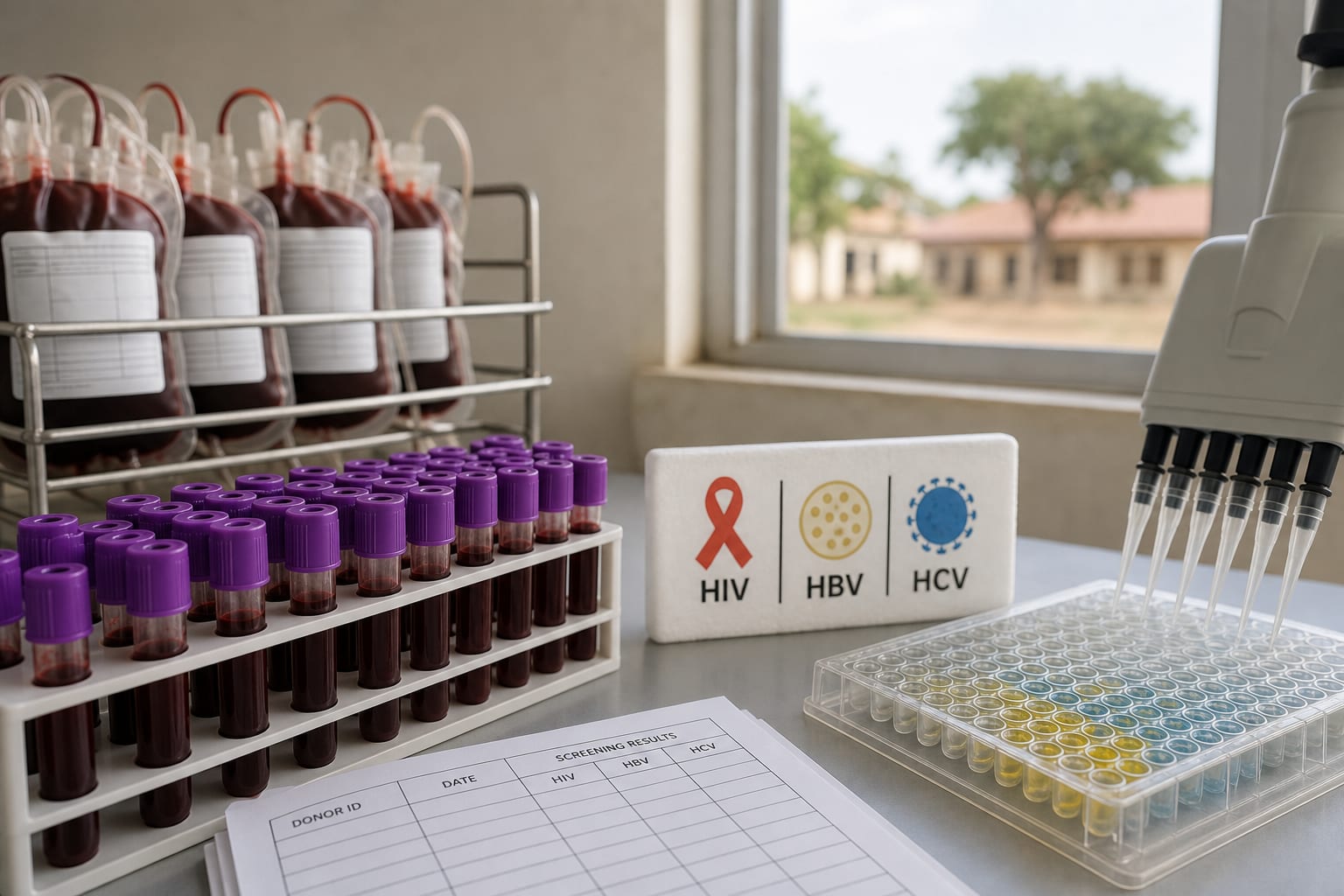
Clinical Report: Assessment of Remaining Risks for HIV, HBV, and HCV Transmission
Overview
This study estimates the residual risk of HIV, HBV, and HCV transmission via blood transfusion in Borgou, Benin, revealing significant incidence rates and highlighting the need for improved screening methods. The findings indicate a lower risk compared to other sub-Saharan African regions but still higher than in high-income countries.
Background
Blood transfusion is essential in healthcare, particularly for maternal and pediatric patients, yet it poses risks of transmitting infections such as HIV, HBV, and HCV. Understanding these risks is crucial for enhancing transfusion safety, especially in resource-limited settings where the prevalence of these infections remains high. This study addresses the urgent need for effective donor selection and screening strategies to mitigate these risks.
Data Highlights
{'format': 'Ensure the table is properly formatted in the final document.'}
Key Findings
{'details': 'Expand on the implications of the findings, especially regarding age-related risks.'}
Clinical Implications
Healthcare providers should be aware of the residual risks associated with blood transfusions in low-resource settings and advocate for enhanced screening methods, including nucleic acid testing. Strengthening donor selection criteria and health education initiatives is essential to further reduce the transmission risks of TTIs.
Conclusion
The study underscores the importance of continuous improvement in blood safety measures in Borgou, Benin, to align with global standards and reduce the risk of transfusion-transmissible infections.
Federal prosecutors allege that a Florida physician and research staff fabricated clinical trial records that were submitted into database systems used to evaluate investigational drugs.