ctDNA- and cfDNA-based liquid biopsy in bladder cancer and urothelial carcinoma: bibliometric mapping and cross-database coverage analysis, 2008-2025 - Report - MDSpire
Conexiant’s news site is now MDSpire News. Learn more
Advertisement
Analysis of Liquid Biopsy Utilizing ctDNA and cfDNA in Bladder Cancer and Urothelial Carcinoma: A Bibliometric Review and Database Coverage Assessment from 2008 to 2025
Clinical Report: Analysis of Liquid Biopsy Utilizing ctDNA and cfDNA in Bladder Cancer
Overview
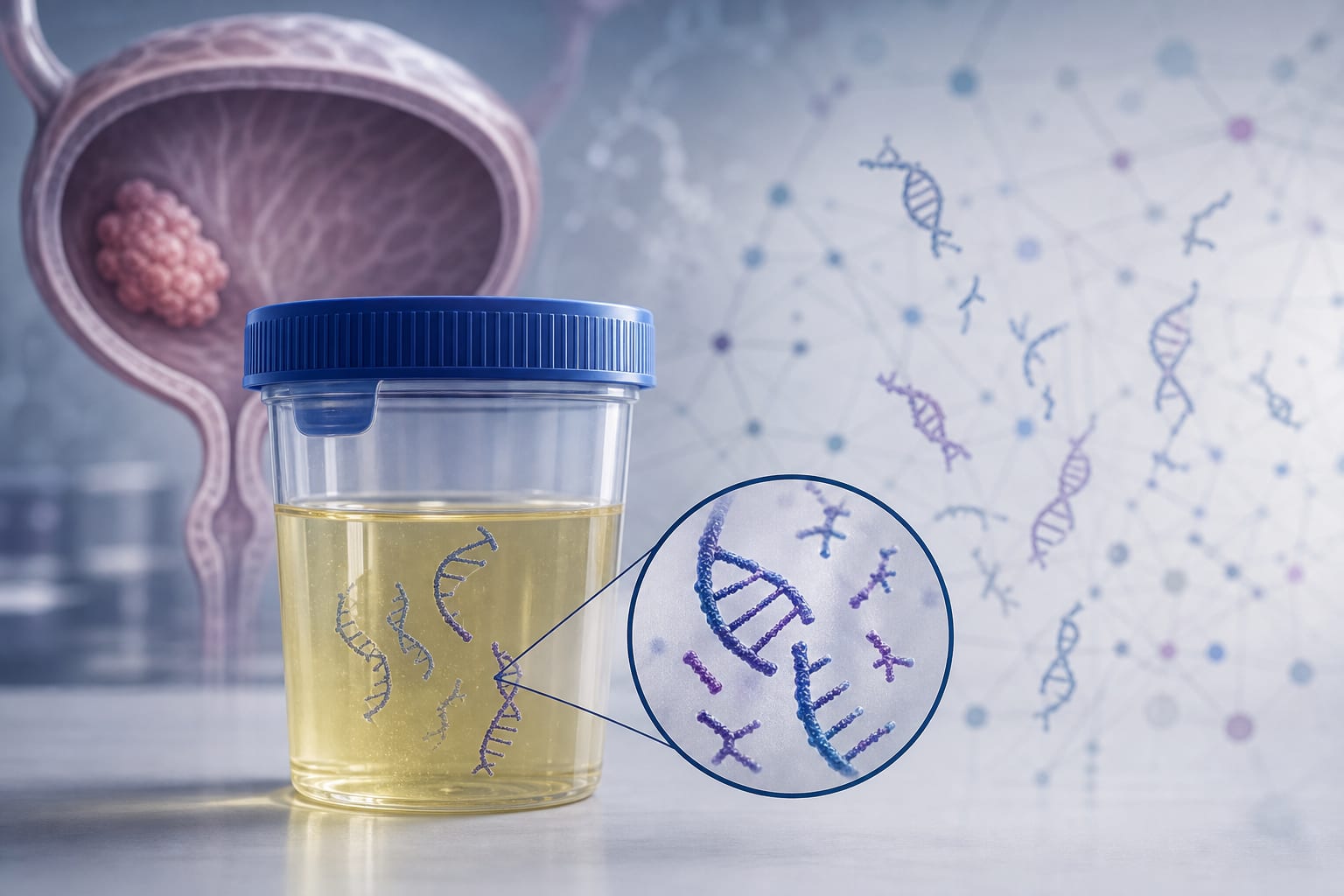
This bibliometric review assesses the growth and coverage of literature on circulating tumor DNA (ctDNA) and cell-free DNA (cfDNA) in bladder cancer and urothelial carcinoma from 2008 to 2025. The findings reveal significant publication activity and uneven database coverage.
Background
Bladder cancer, primarily urothelial carcinoma, is a common malignancy requiring ongoing surveillance and management strategies. Traditional diagnostic methods, such as cystoscopy and urine cytology, have limitations, prompting interest in liquid biopsy techniques utilizing ctDNA and cfDNA. Understanding the landscape of research in this area is crucial for advancing diagnostic and treatment approaches.
Data Highlights
Database
Records
Citations
WoSCC
1,903
17,031
Scopus
3,201
456 of 494
PubMed/MEDLINE
230
93 of 494
Key Findings
1,903 records were found in WoSCC, with 494 deemed eligible after deduplication.
The main set of records accumulated 17,031 citations, with a median of 19 citations per record.
Annual publication output peaked at 82 records in 2025.
Scopus indexed 456 of the 494 main-set records, while PubMed/MEDLINE indexed 93.
Initial reviewer agreement for newly assessed records was 77.7% (Cohen’s kappa, 0.620).
Thematic analysis indicates a shift from methylation markers to ctDNA-based evaluations.
Clinical Implications
The findings highlight the growing interest and research activity in ctDNA and cfDNA applications in bladder cancer. Clinicians should be aware of the evolving landscape of liquid biopsy technologies and their potential implications for patient management.
Conclusion
This review highlights the expanding body of literature on ctDNA and cfDNA in bladder cancer, revealing significant research activity.