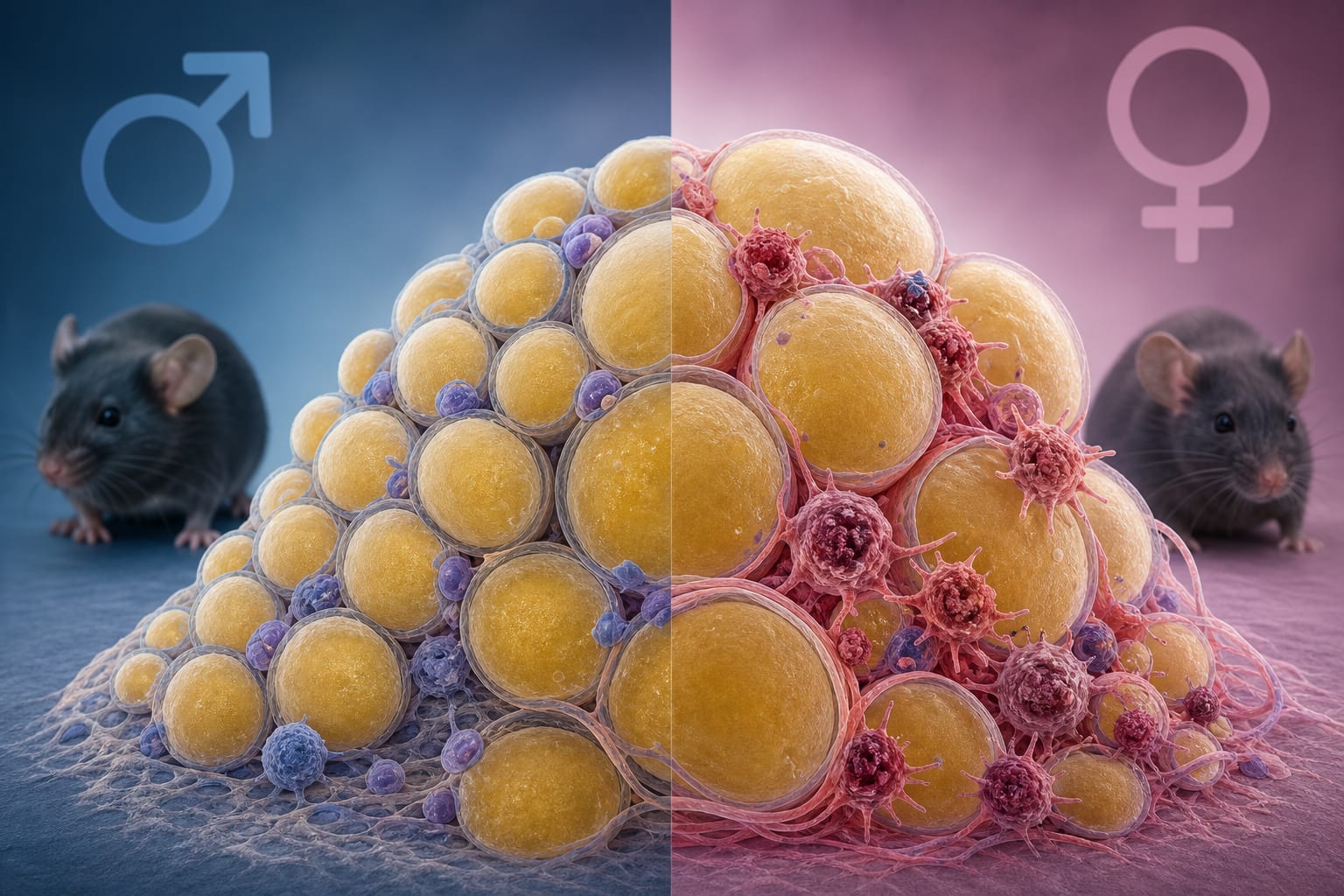
Gender-specific patterns of adipose tissue growth, inflammation, and dysfunction following short-term high-fat diet exposure
Overview
This study investigates the early effects of a high-fat diet on adipose tissue and metabolic inflammation, highlighting significant sex differences. Male mice exhibited greater adipocyte hypertrophy and inflammation compared to females.
Background
Understanding the mechanisms of adipose tissue dysfunction is crucial as it plays a significant role in metabolic diseases such as obesity and type 2 diabetes. Traditional metrics like BMI may not accurately reflect metabolic risk, making intrinsic properties of adipose tissue more relevant. This study emphasizes the importance of sex differences in adipose responses to dietary changes.
Data Highlights
Time (weeks)
Male Weight Gain
Female Weight Gain
Inflammatory Response
1
Increased
Less
Delayed
2
Increased
Less
Delayed
4
Greater
Less
Less Robust
6
Greater
Less
Less Robust
16
Greater
Less
Less Robust
Key Findings
Male mice showed greater weight gain and adipocyte hypertrophy than female mice after HFD exposure.
Inflammatory responses in males were earlier and more pronounced, with increased CD11c+ ATMs in gonadal adipose tissue.
Metabolic dysfunction, including hyperinsulinemia, occurred before inflammation in male mice.
Female mice exhibited a delayed inflammatory response to HFD.
Adipose tissue dysfunction and inflammation are precursors to insulin resistance.
Clinical Implications
These findings indicate that sex-specific responses to dietary fat may influence the risk of developing metabolic diseases.
Conclusion
The study highlights the critical role of sex in the early development of adipose tissue dysfunction and metabolic inflammation following high-fat diet exposure.