Frontotemporal cortical activity in Chinese male alcohol-dependent patients during a verbal fluency task: a functional near-infrared spectroscopy study - Report - MDSpire
Advertisement
Frontotemporal cortical activity in Chinese male alcohol-dependent patients during a verbal fluency task: a functional near-infrared spectroscopy study
Cortical Activation Patterns in Alcohol-Dependent Chinese Males During Verbal Fluency Tasks
Overview
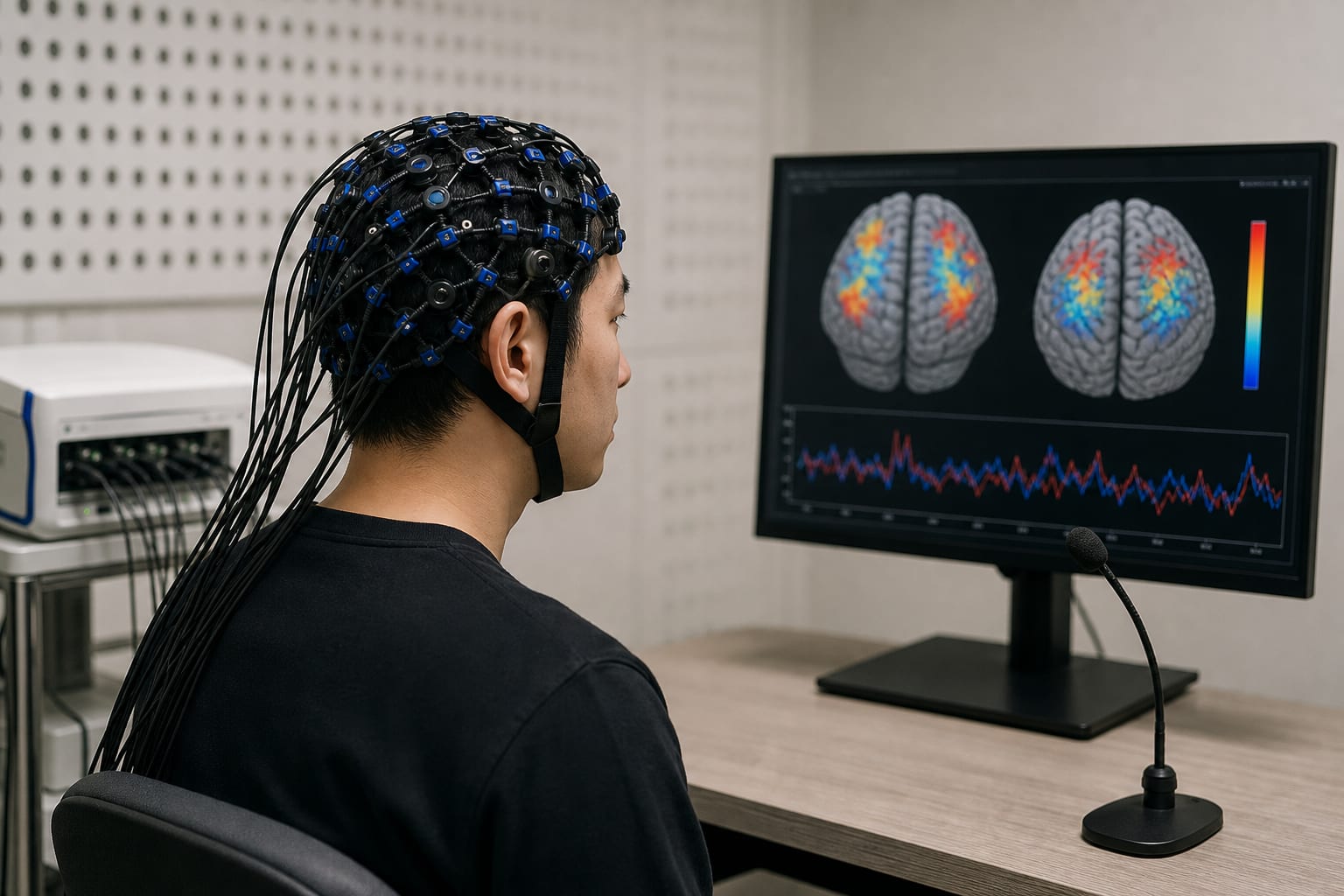
This study investigates cortical activation differences during verbal fluency tasks between alcohol-dependent Chinese males and healthy controls using functional near-infrared spectroscopy. Findings indicate increased oxygenated hemoglobin activation in the right dorsolateral prefrontal cortex among patients with alcohol dependence.
Background
Alcohol dependence is a significant public health issue, particularly in China, where its prevalence has increased notably. It is associated with cognitive dysfunction and emotional dysregulation, which can complicate treatment and recovery. Understanding the neural mechanisms underlying these alterations is crucial for developing effective interventions.
Data Highlights
Group
Channel 23 Activation (t-value)
FDR-adjusted q-value
Alcohol Dependence
3.315
0.104
Healthy Controls
No significant difference
N/A
Key Findings
Alcohol-dependent patients showed greater activation in the right dorsolateral prefrontal cortex compared to healthy controls.
No significant differences were found in other channels measured by fNIRS.
Increased activation may indicate compensatory neural recruitment or enhanced cognitive control and emotion regulation.
Functional near-infrared spectroscopy is a viable tool for assessing cortical function in alcohol dependence.
Further research is needed with larger, mixed-sex, and cross-linguistic samples to validate these findings.
Clinical Implications
The findings suggest that alcohol dependence may lead to compensatory changes in brain activation during cognitive tasks. This highlights the importance of considering neural function in treatment strategies for alcohol use disorder.
Conclusion
Increased activation in specific cortical areas among alcohol-dependent individuals may reflect underlying cognitive and emotional challenges. Further research is essential to explore these dynamics in broader populations.