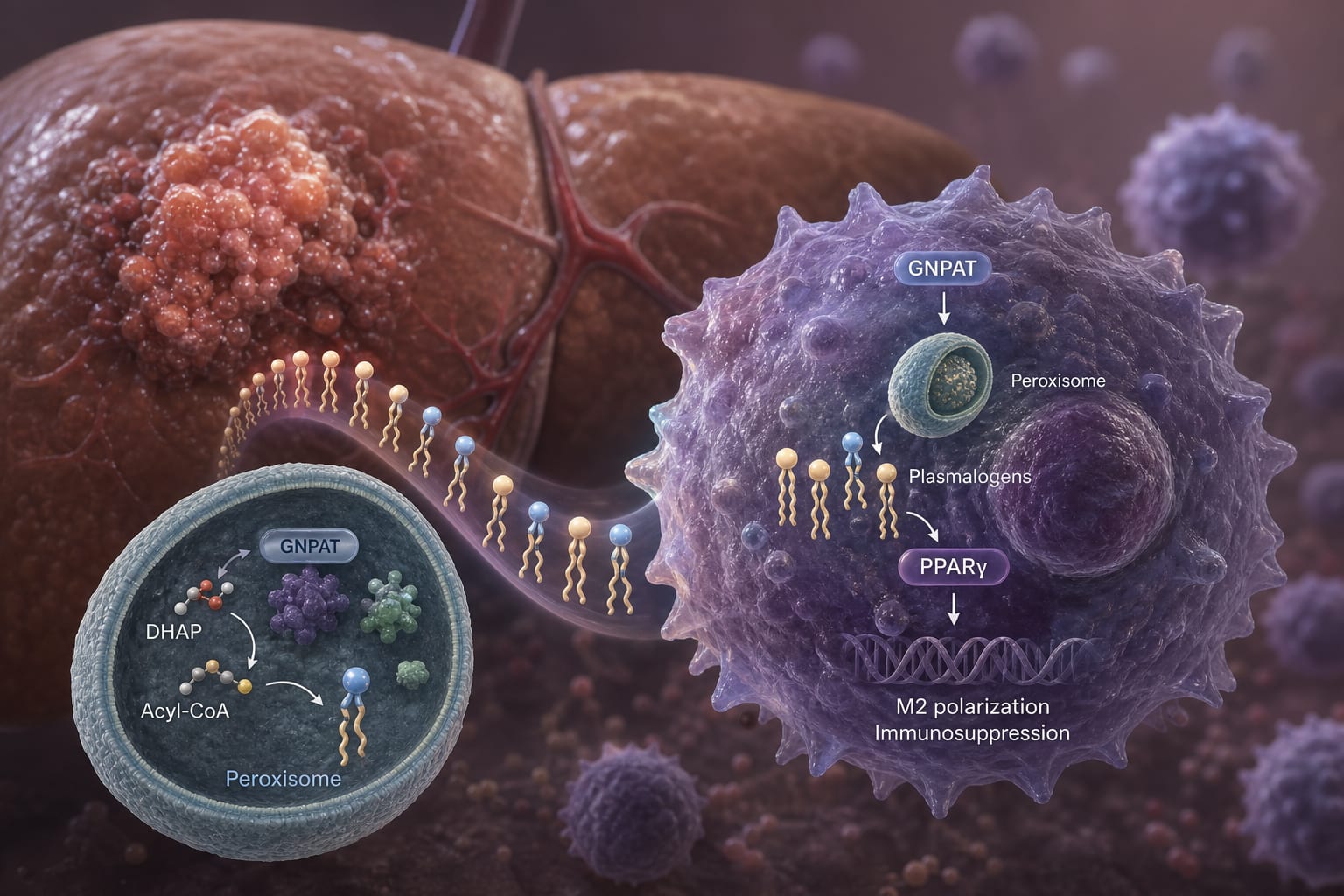
Correction: GNPAT promotes immunosuppression in hepatocellular carcinoma by activating the plasmalogen-PPARg pathway to drive M2 macrophage polarization - Report - MDSpire
Advertisement
Correction: GNPAT promotes immunosuppression in hepatocellular carcinoma by activating the plasmalogen-PPARg pathway to drive M2 macrophage polarization
Correction: GNPAT facilitates immune suppression in hepatocellular carcinoma
Overview
This correction addresses errors in the original publication regarding GNPAT's role in immune suppression in hepatocellular carcinoma (HCC). The corrections pertain to Figure 3, specifically the labeling of 'PE' and the figure caption.
Background
Hepatocellular carcinoma (HCC) is a significant global health concern, characterized by immune evasion mechanisms that complicate treatment. The plasmalogen-PPARγ pathway is involved in HCC, and macrophage polarization plays a role in tumor progression.
Data Highlights
No new data is presented in the correction article.
Key Findings
Correction of Figure 3E from 'PE' to 'plasmalogen PE'.
Correction of the caption for Figure 3 from '(A, F)' to '(A). (F)'.
Figure 3 includes TEM images of peroxisomes in adjacent and tumor tissues.
Quantitative analysis of peroxisomes per field is presented in Figure 3.
RT-qPCR analysis of GNPAT mRNA expression levels is included in the corrected figure.
Clinical Implications
Accurate representation of data in scientific publications is essential.
Conclusion
The corrections made to the original article ensure the integrity of the research findings related to GNPAT and its role in HCC.
Dr. Alicia Morgans of Dana-Farber Cancer Institute reported at #ASCO26 that ARACOG found darolutamide was associated with less decline in cognitive testing than enzalutamide, which may help guide treatment choice.