Clinical Report: Safety and Efficacy of TACE-HAIC with Immunotherapy
Overview
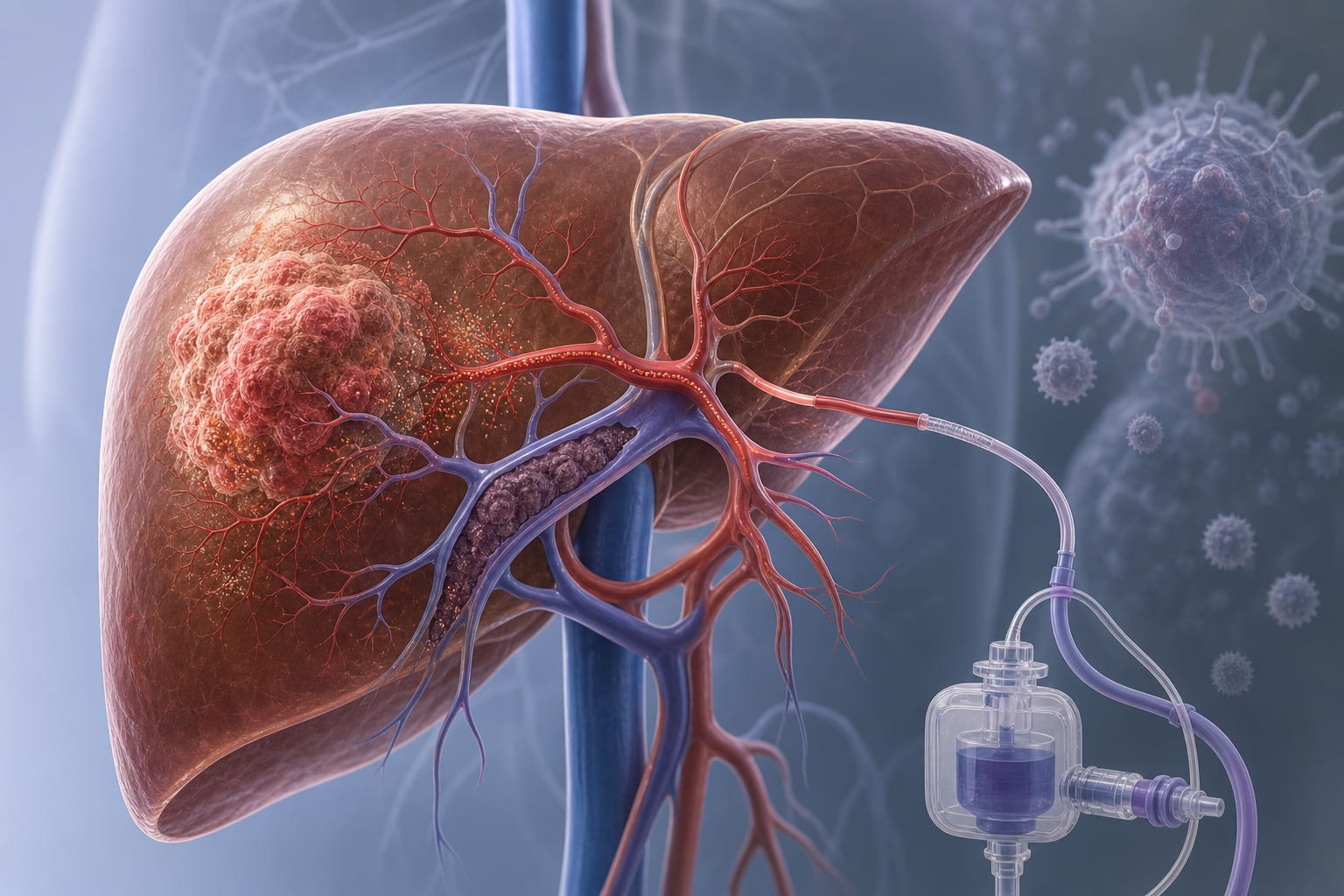
This study evaluates the safety and efficacy of combining TACE-HAIC with targeted immunotherapy in patients with primary hepatocellular carcinoma (HCC) and portal vein tumor thrombus (PVTT). The quadruple-therapy group showed a significantly higher objective response rate compared to the triple-therapy group, although overall survival and progression-free survival rates were not significantly different.
Background
Hepatocellular carcinoma (HCC) with portal vein tumor thrombus (PVTT) poses significant treatment challenges, necessitating effective therapeutic strategies. Transarterial chemoembolization (TACE) combined with systemic therapies, including immunotherapy, has emerged as a promising approach. Understanding the efficacy and safety of these combined therapies is crucial for optimizing treatment protocols in advanced HCC.
Data Highlights
Group
Objective Response Rate (ORR)
Overall Survival (OS)
Progression-Free Survival (PFS)
Quadruple-therapy
Significantly higher (P<0.05)
No significant difference (P>0.05)
No significant difference (P>0.05)
Triple-therapy
Lower
No significant difference (P>0.05)
No significant difference (P>0.05)
Key Findings
The quadruple-therapy group (TACE-HAIC plus immunotherapy) had a superior objective response rate for PVTT compared to the triple-therapy group.
No significant differences were observed in overall survival, progression-free survival, intrahepatic progression-free survival, or PVTT progression-free survival between the two groups.
Both treatment groups experienced adverse events, but the incidence was not detailed in the abstract.
HAIC is recommended as a first-line treatment for HCC with PVTT by the Japanese Society of Hepatology.
Research on combined therapies for patients with vascular invasion remains limited, highlighting the need for further studies.
Clinical Implications
The findings suggest that combining TACE-HAIC with targeted immunotherapy may enhance the treatment response in patients with HCC and PVTT. Clinicians should consider this quadruple-therapy approach for improving local tumor control while remaining aware of the overall survival outcomes.
Conclusion
The study supports the use of TACE-HAIC combined with targeted immunotherapy as an effective treatment strategy for PVTT, particularly in achieving higher objective response rates. Further research is warranted to explore long-term outcomes and optimize treatment protocols.