Prophylactic anti-seizure medication for post-traumatic seizures in Chinese PICUs: current practices and knowledge gaps - Report - MDSpire

Prophylactic anti-seizure medication for post-traumatic seizures in Chinese PICUs: current practices and knowledge gaps

  • By

  • Jian Ji

  • Quan Wang

  • Zheng Li

  • Boliang Fang

  • Lijuan Wang

  • Suyun Qian

  • June 8, 2026

  • 0 min

Share

Current Approaches and Knowledge Deficiencies in Preventive Anti-Seizure Treatment

Overview

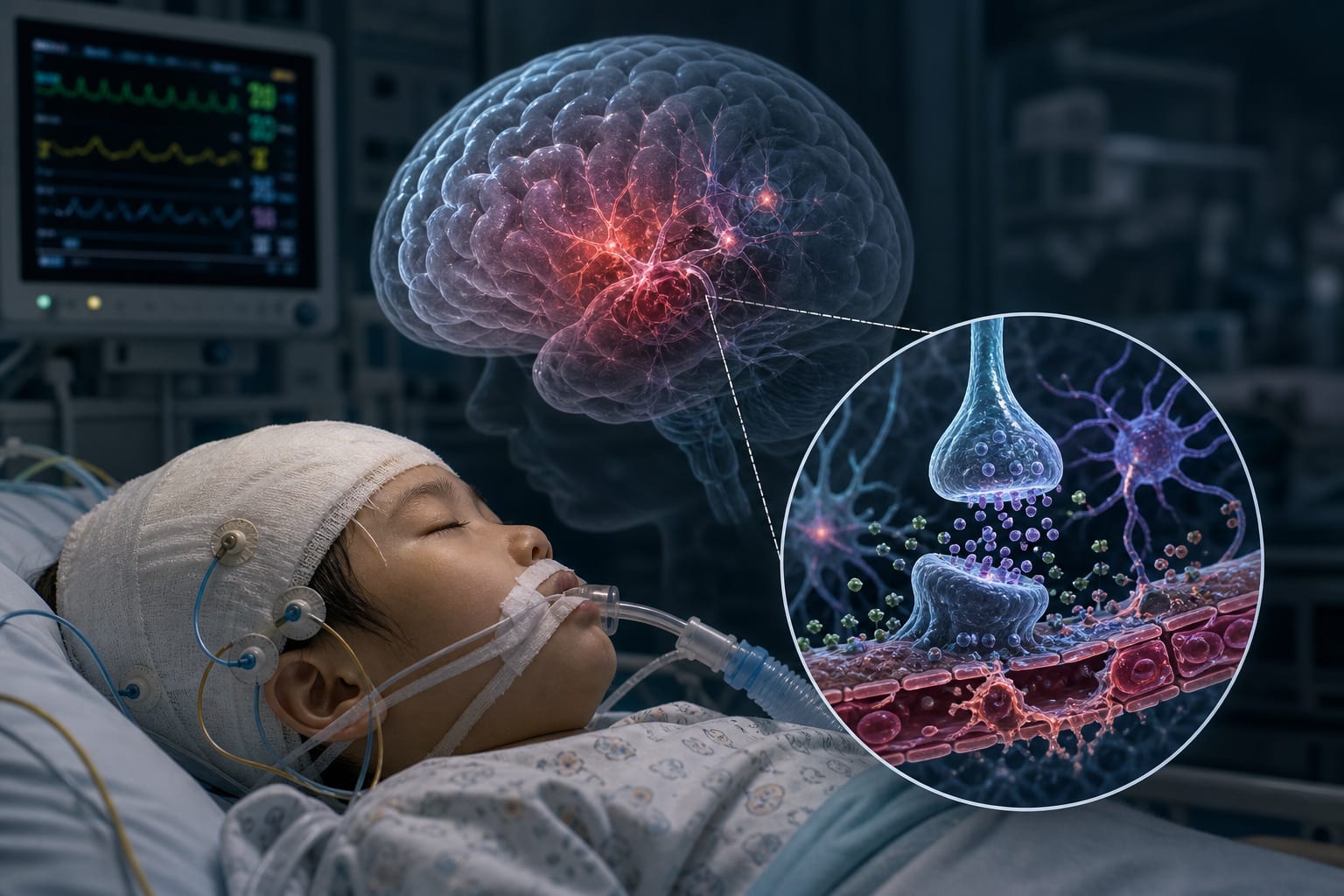
This study investigates the understanding and practices of pediatric intensive care unit (PICU) physicians in China regarding prophylactic anti-seizure medication (ASM) for post-traumatic seizures in children.

Background

Traumatic brain injury (TBI) is a significant pediatric health issue, with rising incidence rates in China. Post-traumatic epilepsy (PTE) occurs in a notable percentage of TBI cases, leading to long-term complications. Effective management of PTE through prophylactic ASM is crucial.

Data Highlights

No numerical data or trial data were provided in the source material.

Key Findings

  • Pediatric TBI contributes to over 28% of injury-related disability-adjusted life years globally.
  • Prophylactic ASM may reduce the risk of epilepsy in children with TBI.
  • High-quality clinical data comparing ASM effects in pediatric TBI-related PTE are lacking.
  • The Chinese Expert Consensus on Pediatric TBI was published in 2021.
  • Research on prophylactic ASM usage in PICUs in China is limited.

Clinical Implications

The findings highlight knowledge gaps among PICU physicians in China regarding prophylactic ASM for pediatric TBI.

Conclusion

The study reveals knowledge deficiencies among PICU physicians in China regarding prophylactic ASM for pediatric TBI.

Related Resources & Content

  1. Brain Trauma Foundation, Guidelines for the Management of Pediatric Severe TBI, 3rd Edition
  2. Neurocritical Care Society, Guidelines for Seizure Prophylaxis in Adults Hospitalized with Moderate–Severe Traumatic Brain Injury
  3. JAMA Neurology, Early Seizure Prophylaxis in Mild and Moderate Traumatic Brain Injury: A Systematic Review and Meta-Analysis
  4. PMC, Effectiveness of Fosphenytoin and Levetiracetam to Prevent Posttraumatic Seizures in Young Children with Accidental or Abusive Traumatic Brain Injury
  5. Intensive Care Medicine — Determining the Beneficiaries of Continuous EEG Monitoring in Critical Care Settings
  6. Frontiers in Surgery — Individualized treatment for pediatric intracranial aneurysms in China: case series and literature review
  7. Pediatric Cardiology — Outcomes and Healthcare Challenges Associated with Neonatal Arrhythmias in Pediatric Hospitals Across China: A Multi-Center Retrospective Cohort Study Protocol
  8. Intensive Care Medicine — Incidence and Outcomes of Seizures in 204 Unconscious Pediatric Patients
  9. Guidelines for the Management of Pediatric Severe TBI, 3rd Edition — Brain Trauma Foundation
  10. Guidelines for Seizure Prophylaxis in Adults Hospitalized with Moderate–Severe Traumatic Brain Injury: A Clinical Practice Guideline for Health Care Professionals from the Neurocritical Care Society
  11. Early Seizure Prophylaxis in Mild and Moderate Traumatic Brain Injury: A Systematic Review and Meta-Analysis - PMC
  12. Effectiveness of Fosphenytoin and Levetiracetam to Prevent Posttraumatic Seizures in Young Children with Accidental or Abusive Traumatic Brain Injury - PMC

Original Source(s)

Related Content