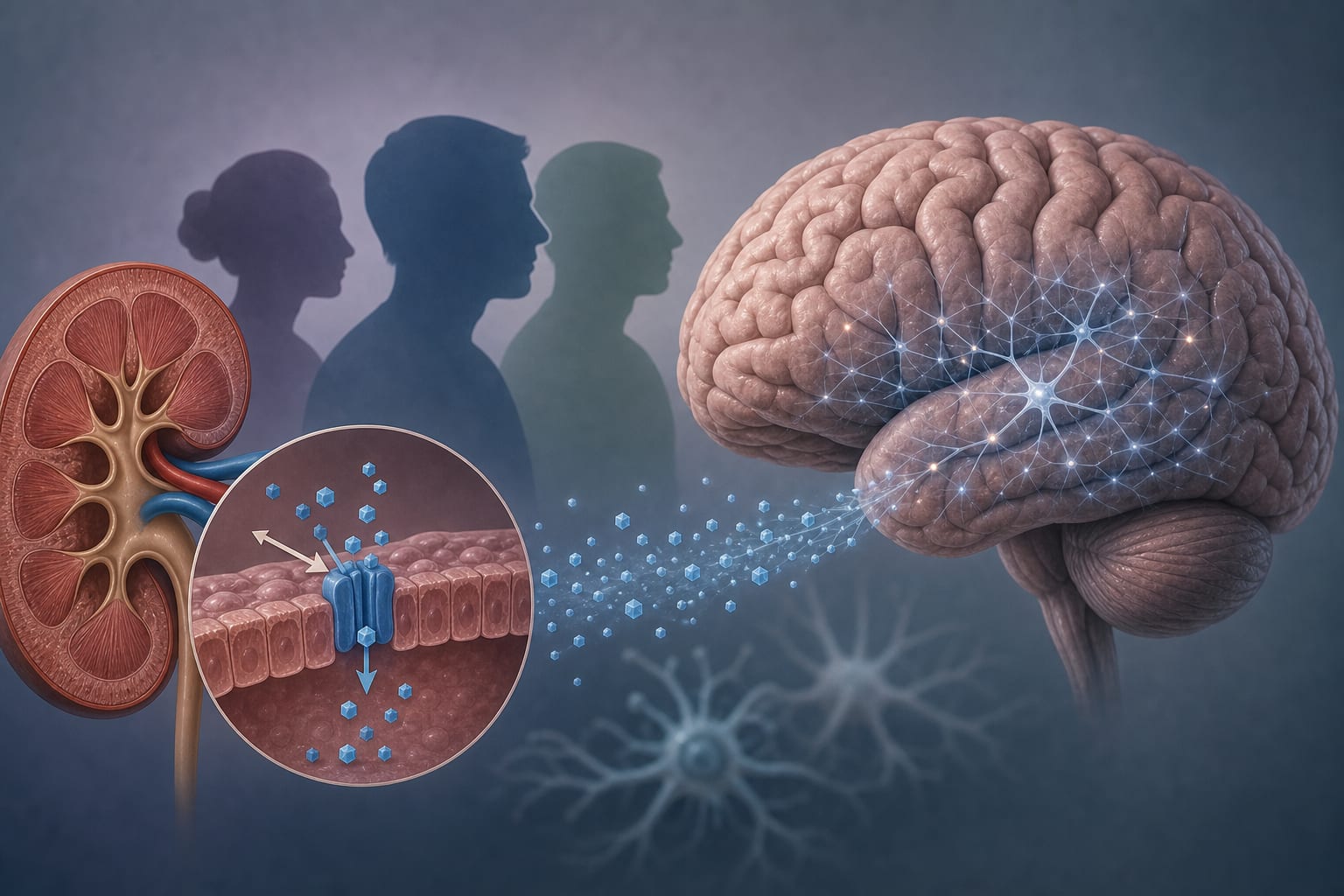
Impact of Sodium-Glucose Cotransporter 2 Inhibitors on Dementia Risk
Overview
This study investigates the association between SGLT2 inhibitors and dementia risk among individuals with psychiatric disorders. It employs a target trial emulation design using data from the US VA health care system to analyze outcomes in patients with major depressive disorder, bipolar disorder, or schizophrenia spectrum disorder.
Background
Individuals with psychiatric disorders are at a heightened risk for developing dementia, highlighting the need for effective preventive strategies. Metabolic dysfunctions, such as insulin resistance, are increasingly recognized as shared features of both psychiatric and neurodegenerative diseases.
Data Highlights
No numerical data or trial data was provided in the source material.
Key Findings
Retrospective studies indicate that SGLT2 inhibitor use is associated with reduced risk of incident dementia compared to other antidiabetic medications.
Dynamic target trial emulation was utilized to analyze treatment effects, enhancing the interpretability of the results.
Prior studies did not adequately account for treatment adherence or comprehensive covariate adjustment, which this study addresses.
The study utilized longitudinal data from the US VA health care system, which is rich in clinical information.
Clinical Implications
The findings suggest that SGLT2 inhibitors could be considered in the management of patients with psychiatric disorders to potentially mitigate dementia risk. Further research is needed to confirm these associations and understand the underlying mechanisms.
Conclusion
The study highlights the potential role of SGLT2 inhibitors in reducing dementia risk among individuals with psychiatric disorders, warranting further investigation in this area.
by David T. Liebers, Tianshe He, Rebecca A. Betensky, Chunlei Zheng, Kaitlin N. Swinnerton, Sean Jacobson, Linden Huhmann, Mary T. Brophy, Nhan V. Do, Paola Gilsanz, Ricardo S. Osorio, Nunzio Pomara, Antonio Convit, Donald C. Goff, Dan V. Iosifescu, Nathanael R. Fillmore, Jaime Ramos-Cejudo
Genetically predicted urinary metabolite levels were associated with schizophrenia, bipolar disorder, attention-deficit/hyperactivity disorder, and anorexia nervosa in a Mendelian randomization analysis.
This Neuroscience Grand Rounds session, led by Yasaman Movahedi and Deanna Aghbashian, explores psychosis in adolescence through both clinical and neurocognitive lenses, emphasizing early recognition and multidisciplinary management.