Bladder Preservation and Systemic Therapy in Localized Muscle-Invasive Bladder Cancer
Overview
Bladder preservation using trimodality therapy (TMT) offers disease control and overall survival rates comparable to radical cystectomy (RC) in muscle-invasive bladder cancer (MIBC). Advances in radiotherapy techniques and hypofractionation regimens have improved treatment precision and patient convenience. Systemic therapies including chemotherapy and immunotherapy are being integrated in neoadjuvant, concurrent, and adjuvant settings to optimize outcomes.
Background
Radical cystectomy has long been the standard curative treatment for MIBC but is associated with significant morbidity. Bladder preservation strategies combining maximal transurethral resection, radiotherapy, and radiosensitisers have emerged as effective alternatives. Recent evidence suggests TMT achieves equivalent survival outcomes to RC, challenging the traditional surgical gold standard. Advances in radiotherapy delivery and systemic therapies continue to refine treatment approaches for localized MIBC.
Data Highlights
Study/Trial
Patient Number
Treatment
5-year Overall Survival
Key Findings
North American Series (2005-2017)
722 (RC=440, TMT=282)
RC vs TMT
~50%
Equivalent metastasis-free survival; improved 5-year OS with TMT
BC2001 and BCON Trials Meta-analysis
Individual patient data
Conventional vs Hypofractionated RT
Not specified
Hypofractionation showed superior locoregional control with comparable toxicity
5.8% pelvic node relapse despite no elective nodal RT
Key Findings
Trimodality therapy (TMT) combining TURBT, radiotherapy, and radiosensitisers achieves overall survival rates (~50% at 5 years) equivalent or superior to radical cystectomy in localized MIBC.
Randomized trials comparing RC and TMT have failed due to recruitment challenges, but retrospective matched cohort analyses support equivalence in outcomes.
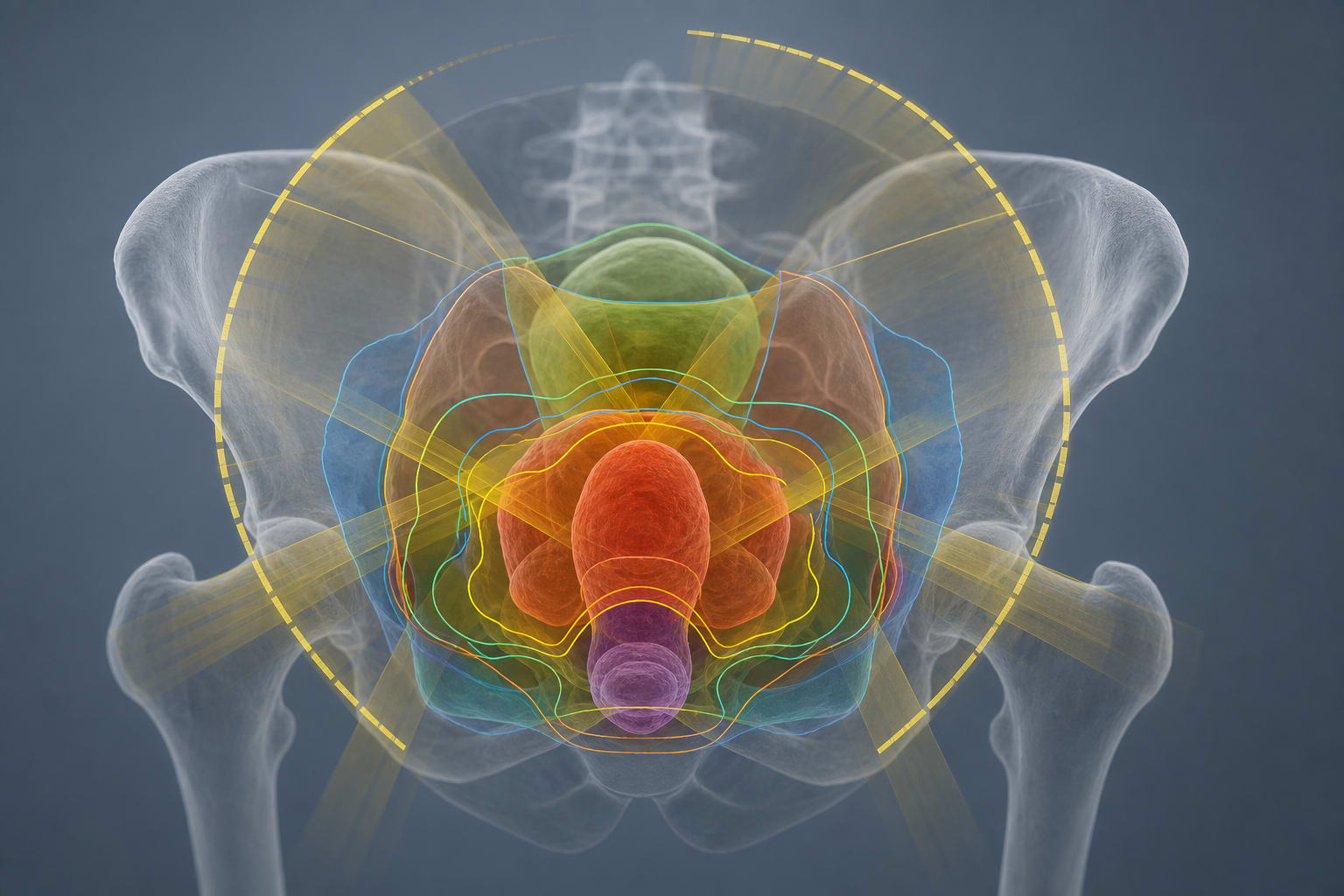
Advances in radiotherapy techniques (3D-CRT, IMRT, VMAT, image-guided RT) enable precise targeting, reducing toxicity and allowing smaller margins.
Hypofractionated radiotherapy regimens (55 Gy in 20 fractions) provide superior locoregional control with similar toxicity compared to conventional fractionation.
Adaptive radiotherapy approaches (e.g., DART in RAIDER trial) show promise in reducing toxicity and improving bladder preservation rates.
Incidental radiation dose to pelvic lymph nodes during bladder-only radiotherapy may contribute to low pelvic relapse rates despite absence of elective nodal irradiation.
Clinical Implications
Clinicians should present both radical cystectomy and bladder preservation with trimodality therapy as viable treatment options for patients with localized MIBC, allowing informed patient choice. Hypofractionated radiotherapy regimens and advanced image-guided techniques can optimize tumor control while minimizing toxicity and treatment burden. Consideration of systemic therapies in neoadjuvant, concurrent, and adjuvant settings may further improve outcomes.
Conclusion
Bladder preservation strategies using trimodality therapy represent an effective alternative to radical cystectomy in localized MIBC, supported by equivalent survival outcomes and advances in radiotherapy delivery. Integration of systemic therapies and personalized radiotherapy approaches holds promise for further improving patient outcomes.
References
James et al. 2012 -- Radiotherapy with or without chemotherapy in muscle-invasive bladder cancer
Shipley et al. 2017 -- Long-term outcomes of bladder preservation
Kumar et al. 2022 -- Comparative outcomes of RC vs TMT in MIBC
BC2001 Trial Investigators 2012 -- Chemoradiation in bladder cancer
RAIDER Trial 2023 -- Adaptive radiotherapy in bladder cancer