SLC10A3 Facilitates Glioblastoma Advancement by Altering the Microenvironment
Overview
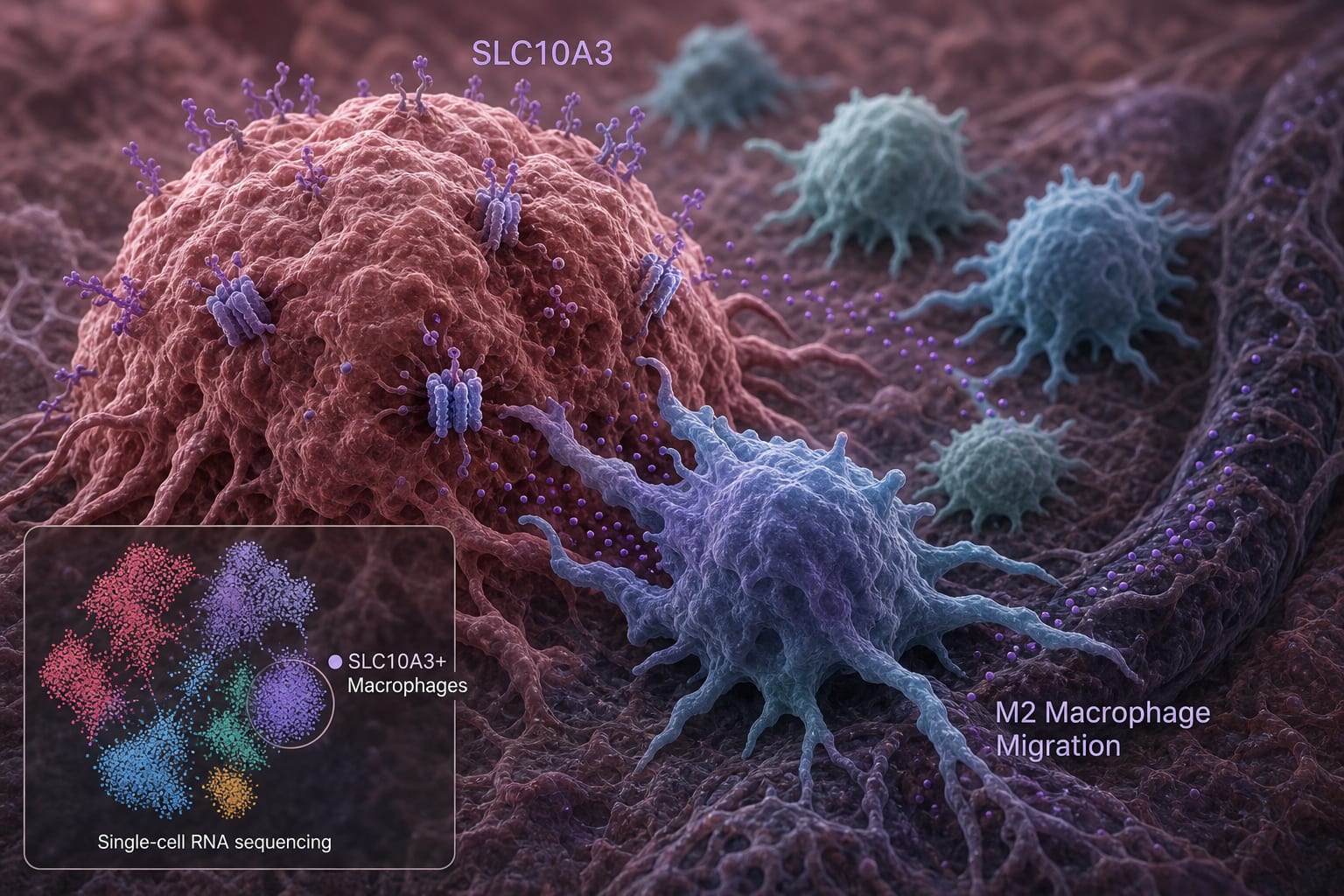
This study identifies SLC10A3 as a key factor in glioblastoma (GBM) progression, linked to poor prognosis and enhanced immunosuppressive microenvironment. SLC10A3 overexpression correlates with increased M2 macrophage migration, suggesting a role in tumor aggressiveness.
Background
Glioblastoma is a highly aggressive brain tumor with a dismal prognosis and limited treatment options. The immunosuppressive microenvironment significantly hampers the effectiveness of current therapies, making the identification of novel therapeutic targets essential. Understanding the role of SLC10A3 in GBM could provide insights into potential treatment strategies.
Data Highlights
No numerical data available in the source.
Key Findings
SLC10A3 is significantly overexpressed in GBM and associated with poor prognosis.
Enrichment analyses link SLC10A3 to key signaling pathways including PI3K-Akt and NF-κB.
Single-cell analysis reveals SLC10A3 enrichment in tumor-associated astrocytes and macrophages.
SLC10A3 knockdown inhibits GBM cell proliferation, migration, and invasion, and reduces M2 macrophage migration.
Clinical Implications
Targeting SLC10A3 may offer a novel therapeutic approach to mitigate GBM progression and enhance the efficacy of immunotherapies, particularly by altering macrophage migration and function.
Conclusion
SLC10A3 plays a critical role in GBM advancement and immune evasion, suggesting it may serve as a promising therapeutic target in the management of this challenging malignancy, pending further validation.