Editorial: Exploring unconventional T cells and CAR-T-cells in cancer immunotherapy
-
By
-
Laura Patrussi
-
Chenran Zhang
-
June 11, 2026
-
0 min
Clinical Report: Investigating the Role of Unconventional T Cells and CAR-T Cell Therapies
Overview
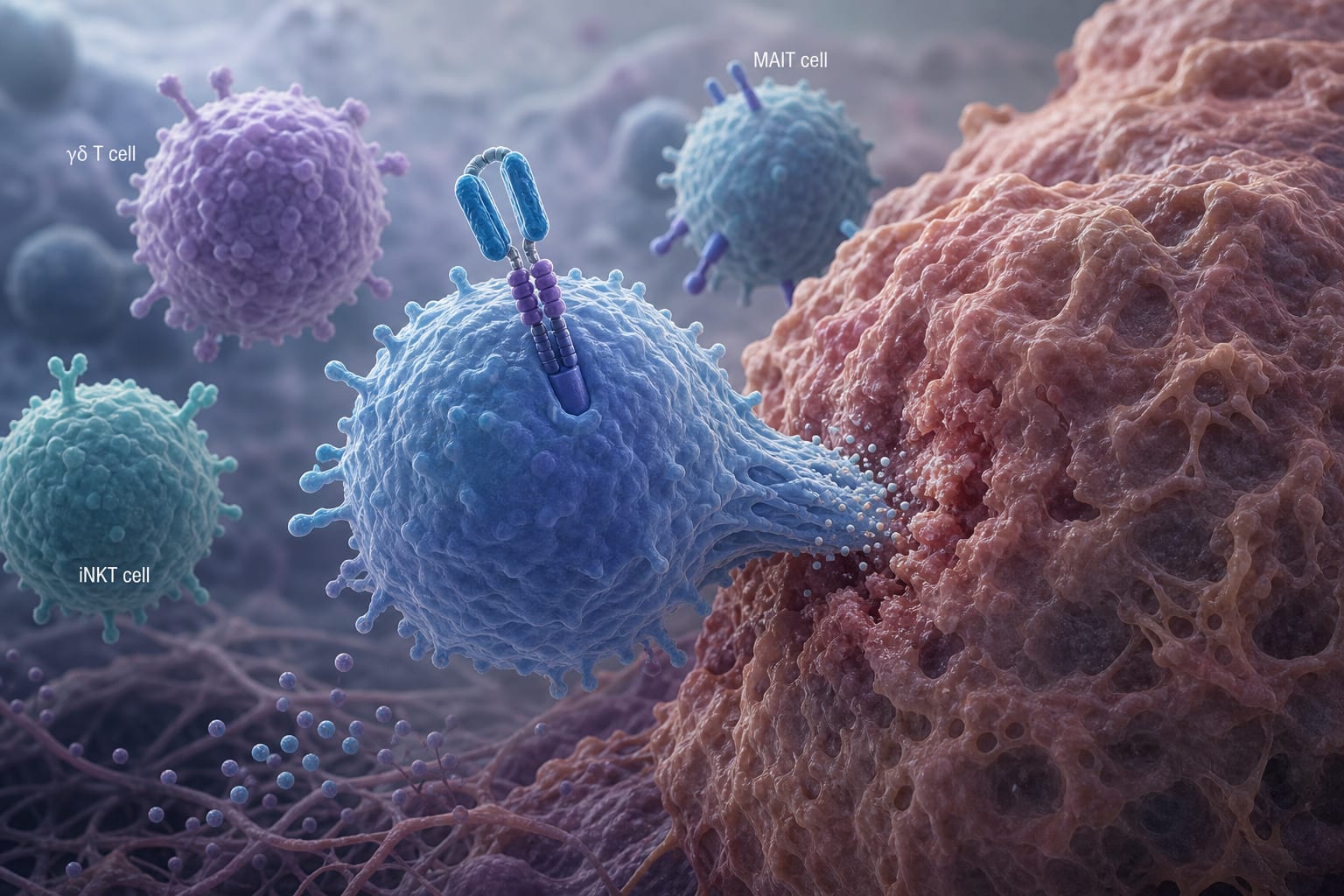
This editorial discusses the integration of unconventional T cells (UCTs) and CAR-T cell therapies in cancer immunotherapy, highlighting their potential to enhance treatment efficacy. It emphasizes the functional diversity of UCTs and their adaptability within the tumor microenvironment, which may lead to improved patient outcomes.
Background
Cancer immunotherapy has evolved to include not only conventional T cells but also unconventional T cells (UCTs) that can recognize a broader range of antigens. UCTs, such as γδ T cells and MAIT cells, exhibit unique properties that position them as promising candidates for next-generation therapies. Understanding their roles and mechanisms is crucial for advancing cancer treatment strategies.
Data Highlights
No specific numerical data was provided in the editorial.
Key Findings
- UCTs, including γδ T cells and MAIT cells, can recognize non-peptide antigens and operate in an MHC-independent manner.
- γδ T cells display dual roles in tumor progression and suppression, influenced by the local cytokine environment.
- MAIT cells undergo significant transcriptional changes due to aging and inflammation, affecting their tumor-related functions.
- iNKT cells can acquire regulatory-like phenotypes through antigenic stimulation, indicating their potential therapeutic versatility.
- Comparative immunology studies in animals provide insights into UCT biology and potential preclinical models for human therapies.
- Integrating UCTs into CAR platforms may address limitations of conventional CAR-T therapies, such as manufacturing complexity and risk of GvHD.
Clinical Implications
The findings suggest that leveraging UCTs in immunotherapy could enhance treatment responses in various cancers. Clinicians should consider the functional plasticity of these cells when designing therapeutic strategies and monitoring patient outcomes.
Conclusion
The integration of unconventional T cells into cancer immunotherapy represents a promising frontier that could significantly improve treatment efficacy and patient prognosis. Continued research is essential to fully harness their potential in clinical settings.
Related Resources & Content
- Frontiers in Immunology, 2026 -- The trinity of T cell engagement: navigating the molecular and clinical landscape of CAR-T, TILs, and TCEs in the war against cancer
- the medicine maker, 2026 -- Engineering CAR T Cells to Resist Tumor Immune Suppression
- Nature Cancer, 2026 -- Tumor irradiation promotes antigen dressing of dendritic cells to enhance CAR T cell persistence and efficacy in lung metastases
- Journal of Neuro-Oncology, 2021 -- Advancements in Chimeric Antigen Receptor T-Cell Therapy for Glioblastoma Multiforme: Historical Context, Current Insights, and Future Directions
- ASTCT Consensus Grading for Cytokine Release Syndrome and Neurologic Toxicity Associated with Immune Effector Cells, Biology of Blood and Marrow Transplantation, 2018
- Cilta-cel in lenalidomide-refractory multiple myeloma (CARTITUDE-4): an updated analysis including overall survival from an open-label, multicentre, randomised, phase 3 trial, ScienceDirect, 2025
- Dual modulation of cytotoxic and checkpoint receptors tunes the efficacy of adoptive Delta One T cell therapy against colorectal cancer, Nature Cancer, 2025
- ASTCT Consensus Grading for Cytokine Release Syndrome and Neurologic Toxicity Associated with Immune Effector Cells - Biology of Blood and Marrow Transplantation
- Cilta-cel in lenalidomide-refractory multiple myeloma (CARTITUDE-4): an updated analysis including overall survival from an open-label, multicentre, randomised, phase 3 trial - ScienceDirect
- Dual modulation of cytotoxic and checkpoint receptors tunes the efficacy of adoptive Delta One T cell therapy against colorectal cancer | Nature Cancer
This content is an AI-generated, fully rewritten summary based on a published scholarly article. It does not reproduce the original text and is not a substitute for the original publication. Readers are encouraged to consult the source for full context, data, and methodology.