The role of protein lactylation in skin diseases: from molecular mechanisms to potential therapeutics - Report - MDSpire

The role of protein lactylation in skin diseases: from molecular mechanisms to potential therapeutics

  • By

  • Yue Zhang

  • Zhinan Shi

  • Xiaohui Mo

  • Qiang Ju

  • Zhanyan Pan

  • July 1, 2026

  • 0 min

Share

Clinical Report: The significance of protein lactylation in dermatological conditions

Overview

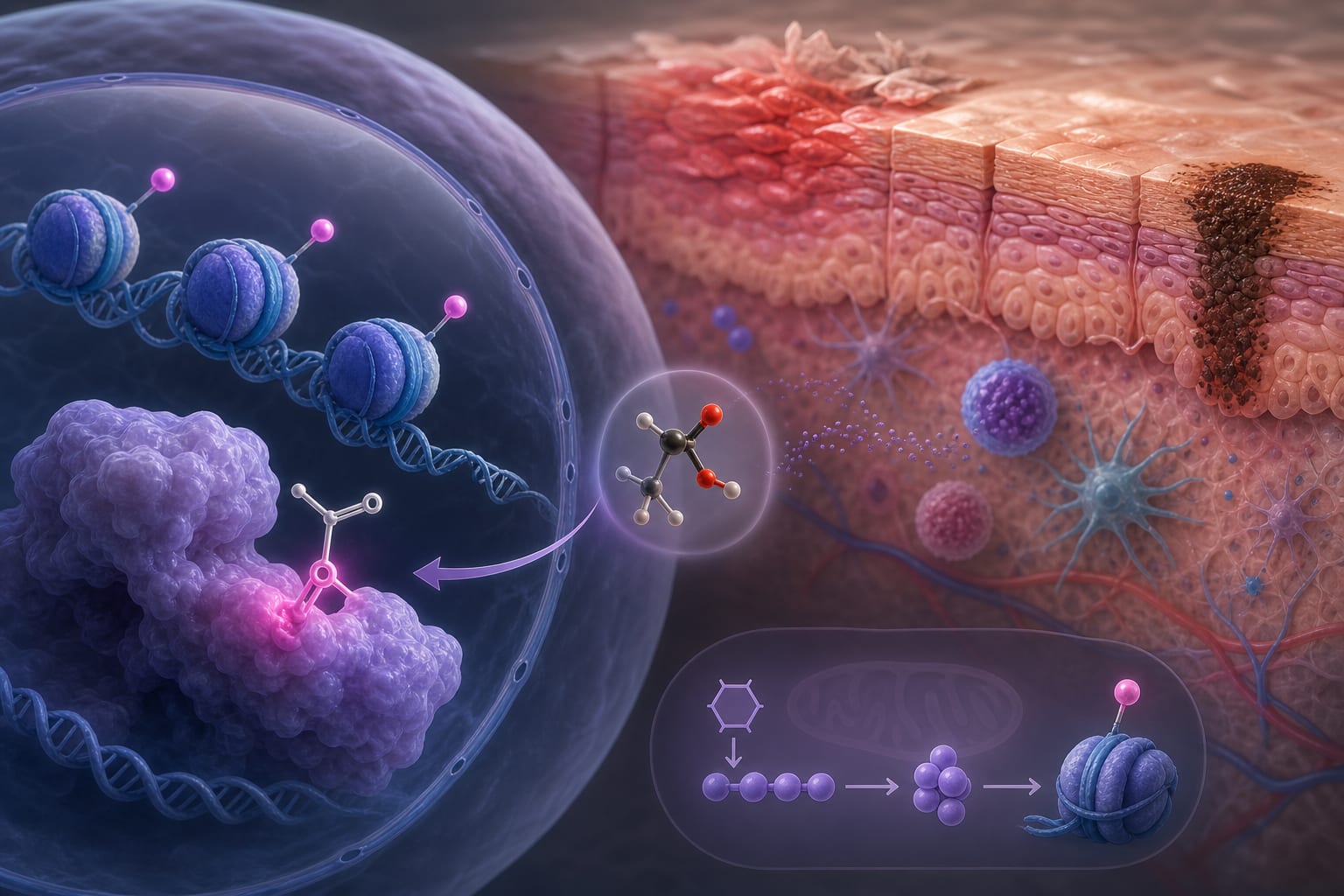
Lactylation, a novel post-translational modification, links cellular metabolism to epigenetic regulation and plays a role in various skin diseases. This report highlights lactylation's potential relevance in dermatological conditions, particularly in immune-inflammatory diseases and skin malignancies.

Background

Lactate, traditionally viewed as a metabolic waste product, is now recognized as a crucial signaling molecule influencing gene expression and immune responses. The discovery of lactylation has opened new avenues for understanding its role in skin diseases, including psoriasis, atopic dermatitis, and melanoma.

Data Highlights

No specific numerical data or trial results were provided in the source material.

Key Findings

  • Lactylation involves the transfer of a lactyl group to lysine residues on proteins, influencing gene transcription and protein function.
  • This modification is linked to metabolic reprogramming and immune-inflammatory responses in skin diseases.
  • Lactylation has been implicated in the pathogenesis of psoriasis, atopic dermatitis, pathologic scars, and melanoma.
  • Current research indicates that lactylation may serve as a therapeutic target in cancer, metabolic, and immunological fields.
  • Direct evidence for lactylation as a pathogenic driver in skin diseases remains an emerging area of investigation.

Clinical Implications

Understanding lactylation's role in skin diseases may provide insights into disease mechanisms.

Conclusion

Lactylation represents an area of research with potential relevance for dermatological conditions. Further studies are needed to elucidate its role in disease mechanisms.

Related Resources & Content

  1. Frontiers in Immunology, 2026 -- The role of protein lactylation in skin diseases: From molecular mechanisms to potential therapeutics
  2. Frontiers in Cardiovascular Medicine — Lactylation: a metabolic–epigenetic driver in atherosclerosis pathogenesis and therapeutic targeting
  3. Frontiers in Immunology — Non-histone lactylation in cancer: current advances and clinical implications
  4. Frontiers in Immunology — The enzymatic mechanisms of lactylation and its role in gynecological diseases: a comprehensive review
  5. Frontiers in Immunology — The lactylation axis: bridging metabolic reprogramming and immunosuppression in the tumor microenvironment
  6. Focused update: Guidelines of care for the management of atopic dermatitis in adults - ScienceDirect
  7. S3 Guideline for the treatment of psoriasis vulgaris, adapted from EuroGuiDerm – part 1: Treatment recommendations and monitoring - PMC
  8. Cutaneous melanoma: ESMO Clinical Practice Guideline for diagnosis, treatment and follow-up - ScienceDirect
  9. Vaccine Plus Pembrolizumab Reduces Risk of Recurrence in High-Risk, Resected Melanoma - The ASCO Post
  10. Stage II Melanoma Adjuvant Pembrolizumab and Risk of New Skin Cancers - The ASCO Post
  11. A phase II randomized study of neoadjuvant pembrolizumab (P) alone or in combination with vidutolimod (V) in high-risk resectable melanoma: ECOG-ACRIN EA6194. | Journal of Clinical Oncology
  12. Biologics for the Treatment of Moderate-to-Severe Plaque Psoriasis: A Systematic Review and Network Meta-analysis | Dermatology and Therapy | Springer Nature Link
  13. Frontiers | The role of protein lactylation in skin diseases: From molecular mechanisms to potential therapeutics
  14. Frontiers | Lactylation in cancer: mechanistic insights, tumor microenvironment, and therapeutic horizons
  15. Histone Lactylation Participates in Psoriasis Progression by Regulating the Adiponectin Expression - PMC

Original Source(s)

Related Content