Clinical Report: Appendiceal Abscess Presenting as Abdominal Wall Mass
Overview
This case study discusses a 13-year-old boy who presented with an abdominal wall mass without abdominal pain, ultimately diagnosed with an appendiceal abscess.
Background
Acute appendicitis is the most common surgical emergency in children, yet atypical presentations can lead to significant diagnostic errors. The occurrence of an appendiceal abscess manifesting solely as an abdominal wall mass, particularly in the absence of abdominal pain, poses challenges for clinicians.
Data Highlights
No numerical data or trial data presented in the article.
Key Findings
A previously healthy 13-year-old boy presented with a right lower abdominal wall mass and denied abdominal pain.
Initial misdiagnosis as a soft tissue infection occurred despite marked systemic inflammation.
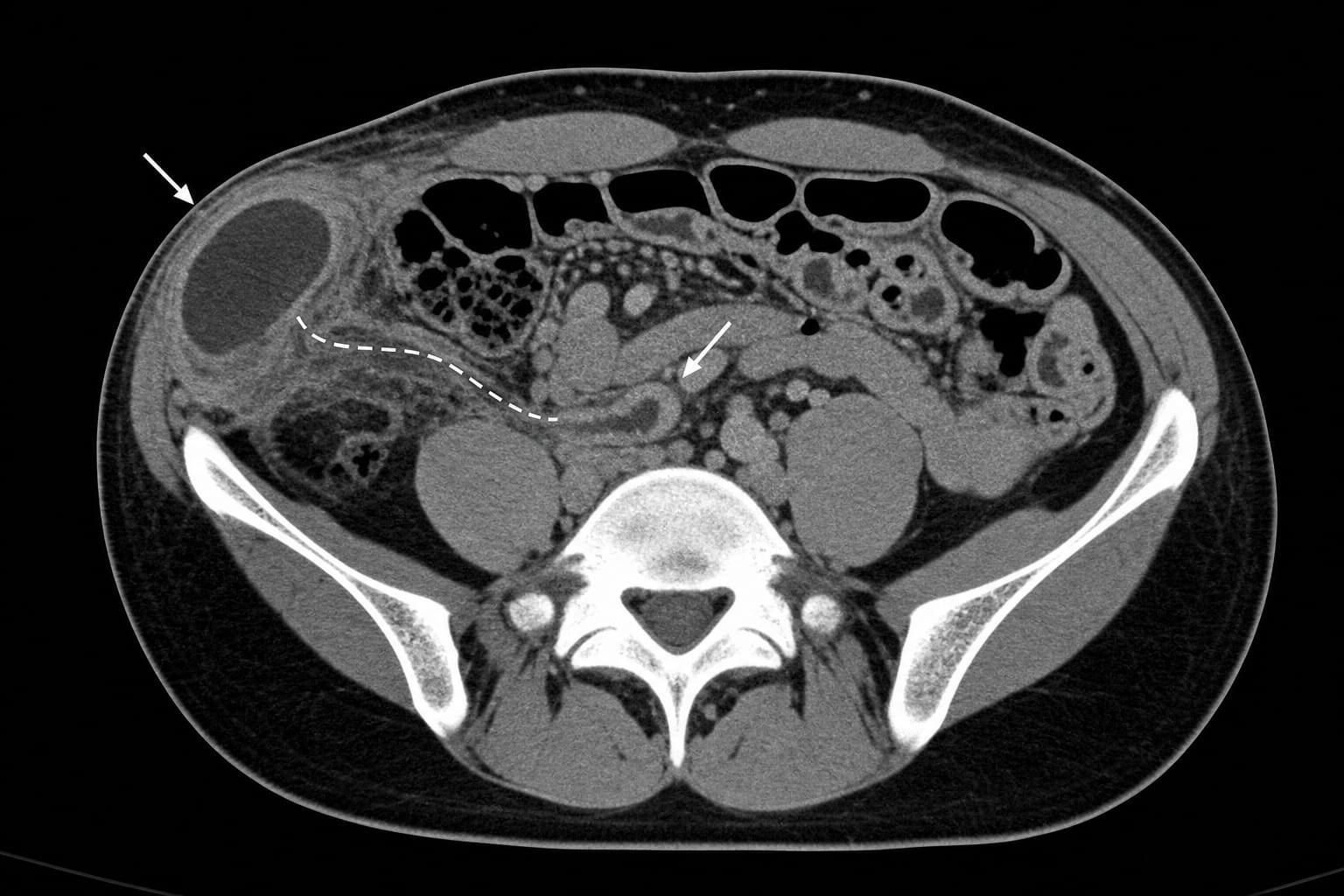
Non-contrast CT revealed an abdominal wall abscess connected to a large periappendiceal abscess.
Staged management with intravenous antibiotics followed by laparoscopic appendectomy was effective.
Comprehensive ultrasound is essential to avoid overlooking intra-abdominal pathology in similar cases.
Clinical Implications
Clinicians should maintain a broad differential diagnosis when evaluating abdominal wall masses in children, even in the absence of abdominal pain.
Conclusion
A structured diagnostic approach can enhance clinical vigilance in similar scenarios.