Prognostic factors for cranial deformities in infancy: a retrospective cohort study - Report - MDSpire

Prognostic factors for cranial deformities in infancy: a retrospective cohort study

  • By

  • Rui Li

  • Qiong Jia

  • Jing Wang

  • Xinyu Huang

  • Jing Yu

  • Jinyang Bai

  • Hua Zhang

  • June 25, 2026

  • 0 min

Share

Clinical Report: Identifying Prognostic Indicators for Infant Cranial Deformities

Overview

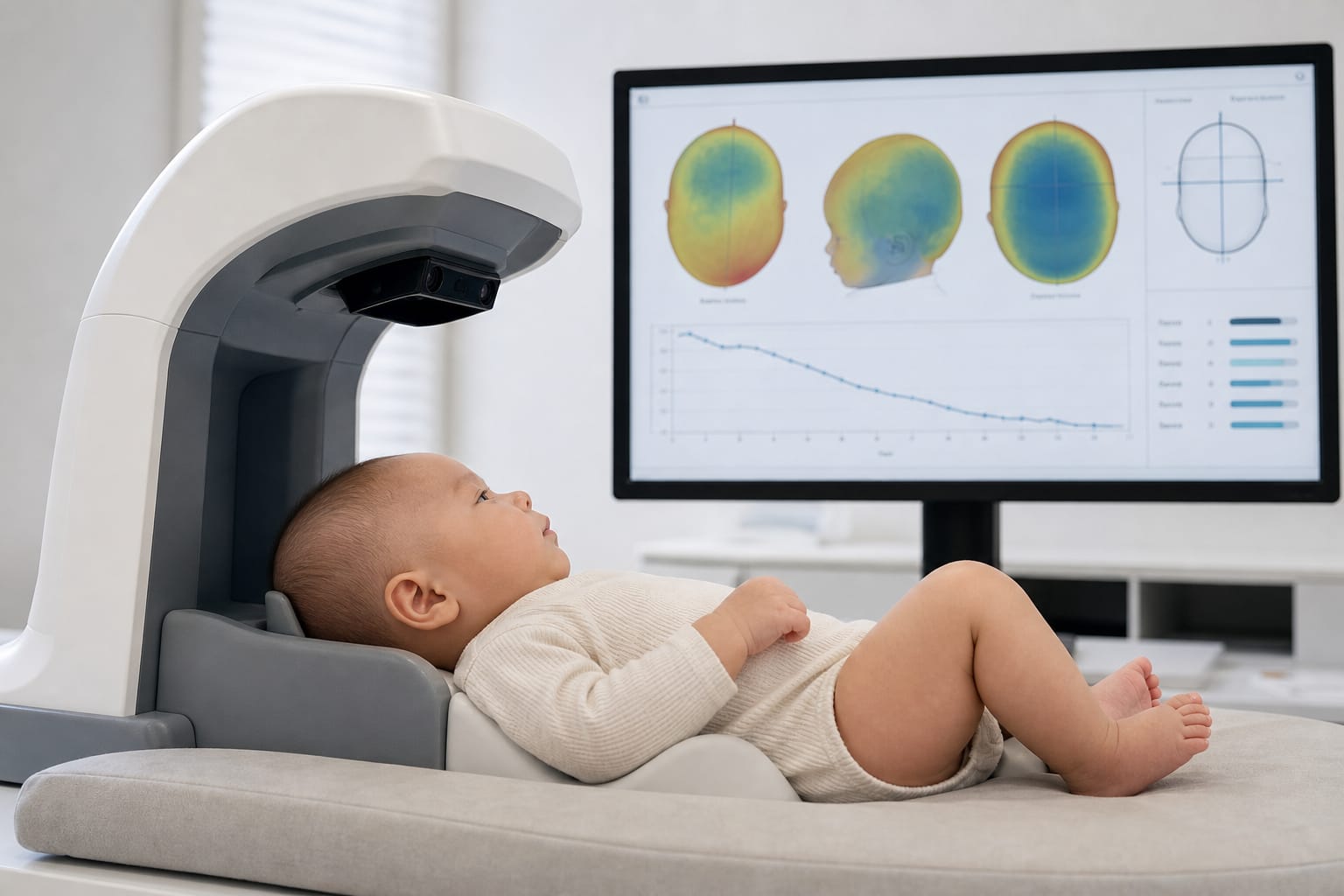
This study identifies key prognostic factors influencing the natural recovery time of positional cranial deformities in infants. Younger age and milder deformity severity are associated with faster recovery rates.

Background

Positional cranial deformities are common in infants, with an incidence reported between 20% to 46%, particularly higher in preterm infants. These deformities can affect appearance. Understanding the factors influencing recovery is crucial for early intervention and management.

Data Highlights

FactorHazard RatioP-value
Age0.44< 0.001
Deformity Severity-< 0.001

Key Findings

  • Younger age at diagnosis is an independent predictor of faster recovery from cranial deformities.
  • Infants with mild deformities recover significantly faster than those with severe deformities.
  • Sex and cranial shape do not significantly influence recovery time.
  • The overall incidence of positional cranial deformities in the study cohort was 56.9%.
  • Preterm infants exhibited a higher rate of cranial deformities compared to full-term infants.

Clinical Implications

Clinicians should prioritize follow-up and management for infants diagnosed at older ages and those with severe deformities. Early identification of high-risk infants is essential for timely intervention.

Conclusion

Younger age and milder deformity severity are critical factors in the natural recovery of positional cranial deformities.

Related Resources & Content

  1. Frontiers in Pediatrics, 2026 -- Cross-Sectional study on cranial shape measurement values of 2,165 preterm infants in Beijing
  2. European Radiology, 2025 -- Impact of Cerebellar Hemorrhage in Extremely Preterm Infants: Correlation of Dentate Nucleus Involvement and Cerebellar Hypoplasia with Negative Cognitive Outcomes
  3. Pediatric Cardiology, 2020 -- Assessment of Early Development and the Influence of Socioeconomic Factors on Neurodevelopment in Infants Diagnosed with Tetralogy of Fallot
  4. Guidelines: Congress of Neurological Surgeons Systematic Review and Evidence-Based Guideline for the Diagnosis of Patients With Positional Plagiocephaly: The Role of Imaging - PubMed
  5. Long-term Results of Posterior Fossa Decompression in Children with Chiari Malformation Type 1: A Cohort Study Based on Population Data
  6. Definition, diagnosis, and natural history of positional cranial deformities
  7. https://www.cns.org/Assets/5dd570d2-57e3-4ab0-aa1d-c51b249b2d33/636985421918630000/plagiocephalygl-ch-3-repositioning-pdf
  8. Helmet therapy in infants with positional skull deformation: randomised controlled trial

Original Source(s)

Related Content