Link Between Bisphenol Exposure and Risk of Polycystic Ovary Syndrome: A Comprehensive Systematic Review and Meta-Analysis
-
By
-
Zongying Gui
-
Huizhen Lin
-
Chuhan Wang
-
Yingsha Yao
-
June 11, 2026
Clinical Report: Link Between Bisphenol Exposure and Risk of PCOS
Overview
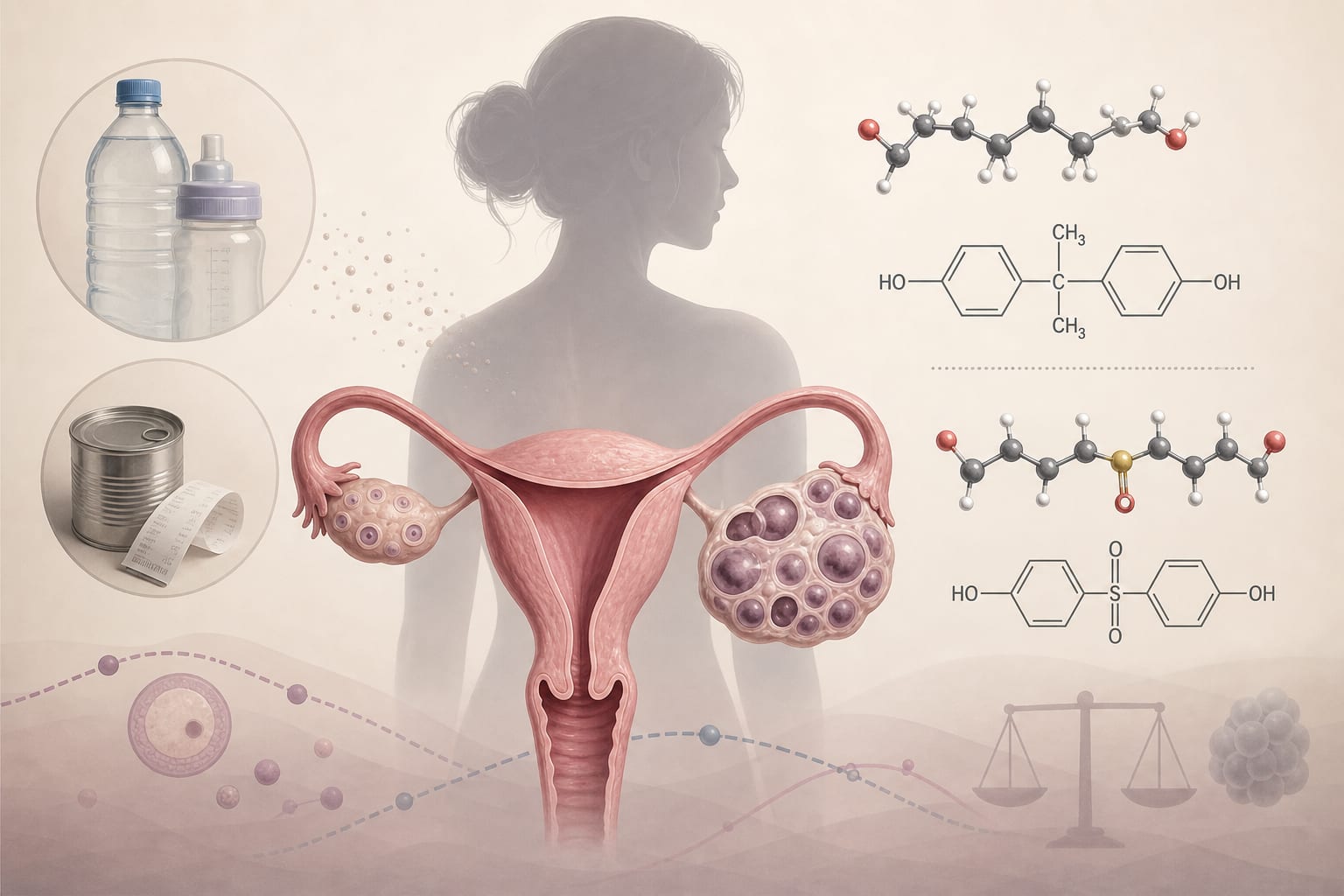
This systematic review and meta-analysis found significant associations between bisphenol exposure and increased risk of polycystic ovary syndrome (PCOS). Specifically, elevated serum and urinary levels of bisphenol A (BPA) and bisphenol S (BPS) were linked to PCOS, highlighting the need for further research and regulatory measures.
Background
Polycystic ovary syndrome (PCOS) is a common endocrine disorder affecting 11-13% of women of reproductive age, associated with various metabolic and reproductive complications. Environmental endocrine-disrupting chemicals, particularly bisphenols, are suspected contributors to PCOS pathogenesis. Understanding the relationship between bisphenol exposure and PCOS is crucial for developing preventive strategies and clinical management.
Data Highlights
| Exposure | Standardized Mean Difference (SMD) | 95% Confidence Interval (CI) |
|---|---|---|
| Serum BPA | 1.32 | 0.83–1.82 |
| Urinary BPA | 2.69 | 1.41–3.97 |
| Serum BPS | 0.26 | 0.07–0.46 |
Key Findings
- Significant positive association between serum BPA and PCOS risk (SMD = 1.32).
- Urinary BPA levels showed a stronger association with PCOS (SMD = 2.69).
- Serum BPS was also positively associated with PCOS risk (SMD = 0.26).
- High heterogeneity was observed for BPA studies (I² = 95–99%), while BPS studies showed no heterogeneity (I² = 0%).
- Sensitivity analyses confirmed the robustness of the findings, excluding lower-quality studies.
- Subgroup analyses indicated slightly attenuated associations for BPA when using Rotterdam criteria.
Clinical Implications
Clinicians should consider the potential role of bisphenol exposure in the assessment and management of PCOS. Incorporating biomonitoring for bisphenols may enhance patient care and inform preventive strategies. Regulatory measures to reduce bisphenol exposure could be beneficial for public health.
Conclusion
The findings underscore a significant association between bisphenol exposure and PCOS risk, warranting further investigation and potential regulatory action to mitigate exposure. Addressing this environmental risk factor may provide new avenues for PCOS prevention and management.
Related Resources & Content
- Frontiers in Medicine, 2026 -- Investigation of trends, hot spots and effective therapies for pregnancy outcomes in polycystic ovary syndrome: a bibliometric analysis
- European Journal of Preventive Cardiology, 2026 -- Nonobese young females with polycystic ovary syndrome are at high risk for long-term cardiovascular disease
- Frontiers in Reproductive Health, 2026 -- Integrating evidence-based lifestyle and adjunct therapies for long-term management of polycystic ovary syndrome: mechanistic insights and clinical implications
- The Journal of Clinical Endocrinology & Metabolism -- Cytokine Profiling Across Diverse Populations Indicates Immune Dysregulation Rather Than Chronic Inflammation in Polycystic Ovary Syndrome
- Clinical Guidelines, 2023 -- Evidence-Based Guidelines for the Assessment and Management of PCOS
- Frontiers, 2026 -- Association Between Bisphenol Exposure and Polycystic Ovary Syndrome Risk: An Integrated Systematic Review and Meta-Analysis
- Commission Regulation (EU) 2024/3190 on Bisphenol Use
- https://www.tjod.org/wp-content/uploads/2025/01/Evidence-Based-Guidelines-PCOS-2023.pdf
- Frontiers | Association Between Bisphenol Exposure and Polycystic Ovary Syndrome Risk: An Integrated Systematic Review and Meta-Analysis
Based on findings from:
Association between bisphenol exposure and polycystic ovary syndrome risk: an integrated systematic review and meta-analysis
Zongying Gui, Huizhen Lin, Chuhan Wang, Yingsha Yao. Frontiers In Endocrinology, 2026.
https://www.frontiersin.org/journals/endocrinology/articles/10.3389/fendo.2026.1859611/full
This content is an AI-generated, fully rewritten summary based on a published scholarly article. It does not reproduce the original text and is not a substitute for the original publication. Readers are encouraged to consult the source for full context, data, and methodology.