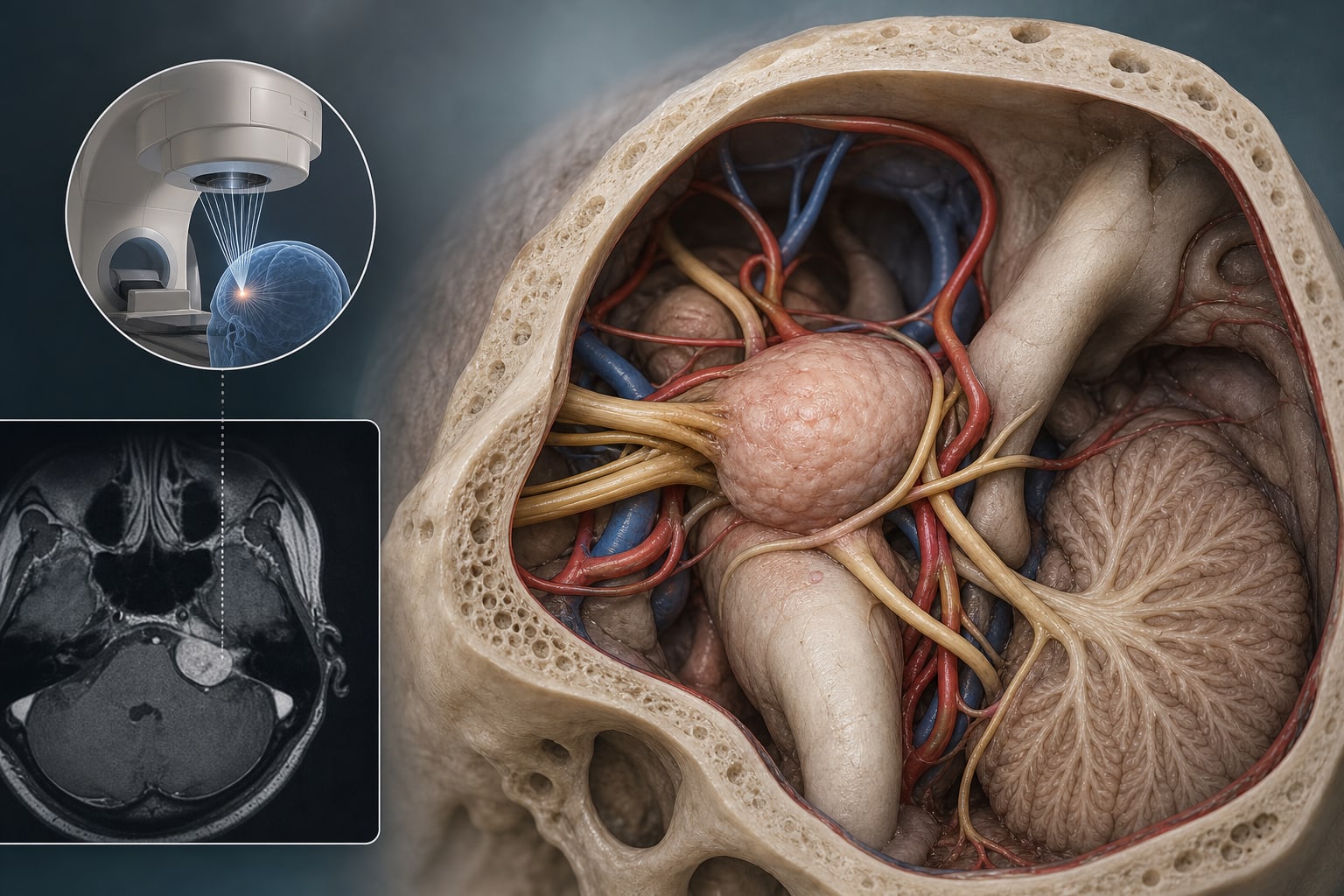
Customized Surgical Strategies for Spinal Chordomas: Multidisciplinary Insights
Overview
This retrospective study highlights personalized surgical approaches for spinal chordomas, emphasizing the balance between maximal tumor resection and preservation of neurological function. Multidisciplinary planning tailored to tumor extent and patient status optimizes outcomes and informs adjunctive therapy decisions.
Background
Chordomas are rare, slow-growing tumors arising from notochord remnants, predominantly affecting the axial skeleton with a peak incidence in middle-aged males. Surgical resection remains the cornerstone of treatment due to resistance to radiotherapy and chemotherapy. Achieving wide or marginal en bloc resection is challenging given spinal anatomy, necessitating individualized surgical strategies. Early adjunctive radiotherapy is considered important in cases of residual disease to improve disease control.
Data Highlights
The study included adult patients with primary spinal chordomas, excluding those with intracranial or secondary tumors. Data collected encompassed demographics, ASA scores, surgical duration, spinal levels treated, hospital and ICU stay, readmissions, reoperations, mortality, and functional scores (Karnofsky Performance Index and Frankel grades). Surgical approaches ranged from laminectomy to complex vertebrectomy with reconstruction, tailored by tumor invasion and patient condition. Postoperative monitoring included MRI surveillance for recurrence and functional assessments.
Key Findings
Chordomas primarily involved the sacrum (50–60%), spheno-occipital region (25–30%), cervical spine (10%), and thoracolumbar vertebrae (5%).
En bloc resection with wide margins is preferred but often limited by spinal anatomy and patient factors.
Reconstruction techniques varied from vertebral body replacement with pedicle screw fixation to custom implants and long-segment fixation depending on resection extent.
Patients undergoing decompression only were typically in palliative stages with poor prognosis, focusing on maintaining neurological function.
Adjuvant radiotherapy and chemotherapy were used mainly after incomplete resection or in palliative care.
Clinical Implications
Clinicians should adopt a personalized, multidisciplinary approach when managing spinal chordomas, considering tumor location, extent, and patient functional status. Surgical planning must weigh the benefits of wide resection against potential morbidity, with reconstruction tailored to maintain spinal stability. Early adjunctive radiotherapy should be considered in cases of residual disease to improve local control.
Conclusion
Customized surgical strategies informed by multidisciplinary evaluation enable optimized management of spinal chordomas, balancing oncologic control with preservation of neurological function and quality of life. Further studies are needed to establish standardized protocols.
References
Various Authors/Institutional Database/2023 -- Customized Surgical Strategies for Spinal Chordomas