Case Report: Intranasal esketamine and accelerated intermittent theta-burst stimulation for severe treatment-resistant depression with suicidal ideation - Report - MDSpire
Advertisement
Case Report: Intranasal esketamine and accelerated intermittent theta-burst stimulation for severe treatment-resistant depression with suicidal ideation
Clinical Report: Combined Use of Intranasal Esketamine and iTBS for TRD
Overview
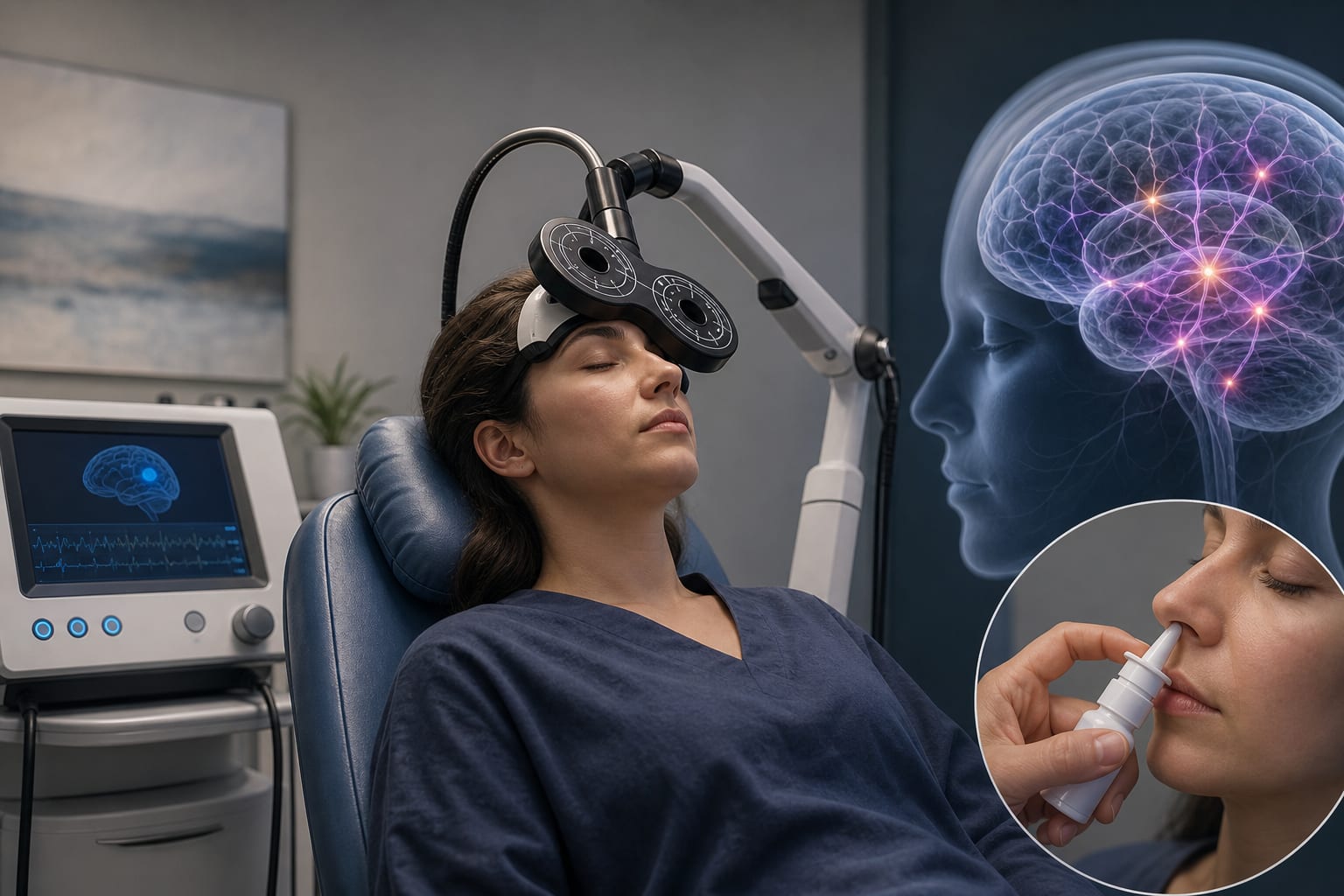
This case study reports the combined use of intranasal esketamine and accelerated intermittent theta-burst stimulation (iTBS) in a patient with severe treatment-resistant depression and suicidal ideation. The patient showed improvement in depressive symptoms and suicidal thoughts during and after the treatment course, as measured by standardized assessments.
Background
Treatment-resistant major depressive disorder (TRD) with suicidal ideation is a critical psychiatric emergency requiring immediate intervention. Current treatment options, including intranasal esketamine and iTBS, are promising but require further research to understand their combined efficacy and safety, particularly for high-risk patients.
Data Highlights
Assessment
Baseline
Post-Treatment
2-Week Follow-Up
PHQ-9
15
11
8
HAMD
27
20
17
BDI
41
28
23
Stress Index (SEA)
7
3
N/A
Key Findings
The patient was a 29-year-old woman with recurrent major depressive disorder and high-risk suicidal ideation.
She received 84 mg of intranasal esketamine and 10 sessions of accelerated iTBS over 4 days.
Depressive symptoms improved during treatment, with PHQ-9 scores decreasing from 15 to 11.
At a 2-week follow-up, PHQ-9 scores further improved to 8.
The device-derived stress index decreased from 7 to 3.
Clinical Implications
Further controlled studies are needed to evaluate the efficacy and safety of the combination of intranasal esketamine and accelerated iTBS for patients with severe treatment-resistant depression and suicidal ideation.
Conclusion
This case study highlights the need for further research to establish the efficacy and safety of combining intranasal esketamine and accelerated iTBS for treating severe depression with suicidal ideation.