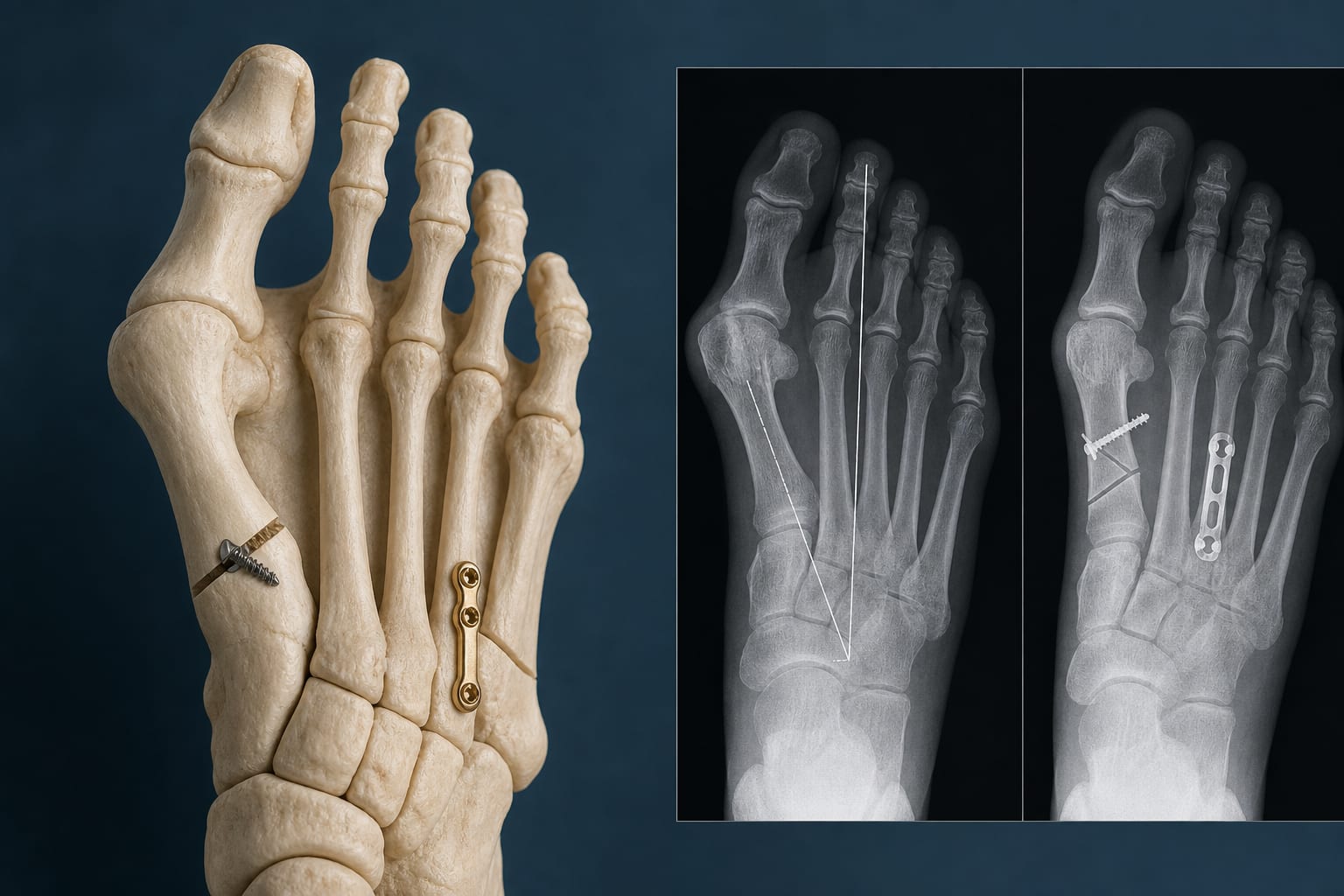
Correction: Modified rotational wedge distal metatarsal osteotomy versus chevron osteotomy for hallux valgus: long-term radiographic and clinical outcomes - Report - MDSpire

Correction: Long-term Clinical and Radiographic Outcomes of Modified Rotational Wedge Distal Metatarsal Osteotomy Compared to Chevron Osteotomy for Hallux Valgus

  • By

  • Ahmet Aybar

  • Kemal Gokkus

  • Erdem Özden

  • Mehmet Hamdi Çetin

  • Mehmet Ümit Çetin

  • July 17, 2026

Share

Clinical Report: Correction of Long-term Outcomes of Osteotomy for Hallux Valgus

Background

Hallux valgus is a common condition that can lead to functional disability and pain. Various surgical techniques, including distal and proximal osteotomies, are employed based on the severity of the deformity. Accurate reporting of clinical studies is essential for maintaining the integrity of surgical research.

Data Highlights

No numerical or trial data is presented in the correction notice.

Key Findings

  • The ethics approval was incorrectly stated in the original manuscript.
  • The corrected approval details include the Clinical Research Ethics Committee of Gaziosmanpasa Training and Research Hospital.
  • The study adheres to the Declaration of Helsinki.
  • Hallux valgus surgery can achieve good to very good results in over 90% of cases with modern, open procedures.
  • Minimally invasive techniques are recognized as viable options for hallux valgus correction.

Clinical Implications

Healthcare professionals should ensure that all ethical approvals are accurately reported in clinical studies.

Conclusion

The correction of the ethics approval declaration emphasizes the importance of accurate reporting in clinical research.

Related Resources & Content

  1. Archives of Orthopaedic and Trauma Surgery, 2026 -- Correction: Long-term Clinical and Radiographic Outcomes of Modified Rotational Wedge Distal Metatarsal Osteotomy Compared to Chevron Osteotomy for Hallux Valgus
  2. The Necessity of Distal Metatarsal Screws in Third-Generation MICA: Insights from a Case-Control Analysis
  3. Minimally Invasive Surgery Compared to Open Techniques for Correcting Lesser Toe Deformities: A Prospective Randomized Trial
  4. Correction of Sesamoid Positioning During the Learning Phase of Scarf-Akin Osteotomy Without Lateral Soft-Tissue Release: A Prospective Observational Study from a Single Centre
  5. Evaluating the Correction Potential and Outcomes of Different Surgical Techniques for Hallux Valgus: A Comprehensive Systematic Review and Meta-Analysis
  6. The Necessity of Distal Metatarsal Screws in Third-Generation MICA: Insights from a Case-Control Analysis
  7. Minimally Invasive Surgery Compared to Open Techniques for Correcting Lesser Toe Deformities: A Prospective Randomized Trial
  8. Correction of Sesamoid Positioning During the Learning Phase of Scarf-Akin Osteotomy Without Lateral Soft-Tissue Release: A Prospective Observational Study from a Single Centre
  9. Evaluating the Correction Potential and Outcomes of Different Surgical Techniques for Hallux Valgus: A Comprehensive Systematic Review and Meta-Analysis
  10. 2025 S2e Hallux Valgus guideline from the German Society of Orthopaedics and Trauma
  11. AOFAS Position Statement on Minimally Invasive Surgery for Hallux Valgus
  12. Comparison of distal minimally invasive metatarsal osteotomy and open chevron osteotomy in the treatment of hallux valgus (HV): A network meta-analysis
  13. Minimally invasive chevron osteotomy provides comparable outcomes to open surgery for hallux valgus: A systematic review and meta-analysis
  14. Chevron osteotomy and scarf osteotomy for hallux valgus angle and intermetatarsal angle correction: a systematic review and meta-analysis of randomized controlled trials - PMC
  15. Modified rotational wedge distal metatarsal osteotomy versus chevron osteotomy for hallux valgus: long-term radiographic and clinical outcomes | Archives of Orthopaedic and Trauma Surgery | Springer Nature Link

Original Source(s)

Related Content