Mesenchymal R-spondin 3 promotes an immunogenic tumor microenvironment with adaptive immune resistance in human gastric adenocarcinoma - Report - MDSpire
Clinical Report: R-spondin 3 Enhances Immunogenicity in Gastric Adenocarcinoma
Overview
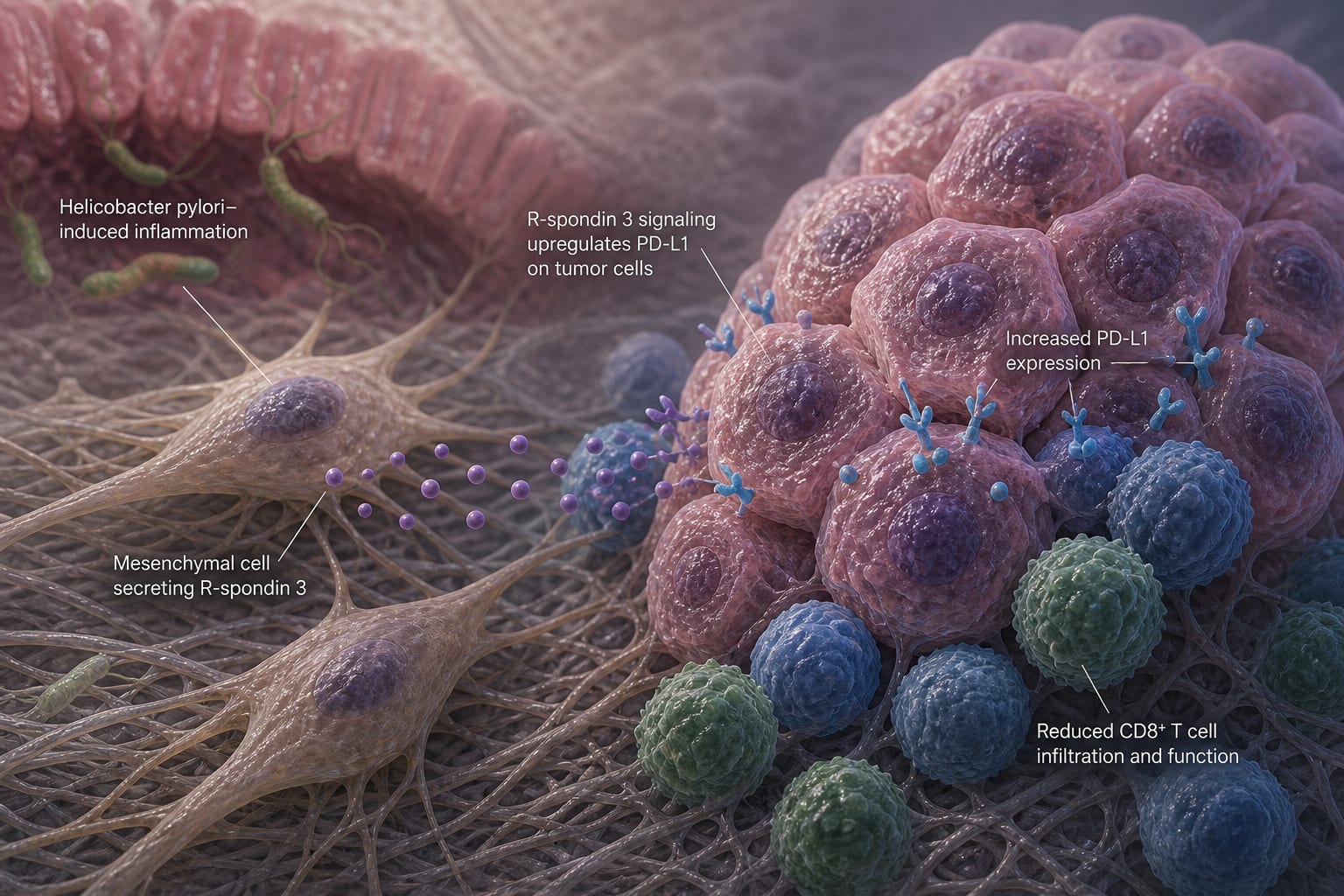
This study investigates the role of R-spondin 3 (RSPO3) in enhancing immunogenicity and adaptive immune resistance in human gastric adenocarcinoma. The findings suggest that RSPO3 levels correlate with leukocyte infiltration and immune checkpoint signaling.
Background
Gastric cancer is a leading cause of cancer-related mortality worldwide, with many patients diagnosed at advanced stages. The heterogeneous immune landscape of gastric cancer complicates treatment, as established biomarkers do not fully predict therapeutic responses. Understanding the role of RSPO3 in gastric carcinogenesis is important for clarifying mechanisms involved in gastric cancer.
Data Highlights
No numerical data or trial data provided in the source material.
Key Findings
RSPO3 enhances Wnt signaling via LGR4 and LGR5 receptors.
RSPO3 levels correlate with leukocyte infiltration in gastric adenocarcinoma.
Dysregulated Wnt signaling is present in approximately 50% of human gastric cancers.
Immunotherapy response rates are influenced by tumor-infiltrating lymphocytes.
Current biomarkers like PD-L1 expression predict therapeutic benefit incompletely.
Clinical Implications
The correlation between RSPO3 levels and immune checkpoint signaling may inform biomarker development for predicting treatment responses in gastric cancer.
Conclusion
The study highlights the role of RSPO3 in the immune landscape of gastric adenocarcinoma.
by Anne-Sophie Fischer, Alexander Arnold, Hilmar Berger, Stefanie Müllerke, Jonas Wizenty, Hans-Joachim Mollenkopf, David Horst, Frank Tacke, Christoph Treese, Michael Sigal