Clinical Report: Impact of Telehealth Nursing Model on Warfarin Management
Overview
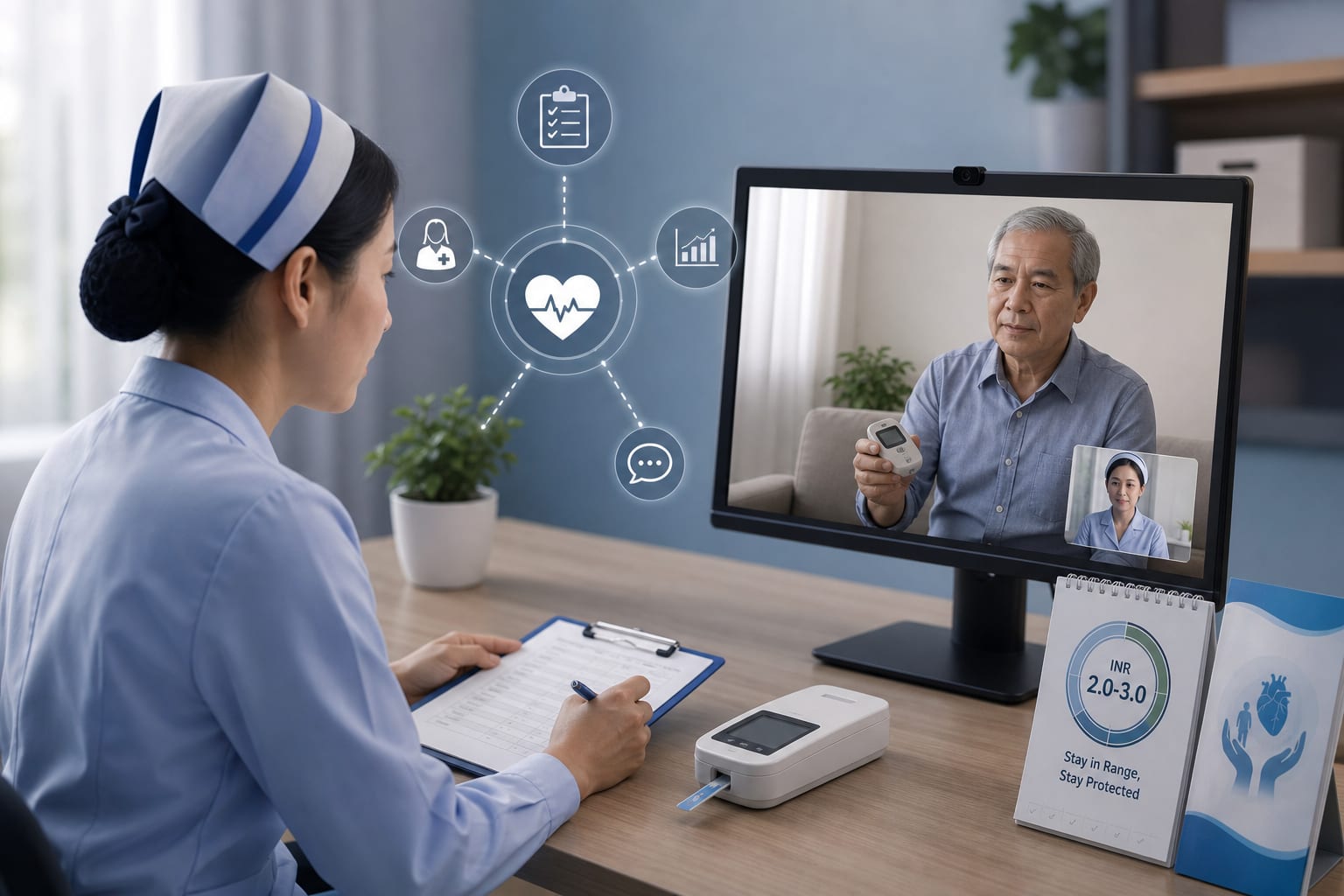
The Internet Plus Nursing Model (INM) significantly improves INR compliance, monitoring rates, and medication adherence in patients on warfarin for atrial fibrillation compared to usual care.
Background
Warfarin remains a critical anticoagulant for managing atrial fibrillation, yet adherence issues are common due to the complexities of therapy. The integration of telehealth models like INM improves warfarin management outcomes.
Data Highlights
Outcome
INM Group
Usual Care Group
P-value
INR Compliance at 10 days
98.33%
86.54%
0.045
INR Compliance at 1 month
86.67%
57.69%
0.015
INR Monitoring at 10 days
98.33%
84.62%
0.017
INR Monitoring at 1 month
96.67%
80.77%
0.036
Medication Adherence
88.33%
48.08%
<0.001
Health Knowledge Score
29.1 ± 2.1
22.8 ± 3.0
<0.001
Patient Satisfaction
98.33%
90.38%
0.020
Key Findings
INM group had higher INR compliance rates at both 10 days and 1 month compared to usual care.
Significantly improved INR monitoring rates were observed in the INM group at both follow-up points.
Medication adherence was markedly higher in the INM group (88.33% vs. 48.08%).
Health knowledge scores were significantly better in the INM group.
Patient satisfaction was higher in the INM group compared to usual care.
No significant differences in complication or readmission rates between groups.
Clinical Implications
The findings suggest that the INM can effectively enhance patient education and adherence in warfarin management, which may lead to better therapeutic outcomes. Healthcare providers may consider integrating telehealth models into routine care for patients on anticoagulation therapy.
Conclusion
The INM demonstrates a significant positive impact on warfarin management in patients with atrial fibrillation.
Shear wave velocity measurements in the basal anteroseptal and right ventricular walls differed between transthyretin and light chain cardiac amyloidosis when conventional echocardiographic parameters did not.