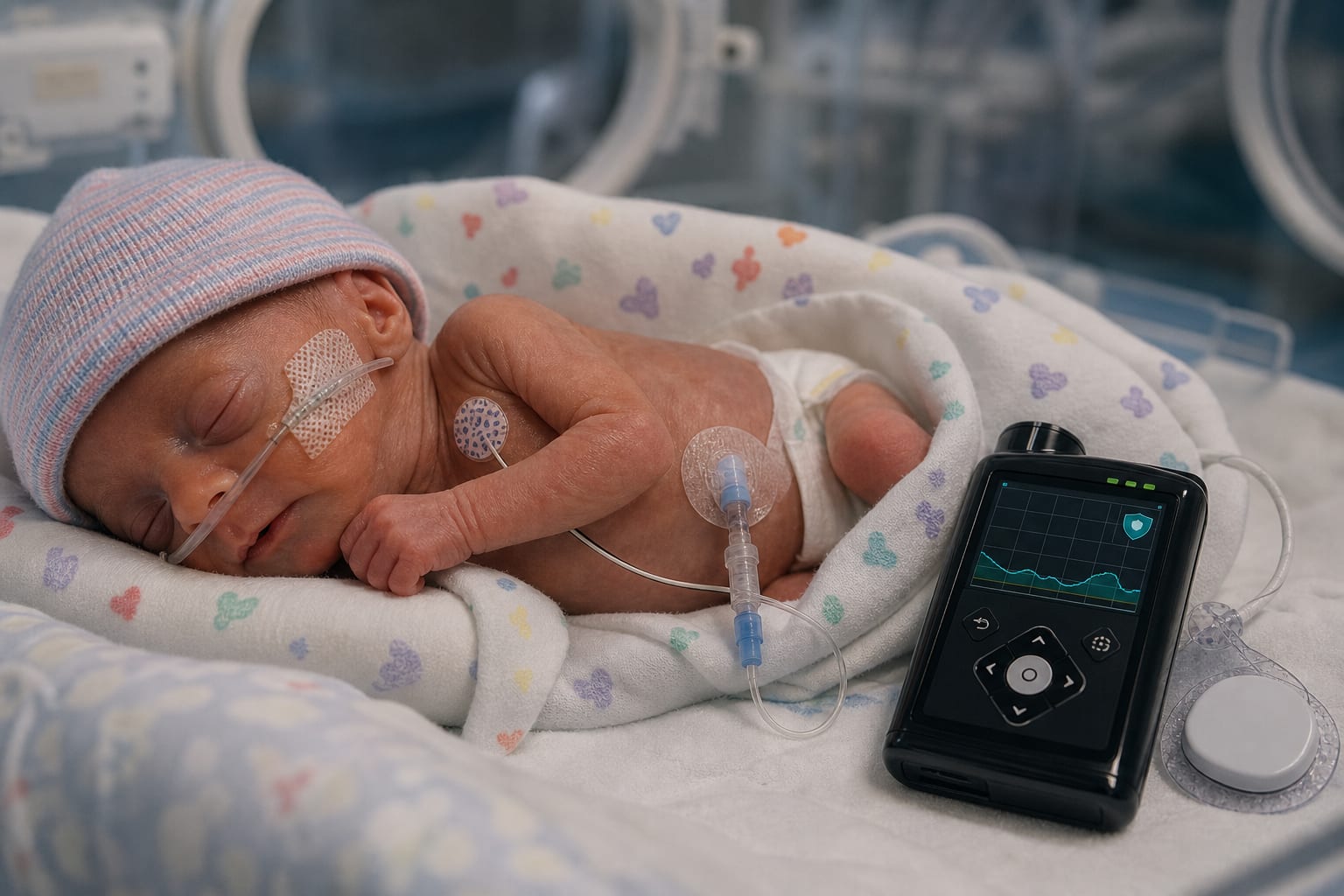
Clinical Report: Use of Subcutaneous Insulin Pump Therapy in a Preterm Infant
Overview
This report presents the first documented case of combined continuous glucose monitoring (CGM) and continuous subcutaneous insulin infusion (CSII) in a 510-gram preterm infant experiencing hyperglycemia. The approach demonstrated effective glycemic control while minimizing invasive procedures.
Background
Neonatal hyperglycemia is prevalent in extremely low birth weight (ELBW) infants, affecting up to 80% of this population and linked to severe outcomes such as mortality and neurodevelopmental issues. Traditional management with intravenous insulin infusion poses challenges, including the need for vascular access and suboptimal insulin delivery. The exploration of subcutaneous insulin delivery systems, particularly in vulnerable populations, is crucial for improving care.
Data Highlights
{'format': 'Ensure the table is accessible and clearly presented.'}
Key Findings
Neonatal hyperglycemia affects a significant proportion of ELBW infants and is associated with adverse outcomes.
This case is the first to report the use of CGM and CSII in an ELBW infant.
CGM reduced the need for invasive glucose measurements from an estimated 84–168 to 20.
Real-time glycemic monitoring allowed for proactive insulin titration during surgical procedures.
Insulin therapy was successfully discontinued after 17 days as glucose levels normalized.
Clinical Implications
The successful application of CGM and CSII in this case suggests a potential shift in managing hyperglycemia in ELBW infants. Clinicians may consider sensor-augmented insulin delivery systems to improve glycemic control while reducing the need for invasive procedures.
Conclusion
This case establishes a proof-of-concept for the use of sensor-augmented subcutaneous insulin pump therapy in extremely low birth weight infants, paving the way for future closed-loop trials in this vulnerable population.