Clinical Report: Can Proteomics Refine Lung Screening?
Overview
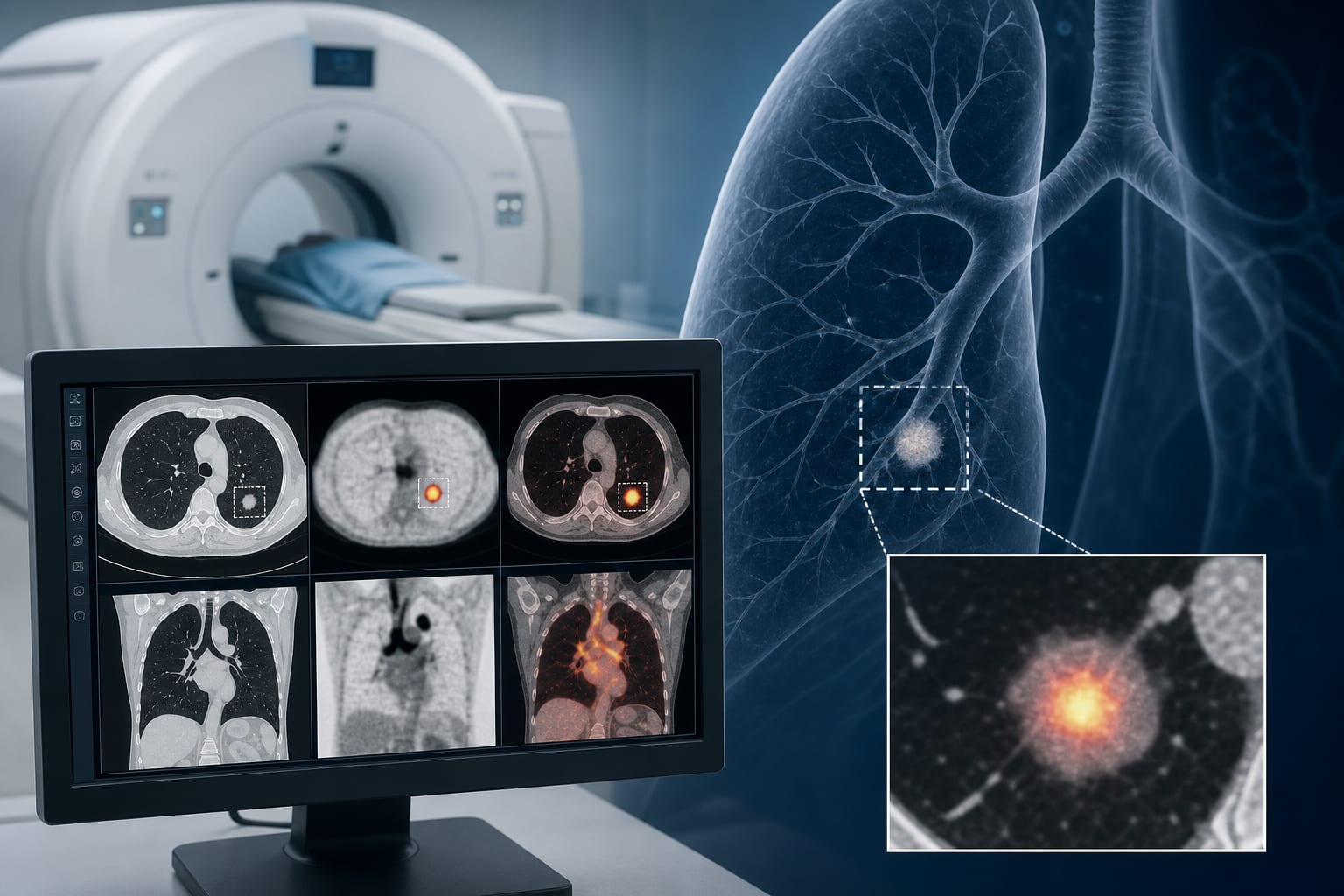
The INTEGRAL-Risk model, utilizing 13 circulating protein biomarkers, shows improved short-term lung cancer risk prediction compared to existing models, capturing a higher percentage of lung cancer cases within one year. This suggests significant potential for refining eligibility for low-dose computed tomography screening, which could lead to earlier detection and better outcomes.
Background
Lung cancer remains a leading cause of cancer-related mortality, necessitating effective screening strategies. Current guidelines primarily rely on smoking history and demographic factors, which may exclude high-risk individuals. The development of biomarker-based models like INTEGRAL-Risk could enhance early detection and improve screening outcomes, especially given that lung cancer accounts for a substantial percentage of cancer deaths.
Data Highlights
| Model | AUC (1 year) | Cases Captured (%) | Quasi-NNS |
|---|---|---|---|
| INTEGRAL-Risk | 0.88 | 85 | 215 |
| PLCOm2012 | 0.79 | 70 | 262 |
| USPSTF 2021 | N/A | 63 | 290 |
Key Findings
- The INTEGRAL-Risk model had an AUC of 0.88 for predicting lung cancer within 1 year.
- It captured 85% of lung cancer cases within 1 year, outperforming PLCOm2012 (70%) and USPSTF 2021 criteria (63%).
- Subgroup analyses indicated higher discrimination among Asian, non-Hispanic Black, and non-Hispanic White participants.
- The model improved risk classification for individuals ineligible under USPSTF 2021 criteria.
- Discriminative performance decreased over longer follow-up periods, with AUCs of 0.84 at 2 years and 0.81 at 3 years.
- Recalibration may be necessary for clinical implementation due to underprediction in certain racial groups.
- Quasi-NNS refers to the quasi-number needed to screen to classify one lung cancer case as eligible.
Clinical Implications
The INTEGRAL-Risk model may enhance the identification of high-risk individuals for lung cancer screening, potentially leading to earlier detection and improved outcomes. However, further validation and recalibration are essential before clinical adoption.
Conclusion
The INTEGRAL-Risk model represents a promising advancement in lung cancer risk assessment, warranting further research to confirm its utility in clinical practice.
Related Resources & Content
- Zahed H, et al., JAMA, 2023 -- Biomarker-Based Eligibility for Lung Cancer Screening: Validation of the Protein-Based INTEGRAL-Risk Model
- Kennedy, et al., Nature Communications, 2022 -- Report Examines Imaging Approach With Potential to Detect Lung Cancer at the Cellular Level
- Kearney, et al., Annals of Internal Medicine, 2024 -- Can Alternative Criteria Help Identify Patients Who May Benefit From Lung Cancer Screening?
- US Preventive Services Taskforce, 2022 -- Recommendation: Lung Cancer: Screening
- European Radiology — Advantages and Disadvantages of Reporting Incidental Findings in Lung Cancer Screening Programs
- European Journal of Preventive Cardiology — Assessing Proteomic Approaches for Heart Failure Prediction in Dysglycaemic Patients: Are We Prepared to Rely on This Technology?
- Reduced Lung-Cancer Mortality with Low-Dose Computed Tomographic Screening
- Advantages and Disadvantages of Reporting Incidental Findings in Lung Cancer Screening Programs
- Recommendation: Lung Cancer: Screening | United States Preventive Services Taskforce
- Biomarker-Based Eligibility for Lung Cancer Screening: Validation of the Protein-Based INTEGRAL-Risk Model | Lung Cancer | JAMA | JAMA Network
This content is an AI-generated, fully rewritten summary based on a published scholarly article. It does not reproduce the original text and is not a substitute for the original publication. Readers are encouraged to consult the source for full context, data, and methodology.