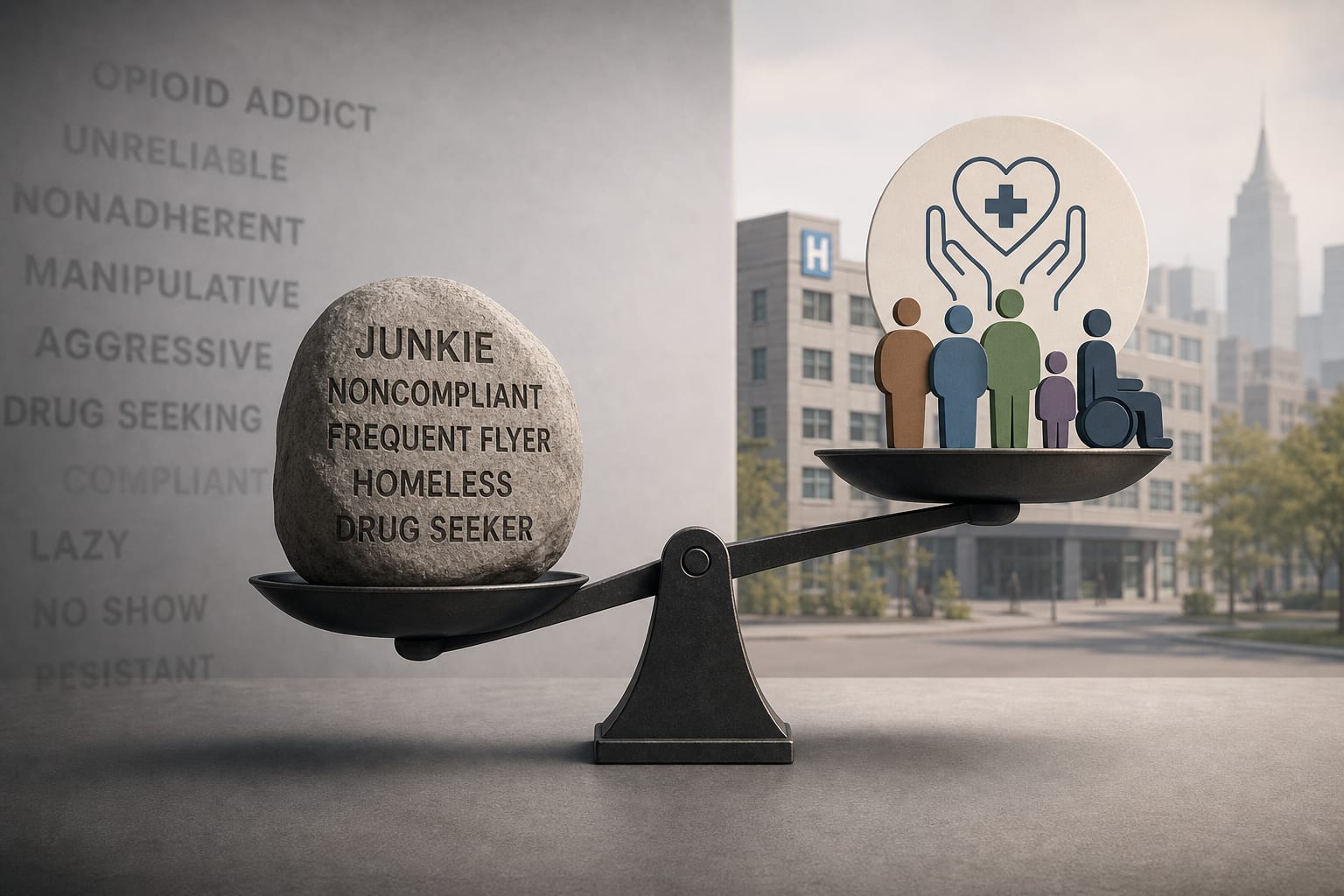
Clinical Report: Recognizing Trends in the Use of Stigmatizing Language
Overview
This study identifies the prevalence of stigmatizing language in clinical notes within NYC Health + Hospitals, highlighting significant disparities based on patient demographics.
Background
Stigmatizing language can adversely affect clinical care and patient trust, particularly in safety net systems serving low-income and historically marginalized communities. NYC Health + Hospitals, as the largest municipal safety net system in the U.S., provides a critical context for examining these issues.
Data Highlights
Measure
Value
Total Patients Seen
851,130
Total Notes Generated
15,006,940
Notes with Stigmatizing Language
93,107 (0.6%)
Unique Patients with Stigmatizing Language
26,052 (3.1%)
Prevalence in IP Notes
1.0%
Prevalence in ED Notes
0.9%
Prevalence in OP Notes
0.1%
Key Findings
Stigmatizing language was found in 0.6% of medical notes, affecting 3.1% of unique patients.
Prevalence was highest among notes authored by Social Workers, Counselors, or Psychologists (1.7%).
Patients with homelessness (15.9%) and substance use disorders (15.3%) had the highest prevalence of stigmatizing terms.
Racial disparities were evident, with Non-Hispanic White (4.7%) and Black (4.1%) patients experiencing higher rates of stigmatizing language compared to Hispanic/Latinx patients (2.1%).
Factors influencing stigmatizing language included having two or more chronic conditions, Medicare insurance, and homelessness.
Clinical Implications
The findings highlight the need for healthcare systems to address the use of stigmatizing language, particularly among vulnerable populations. Implementing training and interventions to promote respectful communication can enhance patient trust and care quality.
Conclusion
This study reveals significant patterns of stigmatizing language in clinical notes, emphasizing the importance of targeted interventions to mitigate bias and improve care for marginalized populations.