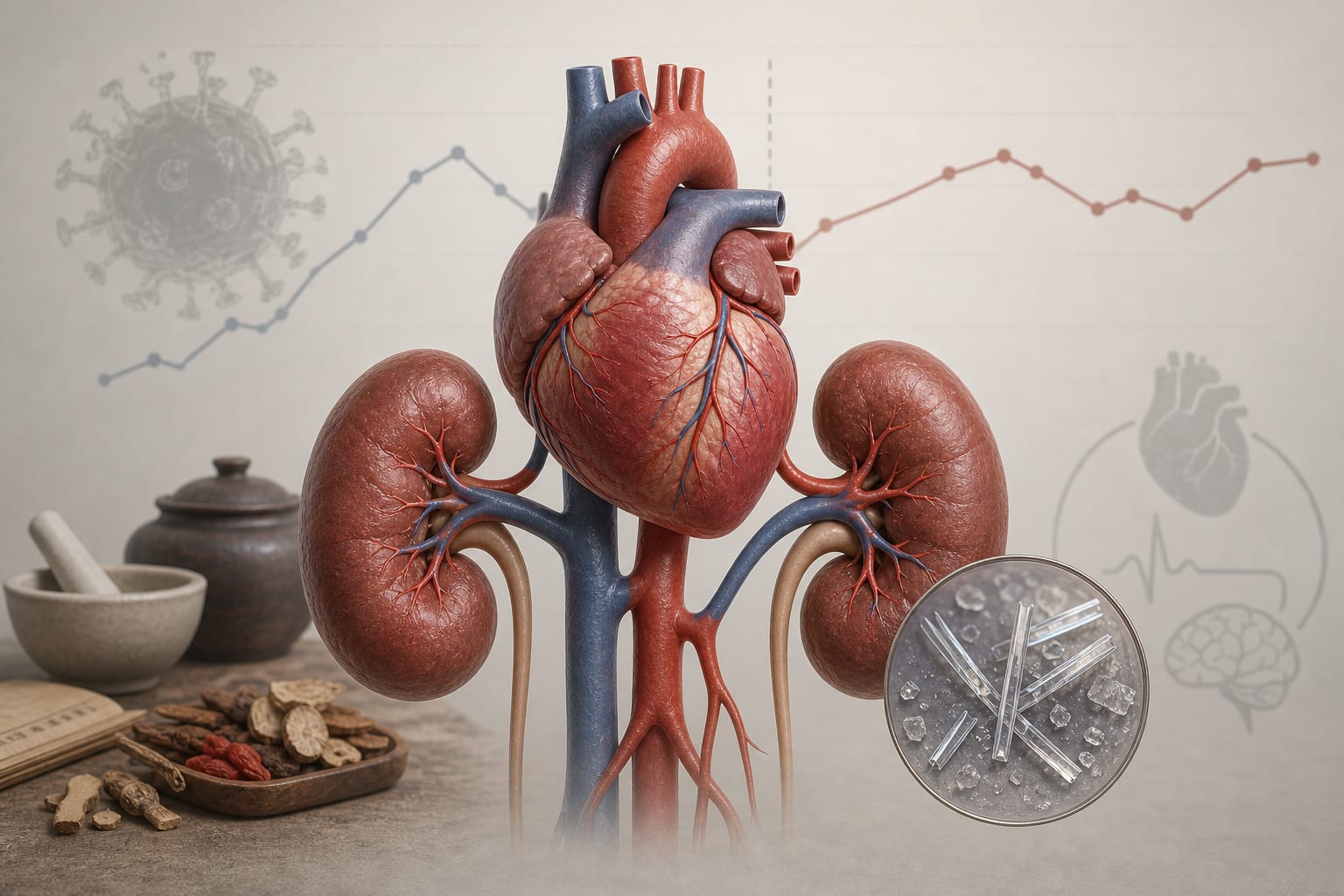
Dynamic Assessment of Circulating Cardiovascular Biomarkers Enhances Risk Prediction
Overview
Current cardiovascular risk prediction models have moderate accuracy and rely heavily on static, one-time assessments. Incorporating circulating biomarkers with dynamic, repeated measurements can improve personalized risk estimation and better capture the evolving nature of cardiovascular disease development.
Background
Cardiovascular disease (CVD) remains a leading cause of morbidity and mortality worldwide, making primary prevention essential. Traditional risk scores primarily use static factors like age and have limited discriminative accuracy, often miscalibrating risk in certain populations. Circulating cardiovascular biomarkers such as C-reactive protein, growth differentiation factor 15, N-terminal pro B-type natriuretic peptide, and cardiac troponins offer additional biological insights. Dynamic risk prediction models that incorporate longitudinal biomarker data may better reflect individual risk trajectories and improve preventive strategies.
Data Highlights
Widely used cardiovascular risk scores have concordance indices ranging from 0.67 to 0.84, indicating moderate predictive accuracy. Single time-point biomarker measurements independently associate with CVD risk but add only modest improvements to traditional risk factors. Dynamic models using repeated biomarker measures can capture risk changes over time, potentially enhancing prediction accuracy beyond static models.
Key Findings
Traditional cardiovascular risk scores show moderate accuracy with c-indices between 0.67 and 0.84.
Single measurements of circulating biomarkers correlate independently with CVD risk but provide limited incremental predictive value.
Dynamic risk prediction approaches, such as joint modeling of repeated biomarker measurements, better capture the complexity of CVD development.
Biomarker-driven dynamic models enable updating risk estimates over time, facilitating earlier detection and personalized prevention.
Integration of electronic health records and commercial biomarker assays makes clinical implementation of dynamic risk models feasible.
Future research should focus on validating multi-marker dynamic models, standardizing methodologies, and assessing cost-effectiveness and public health impact.
Clinical Implications
Incorporating repeated measurements of cardiovascular biomarkers into risk prediction models can improve individualized risk assessment and guide more timely preventive interventions. Clinicians should consider dynamic risk estimation approaches as they become available, leveraging electronic health record data and biomarker assays. Optimizing screening intervals based on biomarker trajectories may further personalize primary prevention strategies.
Conclusion
Dynamic assessment of circulating cardiovascular biomarkers represents a promising advancement in cardiovascular risk prediction, offering enhanced personalization and accuracy over traditional static models. Continued research and validation are needed to translate these approaches into routine clinical practice.
References
Current Review Article 2024 -- Dynamic Assessment of Circulating Cardiovascular Biomarkers: Enhancing Cardiovascular Risk Prediction