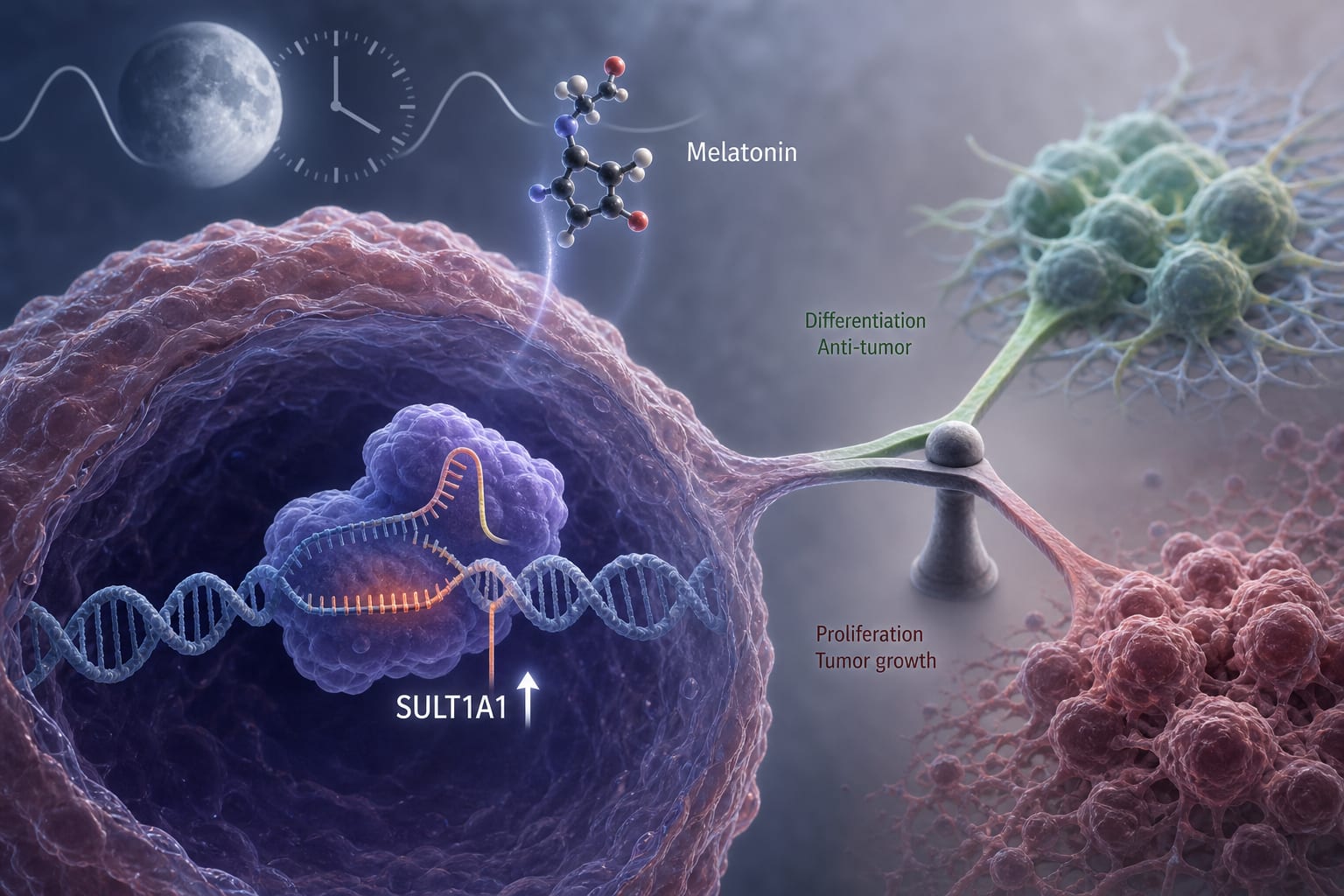
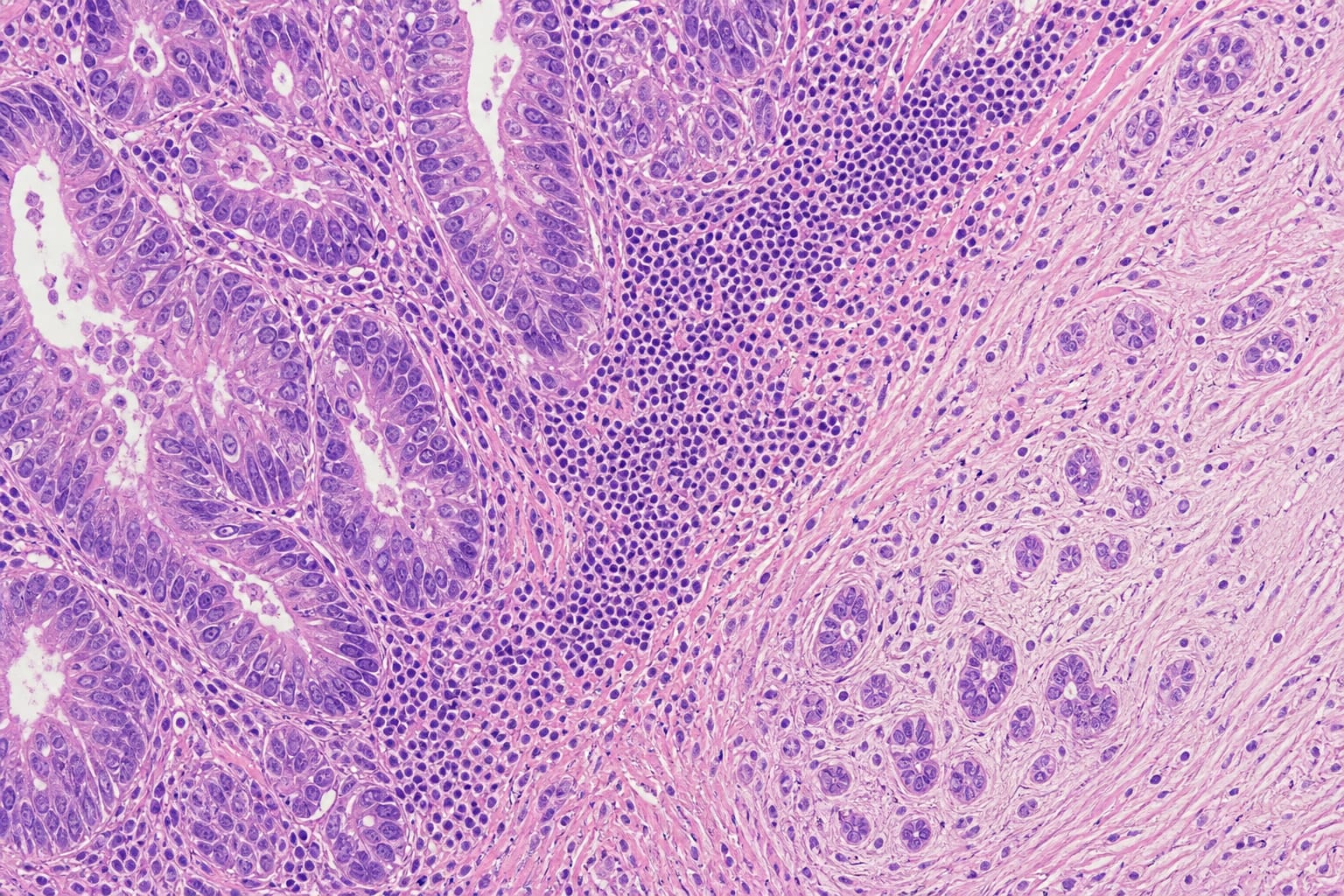
Regulation of Osteosarcoma Cell Growth and Melatonin's Anti-Tumor Effects by SULT1A1
Overview
This study identifies SULT1A1 as a critical gene in osteosarcoma cell proliferation and melatonin sensitivity. A five-gene prognostic signature was established.
Background
Osteosarcoma is a highly aggressive bone tumor primarily affecting adolescents, with significant challenges in treatment due to therapeutic resistance. Circadian rhythm disruption has been implicated in tumorigenesis, yet its specific role in osteosarcoma remains underexplored.
Data Highlights
No numerical data or trial data presented in the article.
Key Findings
A five-gene circadian rhythm-annotated prognostic signature was established and validated.
SULT1A1 was identified as a key gene at a differentiation branch point in osteosarcoma.
CRISPR-Cas9 screening confirmed SULT1A1's essential role in osteosarcoma cell proliferation.
Knockdown of SULT1A1 significantly suppressed osteosarcoma cell proliferation and colony formation.
SULT1A1 knockdown enhanced the anti-tumor efficacy of melatonin in osteosarcoma cells.
Clinical Implications
The identification of SULT1A1 as a critical gene in osteosarcoma warrants further investigation.
Conclusion
This study identifies SULT1A1 in osteosarcoma and its interaction with melatonin.
First Treg-based cell therapy approved, FDA advanced therapy office faces fresh turnover, and preclinical CAR T studies target rare blood cancers and glioblastoma