Transcranial magnetic stimulation combined with functional near-infrared spectroscopy to elucidate the neurophysiological mechanisms of post-stroke hemiplegia: a systematic review - Report - MDSpire

Transcranial magnetic stimulation combined with functional near-infrared spectroscopy to elucidate the neurophysiological mechanisms of post-stroke hemiplegia: a systematic review

  • By

  • Yuzhe Zou

  • Xiangfeng Lai

  • Qian Liu

  • Hongmei Zhang

  • Hui Li

  • Wei Li

  • Dingwei He

  • Liqing Yao

  • Xue Yang

  • June 10, 2026

  • 0 min

Share

Clinical Report: Neurophysiological Mechanisms of Post-Stroke Hemiplegia

Overview

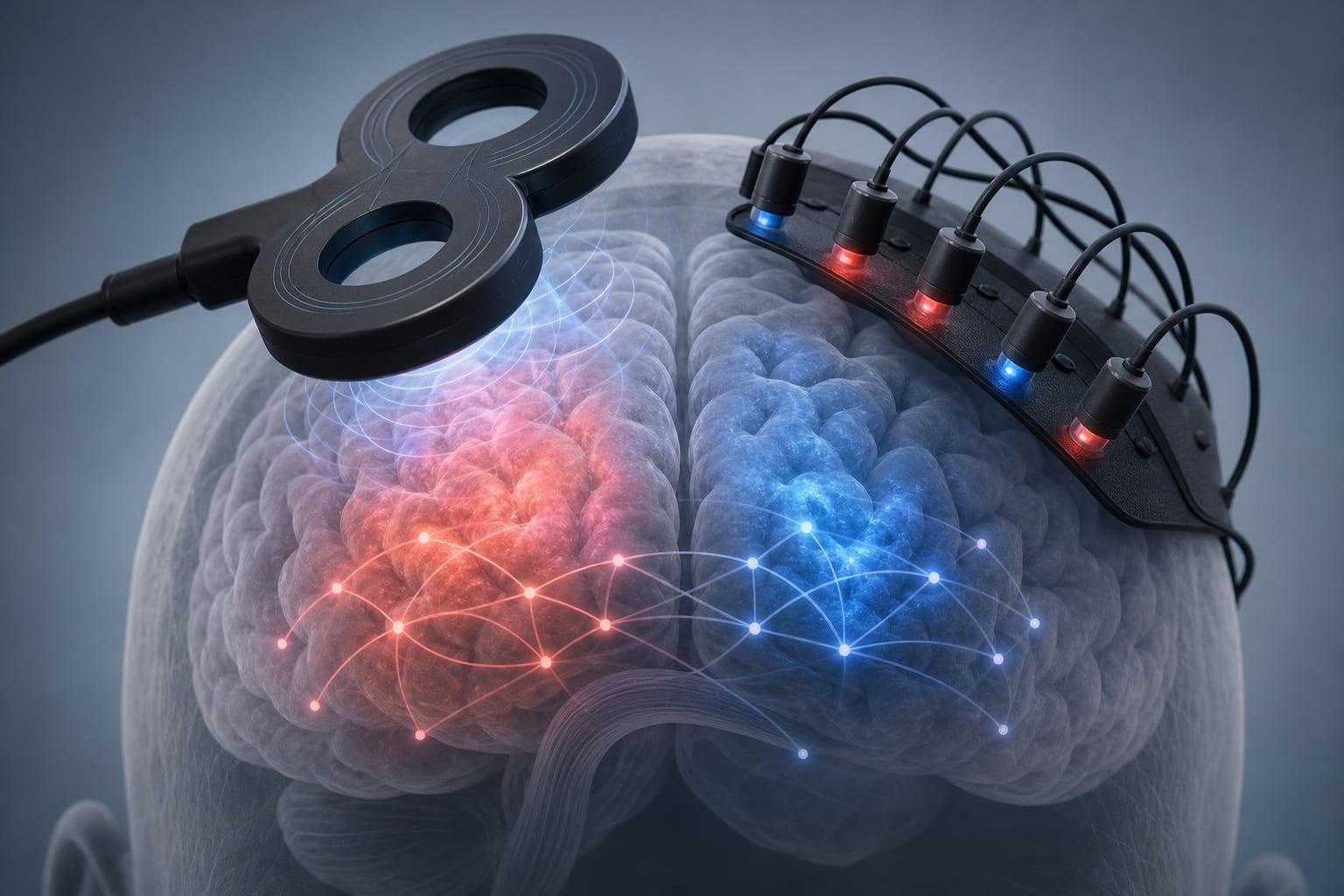
This systematic review evaluates the combined use of transcranial magnetic stimulation (TMS) and functional near-infrared spectroscopy (fNIRS) in enhancing motor function recovery in post-stroke hemiplegia. The findings indicate that this combined approach is safe and feasible, with significant improvements reported in motor function in some studies.

Background

Stroke is a leading cause of disability and mortality globally, with hemiplegia affecting a significant proportion of survivors. The recovery from motor dysfunction is often hindered by imbalanced interhemispheric competition and abnormal neural network reorganization. Understanding the neurophysiological mechanisms underlying these challenges is crucial for developing effective rehabilitation strategies.

Data Highlights

StudyMotor Function Improvement
Study 1Significant
Study 2Significant
Study 3No Improvement
Study 4Significant
Study 5No Improvement
Study 6Significant

Key Findings

  • The TMS-fNIRS combined protocol is safe and feasible for post-stroke rehabilitation.
  • Six out of nine studies reported statistically significant improvements in motor function.
  • Effective TMS interventions enhance activation of the ipsilesional primary motor cortex.
  • Improvements in neurophysiological indicators correlate with clinical function enhancements.
  • Current studies exhibit limitations such as small sample sizes and high risk of bias.

Clinical Implications

The integration of TMS and fNIRS may offer a promising avenue for individualized stroke rehabilitation strategies. Clinicians should consider the potential of this combined approach while being mindful of the current evidence limitations and the need for further research.

Conclusion

The TMS-fNIRS technology shows potential in advancing stroke rehabilitation, but further large-scale studies are necessary to establish its efficacy and transition to precision therapy.

Related Resources & Content

  1. Frontiers in Neurology, 2026 -- Impacts of Repetitive Transcranial Magnetic Stimulation Parameters on Cerebral Hemodynamics in Patients with Disorders of Consciousness
  2. Frontiers in Neurology, 2026 -- Effects of Non-Invasive Neural Stimulation Modalities on Upper Limb Function in Subacute Stroke: A Systematic Review and Meta-Analysis
  3. Frontiers in Neurology, 2026 -- Synergistic neuroplasticity from synchronous Taiji Yunshou and tDCS in stroke: an fNIRS study of cortical activation and cross-subject hemodynamic brain network
  4. European Stroke Organisation (ESO) guideline on motor rehabilitation
  5. Overview | Stroke rehabilitation in adults | Guidance | NICE
  6. Frontiers in Neurology — The effect of non-invasive brain stimulation combined with motor imagery on upper limb motor function and activities of daily living in stroke patients: A systematic review and Meta-analysis
  7. 2026 Guideline for the Early Management of Patients With Acute Ischemic Stroke
  8. Electric Field Navigated 1-Hz rTMS for Poststroke Motor Recovery: The E-FIT Randomized Controlled Trial
  9. European Stroke Organisation (ESO) guideline on motor rehabilitation
  10. Overview | Stroke rehabilitation in adults | Guidance | NICE
  11. Efficacy comparison of seven non-invasive brain stimulation techniques for upper limb motor dysfunction after stroke: a Bayesian network meta-analysis and systematic review - PMC
  12. Brain stimulation did not improve impaired motor skills after stroke | American Heart Association
  13. Pretreatment spatial signature of contralesional cortical activation predicts therapeutic response to 1 Hz rTMS in post-stroke upper limb motor Recovery: A fNIRS-based biomarker study - ScienceDirect
  14. Checking your browser - reCAPTCHA
  15. Frontiers | A systematic review of functional near-infrared spectroscopy-based task paradigms in stroke rehabilitation

Original Source(s)

Related Content