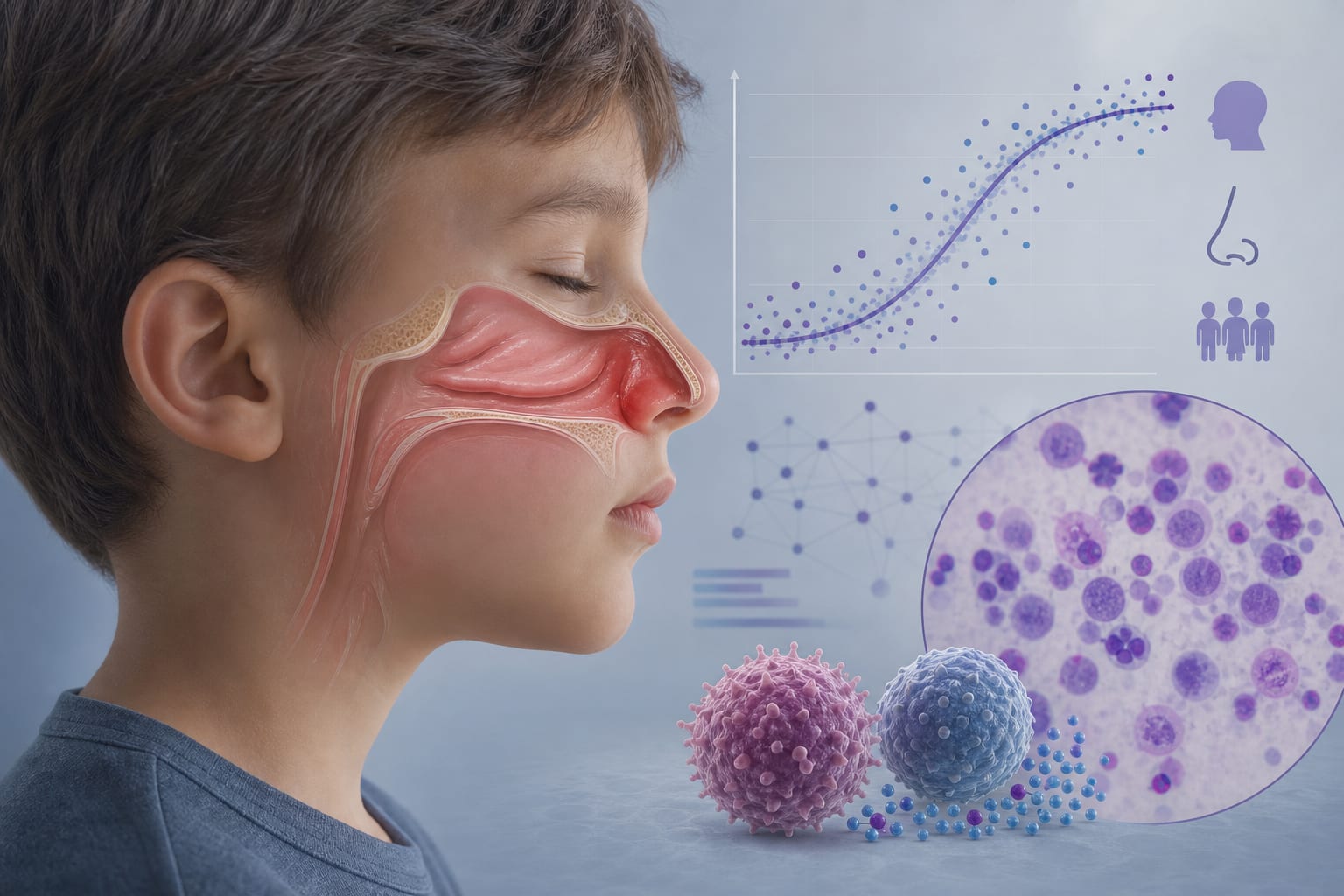
Clinical Report: Allergic Rhinitis and Nasal Septum Deviation in Children
Overview
The ARHINASD study reveals a significant association between nasal septum deviation (NSD) and allergic rhinitis (AR) in children, with NSD+ children showing a higher prevalence of AR and more severe symptoms. These findings underscore the need for early identification and management of NSD to improve AR outcomes.
Background
Allergic rhinitis is a prevalent condition affecting up to 25% of children globally, leading to significant morbidity and socioeconomic impact. Nasal septum deviation, observed in approximately 34% of the pediatric population, may contribute to the exacerbation of allergic conditions. Understanding the relationship between NSD and AR is crucial for developing effective management strategies.
Data Highlights
Group
AR Prevalence
VAS Score
NPIF (L/min)
NSD+
66.7%
7 (3.5)
40 (30)
NSD−
36.2%
2 (4)
60 (40)
Key Findings
NSD+ children had a significantly higher prevalence of AR compared to NSD− children (66.7% vs. 36.2%; p < 0.0001).
Multivariable logistic regression indicated NSD is independently associated with AR (aOR 3.51; p = 0.001).
NSD+ children reported more severe AR symptoms, reflected by higher VAS scores.
Lower NPIF values were observed in NSD+ children compared to NSD− children.
Increased eosinophil counts and elevated levels of IL-4, IL-5, and ECP were found in nasal fluid of NSD+ children.
Clinical Implications
Clinicians should consider the presence of nasal septum deviation when evaluating children with allergic rhinitis, as it may worsen symptoms and airflow. Early identification and management of NSD could lead to improved outcomes for children suffering from AR.
Conclusion
The ARHINASD study highlights the significant relationship between nasal septum deviation and allergic rhinitis in children, suggesting that addressing NSD may enhance AR management. Further longitudinal studies are warranted to explore causality.
by Laura Carucci, Rita Nocerino, Elena Cantone, Francesco Berni Canani, Margherita Licito, Luciano La Marca, Margherita Farnetano, Antonio Masino, Franca Oglio, Dario Marziali, Serena Coppola, Roberto Berni Canani