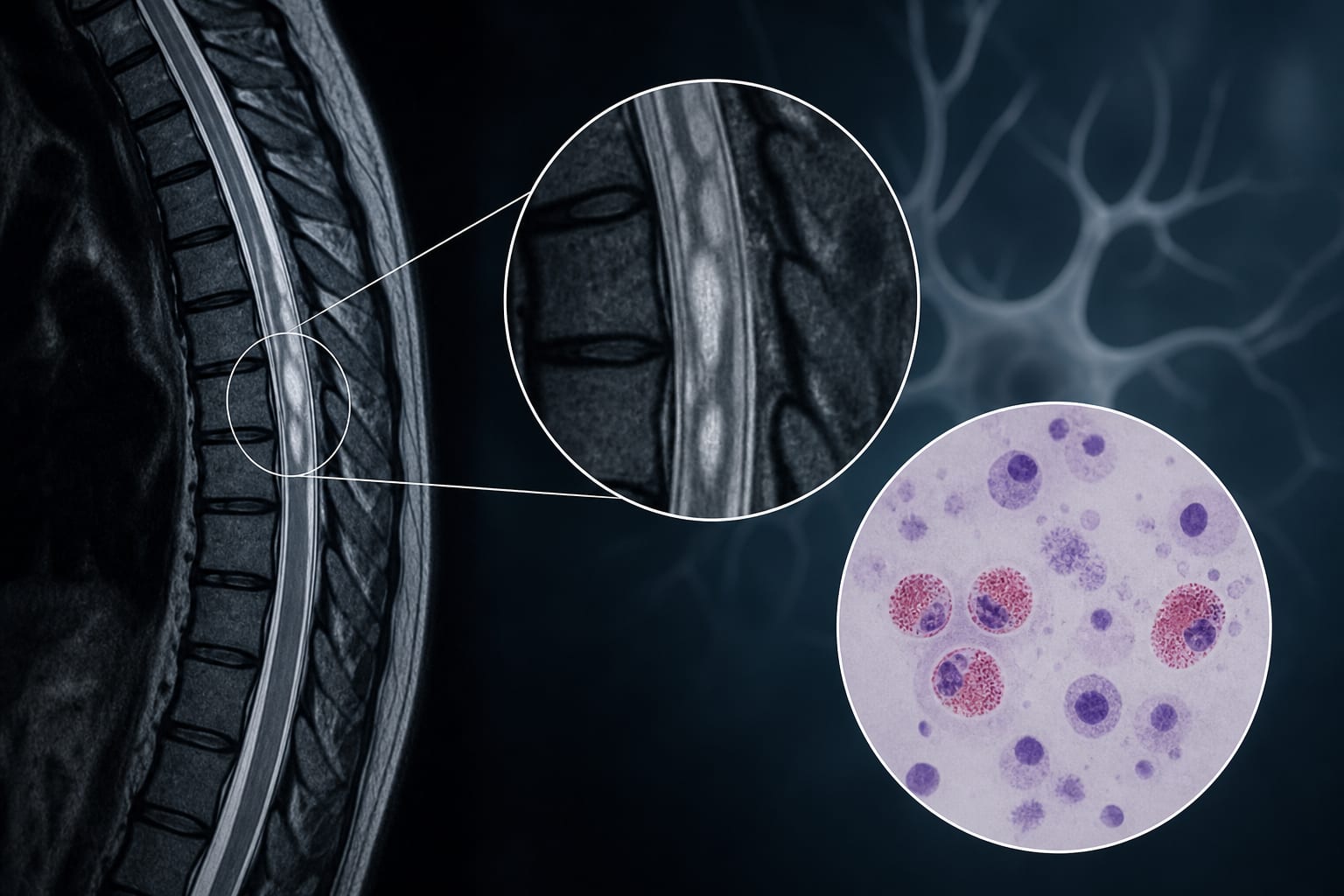
The 60 Percent Diagnostic Gap in M/E
Overview
Revise to specify the types of tests reduced by mNGS and the implications of the diagnostic gap.
Background
Meningitis and encephalitis are complex conditions that present with nonspecific symptoms, making rapid diagnosis challenging. Current diagnostic methods are often limited and hypothesis-driven, leading to a high rate of undiagnosed cases. The integration of mNGS could potentially streamline the diagnostic process and improve patient outcomes.
Data Highlights
In a modeled analysis, earlier use of mNGS reduced microbiologic testing by over 60% in infectious cases and by more than 90% in autoimmune encephalitis cases. Time to diagnosis was shortened by approximately 7 days for infectious cases and 10 days for autoimmune cases.
Key Findings
- Over 60% of M/E cases remain undiagnosed after comprehensive evaluation.
- Earlier mNGS testing can reduce the number of microbiologic tests ordered per patient.
- Time to diagnosis can be shortened by 7 days for infectious M/E and 10 days for autoimmune encephalitis.
- mNGS is particularly beneficial in immunocompromised patients and cases with atypical presentations.
- Strict pre-analytic handling is crucial for accurate mNGS results.
Clinical Implications
Clinicians should consider integrating mNGS earlier in the diagnostic process for patients with M/E, especially in cases with limited CSF volume or when initial tests are inconclusive. This approach may lead to faster diagnoses and more appropriate management strategies.
Conclusion
The implementation of mNGS in the early diagnostic workup of M/E has the potential to significantly improve diagnostic accuracy and reduce time to treatment, addressing a critical gap in current clinical practice.
Related Resources & Content
- Nature Medicine, 2024 -- Seven-year performance of a clinical metagenomic next-generation sequencing test for diagnosis of central nervous system infections
- Open Forum Infectious Diseases, 2025 -- Metagenomic Next-generation Sequencing in Patients With Infectious Meningoencephalitis: A Comprehensive Systematic Literature Review and Meta-analysis
- Clinical Infectious Diseases, 2023 -- Evaluation of Meningitis/Encephalitis Diagnostic Gaps
- The ASCO Post — Racial, Ethnic Disparities in Diagnostic Procedures Following Abnormal Mammograms
- conexiant — AI Falls Short on Differential Dx
- the asco post — Racial, Ethnic Disparities in Diagnostic Procedures Following Abnormal Mammograms
- Surgical Endoscopy — Evaluation of Minimally Invasive Esophagectomy Through Expert and Crowd-Sourced Video Analysis
- AI Falls Short on Differential Dx
- Racial, Ethnic Disparities in Diagnostic Procedures Following Abnormal Mammograms
- https://academic.oup.com/cid/article/77/5/e14/7229814
- Seven-year performance of a clinical metagenomic next-generation sequencing test for diagnosis of central nervous system infections | Nature Medicine
- Metagenomic Next-generation Sequencing in Patients With Infectious Meningoencephalitis: A Comprehensive Systematic Literature Review and Meta-analysis - PubMed
- Cerebrospinal Fluid Metagenomic Next-Generation Sequencing in Pediatric Central Nervous System Infection: Clinical Experience and Diagnostic Stewardship Strategies - PMC
This content is an AI-generated, fully rewritten summary based on a published scholarly article. It does not reproduce the original text and is not a substitute for the original publication. Readers are encouraged to consult the source for full context, data, and methodology.