Ophthalmic involvement in VEXAS syndrome and its influence on mortality: insights from the international AIDA network registry - Report - MDSpire

Ophthalmic involvement in VEXAS syndrome and its influence on mortality: insights from the international AIDA network registry

  • By

  • Jurgen Sota

  • Andrea Hinojosa-Azaola

  • Eduardo Martín-Nares

  • Paolo Sfriso

  • Sara Bindoli

  • Pravin Hissaria

  • Mark Beecher

  • José Hernández-Rodríguez

  • Verónica Gómez-Caverzaschi

  • Micol Frassi

  • Francesca Crisafulli

  • Lorenzo Dagna

  • Corrado Campochiaro

  • Serena Bugatti

  • Alessandra Milanesi

  • Guillermo Ruiz-Irastorza

  • Adriana Soto-Peleteiro

  • Matteo Piga

  • Ombretta Viapiana

  • Abdurrahman Tufan

  • Ertugrul Cagri Bolek

  • Paola Triggianese

  • Marcella Prete

  • Jessica Sblachiero

  • Valeria Caggiano

  • Antonio Vitale

  • Henrique Ayres Mayrink Giardini

  • Giuseppe Lopalco

  • Fabrizio Conti

  • Paolo Moscato

  • Chiara Cardamone

  • Ewa Wiesik-Szewczy

  • Andrés González-García

  • Amato De Paulis

  • Rosetta Vitetta

  • Perla Ayumi Kawakami-Campos

  • Alessandra Brancaleoni

  • Andrea Mercanti

  • Alessandra Renieri

  • Monica Bocchia

  • Gaafar Ragab

  • Vishali Gupta

  • Alejandra de-la-Torre

  • Bruno Frediani

  • Carmelo Gurnari

  • Luca Cantarini

  • Claudia Fabiani

  • June 19, 2026

  • 0 min

Share

Clinical Report: Ocular Manifestations in VEXAS Syndrome and Their Impact on Mortality

Overview

Ocular involvement is prevalent in VEXAS syndrome. This study highlights the types of ophthalmic manifestations.

Background

VEXAS syndrome is a life-threatening autoinflammatory disease caused by mutations in the UBA1 gene. Ocular manifestations are common, affecting nearly half of patients.

Data Highlights

CharacteristicValue
Patients with ophthalmic inflammation41 (47.7%)
Ophthalmic involvement at disease onset26/35 (74.3%)
Ophthalmic involvement before diagnosis33/35 (94.3%)
Response to glucocorticosteroids66.7%
Increased mortality risk (OR)3.72

Key Findings

  • Orbital inflammation is the most common ocular manifestation in VEXAS syndrome.
  • Anterior non-granulomatous uveitis and anterior diffuse scleritis are frequently observed.
  • Ophthalmic involvement is significantly associated with relapsing polychondritis (p = 0.014).
  • Patients with ocular involvement have an increased chance of a fatal outcome (RR 5.87, p = 0.016).
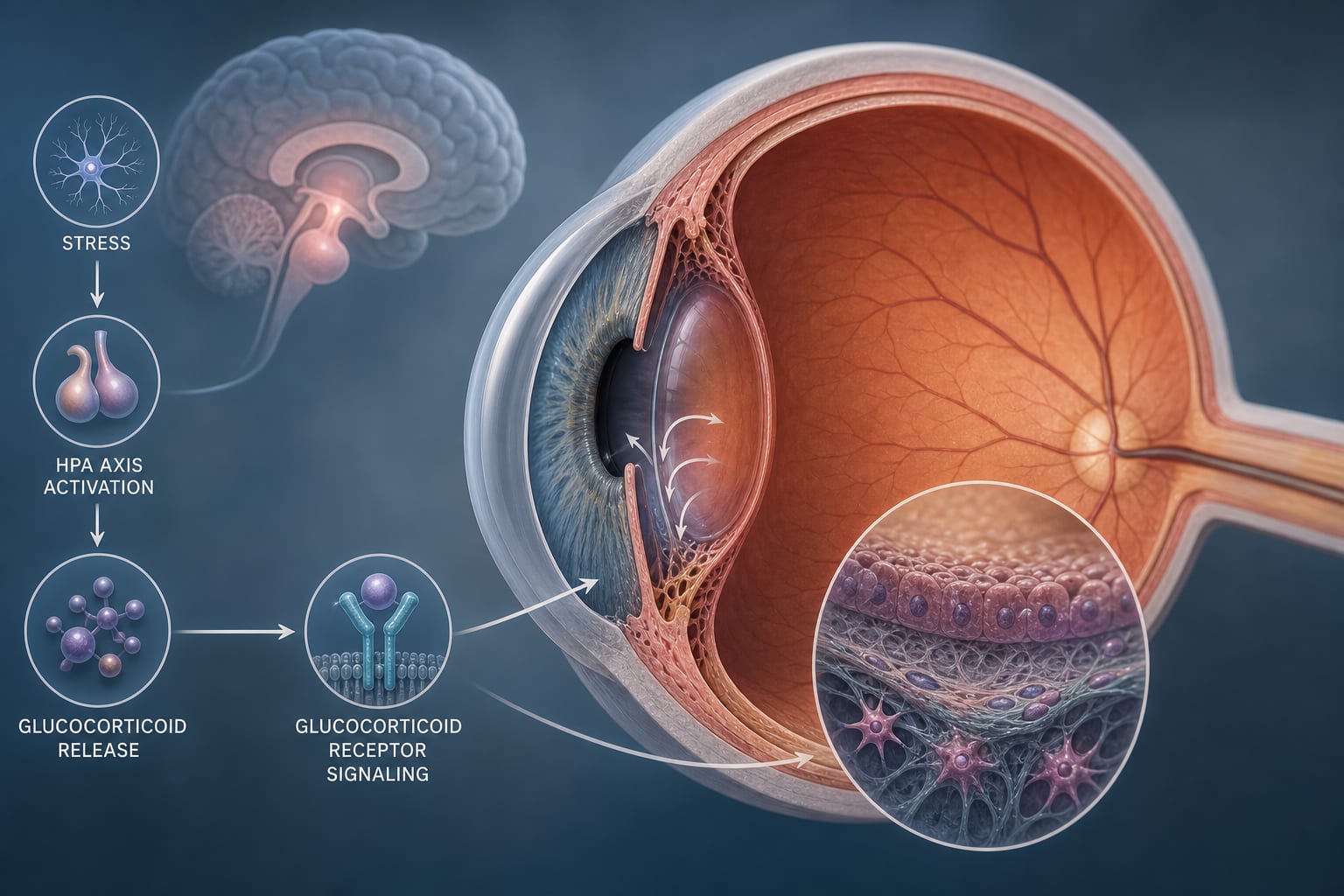
  • 66.7% of patients showed full or partial response to glucocorticosteroids for ophthalmic involvement.

Clinical Implications

Healthcare professionals should monitor patients with VEXAS syndrome for ocular manifestations.

Conclusion

Ocular manifestations in VEXAS syndrome are common.

Related Resources & Content

  1. Author(s)/Org, Source, Year -- Title
  2. Author(s)/Org, Source, Year -- Title
  3. Author(s)/Org, Source, Year -- Title
  4. Author(s)/Org, Source, Year -- Title
  5. Author(s)/Org, Source, Year -- Title
  6. Author(s)/Org, Source, Year -- Title
  7. Retinal Physician — Clinical Trials in Retinal Vein Occlusion
  8. New ACR Guidance: Diagnosis and Management of VEXAS Syndrome | American College of Rheumatology
  9. Orbital/ocular inflammatory involvement in VEXAS syndrome: Data from the international AIDA network VEXAS registry - ScienceDirect
  10. Peripheral blood UBA1 variant burden predicts poor outcomes in VEXAS syndrome: a nationwide prospective study - ScienceDirect

Original Source(s)

Related Content