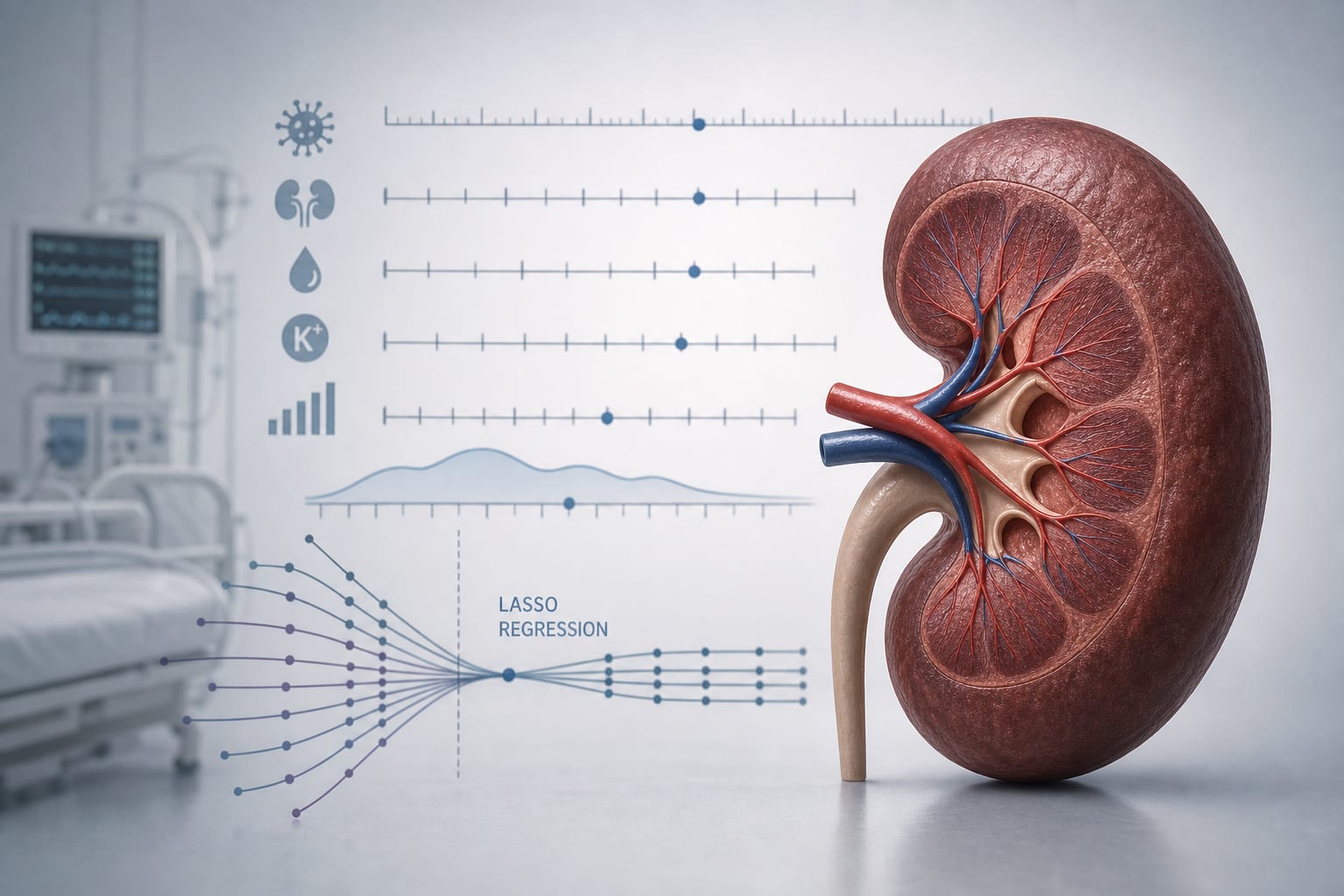
Nomogram analysis of factors associated with prognosis in patients with sepsis-associated acute kidney injury: a case-control study based on LASSO regression - Report - MDSpire
Advertisement
Nomogram analysis of factors associated with prognosis in patients with sepsis-associated acute kidney injury: a case-control study based on LASSO regression
Clinical Report: Prognostic Factor Analysis for Sepsis-Related AKI Using Nomogram
Overview
This study developed and validated a nomogram for predicting prognosis in patients with sepsis-associated acute kidney injury (SA-AKI). Key predictive variables identified include age, SOFA score, creatinine, and serum potassium, which are independent factors associated with prognosis.
Background
Sepsis-associated acute kidney injury (SA-AKI) is a prevalent and severe complication of sepsis, leading to high mortality rates and long-term health issues such as chronic kidney disease. Early identification of patients at high risk for poor outcomes is crucial for improving clinical decision-making and patient management. Current prognostic tools lack simplicity and individualization, highlighting the need for more accessible prediction models.
Data Highlights
Variable
Odds Ratio (OR)
95% Confidence Interval (CI)
Age
0.94
0.91–0.97
SOFA Score
0.75
0.67–0.84
Creatinine
0.60
0.39–0.91
Serum Potassium
0.51
0.32–0.80
Key Findings
Four independent predictors of prognosis in SA-AKI were identified: age, SOFA score, creatinine, and serum potassium.
The nomogram model achieved an AUC of 0.92 in the training set and 0.85 in the validation set.
Higher levels of age, SOFA score, creatinine, and serum potassium correlate with an unfavorable prognosis.
The model demonstrated good calibration with p-values of 0.41 and 0.57 for the training and validation sets, respectively.
Decision curve analysis confirmed the clinical utility of the nomogram for risk stratification.
Clinical Implications
The nomogram developed in this study can assist clinicians in early identification of high-risk SA-AKI patients, facilitating timely interventions. By utilizing easily accessible clinical indicators, this tool may enhance individualized patient management strategies.
Conclusion
The nomogram based on age, SOFA score, creatinine, and serum potassium provides a reliable method for predicting prognosis in SA-AKI patients. Its implementation could improve clinical outcomes through better risk stratification and personalized treatment approaches.