Medium-to-long-term success rate of left atrial appendage closure using endocardial sutures and postoperative anticoagulant strategies - Report - MDSpire
Advertisement
Medium-to-long-term success rate of left atrial appendage closure using endocardial sutures and postoperative anticoagulant strategies
Efficacy and Longevity of Left Atrial Appendage Closure with Endocardial Sutures
Overview
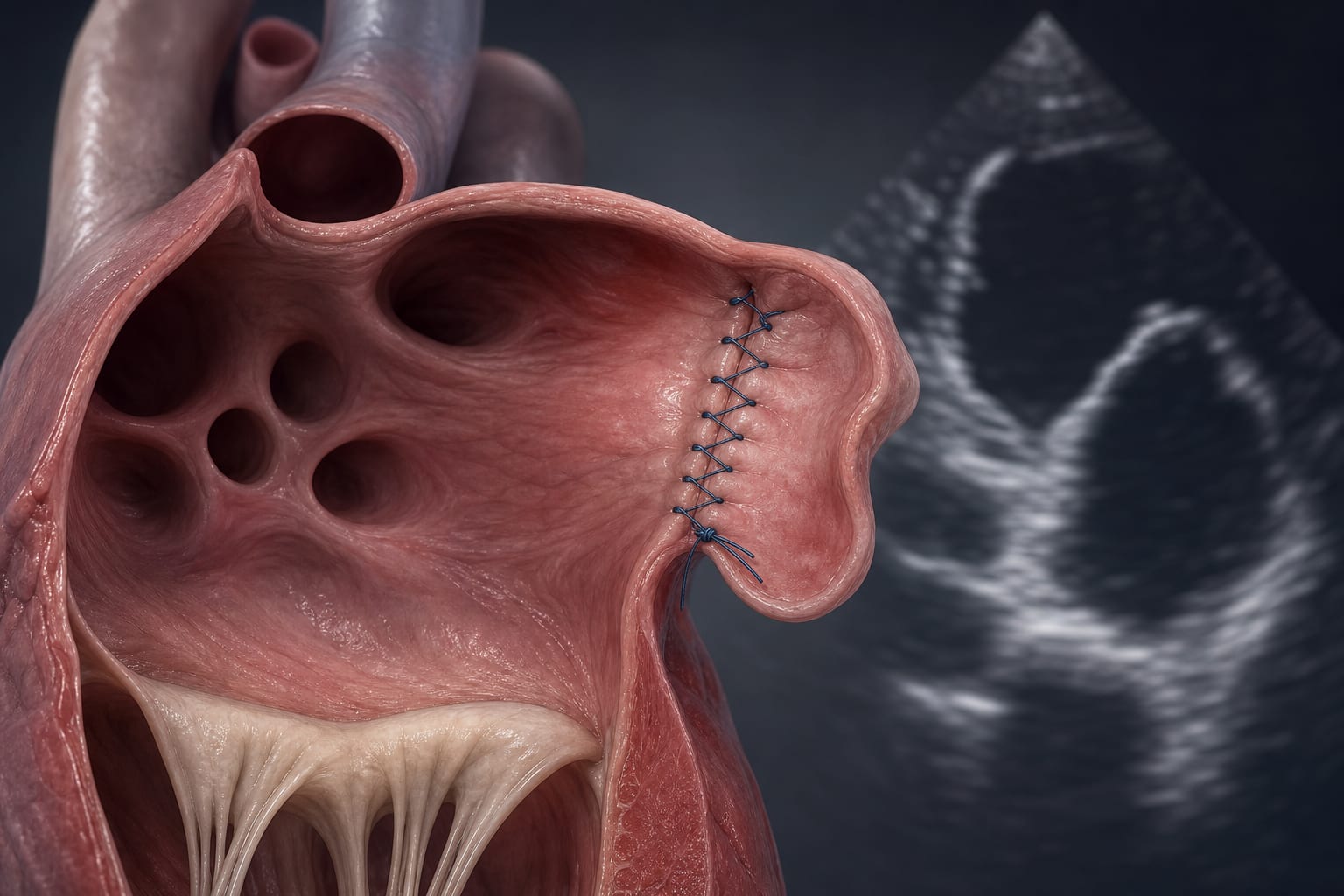
This study evaluates the efficacy and safety of endocardial suture closure of the left atrial appendage (LAA) during cardiac surgery in patients with atrial fibrillation (AF). The findings indicate a medium-to-long-term closure success rate of 90.0%.
Background
Atrial fibrillation (AF) significantly increases the risk of thromboembolic events, particularly strokes, due to thrombus formation in the left atrial appendage (LAA). Surgical closure of the LAA is recommended during cardiac surgery to mitigate this risk, as per current guidelines. However, evidence regarding the long-term efficacy of various closure techniques, including endocardial sutures, remains limited.
Data Highlights
Follow-up Duration (years)
Closure Success Rate
Residual Flow
Thrombus Formation
7.16 ± 1.73
90.0%
10.0%
80.0%
Key Findings
The study included 50 patients with valvular heart disease and AF who underwent LAA closure using endocardial sutures.
Intraoperative TEE showed no residual LAA stump or to-and-fro flow in any patient.
At follow-up, 10.0% of patients had residual to-and-fro flow, with a closure success rate of 90.0%.
Thrombus was detected in 80.0% of patients with residual flow, leading to one ischemic stroke.
No strokes occurred in patients with confirmed successful LAA closure.
Clinical Implications
The findings indicate that while endocardial suture closure of the LAA is effective, the presence of residual flow may pose a thromboembolic risk.
Conclusion
Endocardial suture closure of the LAA demonstrates a high success rate in this cohort.