Aerobic exercise training attenuates the deleterious effects of walker-256 cancer: effects on physical capacity, cachexia, and cardiac mass - Report - MDSpire
Advertisement
Aerobic exercise training attenuates the deleterious effects of walker-256 cancer: effects on physical capacity, cachexia, and cardiac mass
Clinical Report: Impact of Aerobic Exercise Training on Physical Performance
Overview
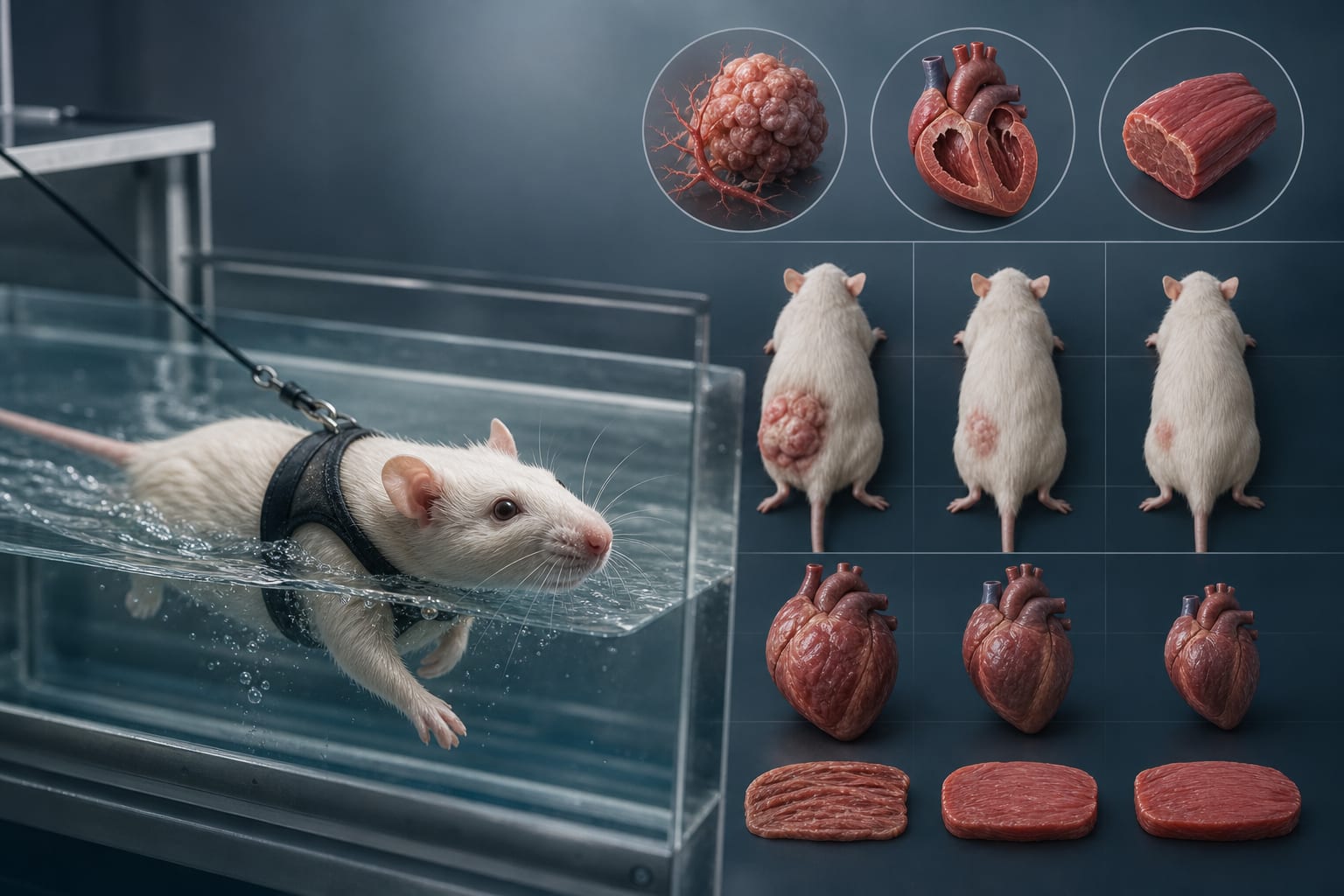
This study investigates the effects of aerobic exercise training (AET) on physical performance, cachexia, and cardiac changes in a Walker-256 cancer model. AET demonstrated significant improvements in exercise tolerance and reduced tumor weight.
Background
Aerobic exercise training is recognized for its therapeutic benefits in chronic diseases, including cancer. Cancer cachexia, characterized by severe muscle wasting and functional decline, affects a significant proportion of cancer patients and is associated with increased mortality.
Data Highlights
Group
Exercise Tolerance (m)
Tumor Weight (g)
Cachexia (%)
Wistar Control (WC)
455.77 ± 50.22
-
-
Control Tumor (WCT)
267.65 ± 53.55
25.08 ± 4.05
47.08 ± 6
Tumor Trained (WTT)
578.63 ± 66.84
-
7.83 ± 1.75
Key Findings
AET improved exercise tolerance in the WTT group compared to WCT.
The WTT group exhibited a significant reduction in tumor weight compared to the WCT group.
Cachexia percentage was significantly lower in the WTT group than in the WCT group.
AET reversed soleus and plantaris muscle atrophy in the tumor model.
Cardiac remodeling was mitigated in the WTT group, indicated by improved left ventricular mass.
Clinical Implications
Further research is warranted to explore the application of AET in clinical settings for cancer patients.
Conclusion
This study highlights the effects of aerobic exercise training on exercise tolerance and tumor weight in the context of cancer cachexia.
Harold Burstein, MD, PhD, and Ana C. Garrido-Castro, MD discuss results from the Saci-IO HR+ trial, which were presented at the 2026 ESMO Breast Cancer Congress.