PIGL Enhances Resistance to Docetaxel in Prostate Cancer Through Regulation by E3 Ubiquitin Ligase HUWE1
Overview
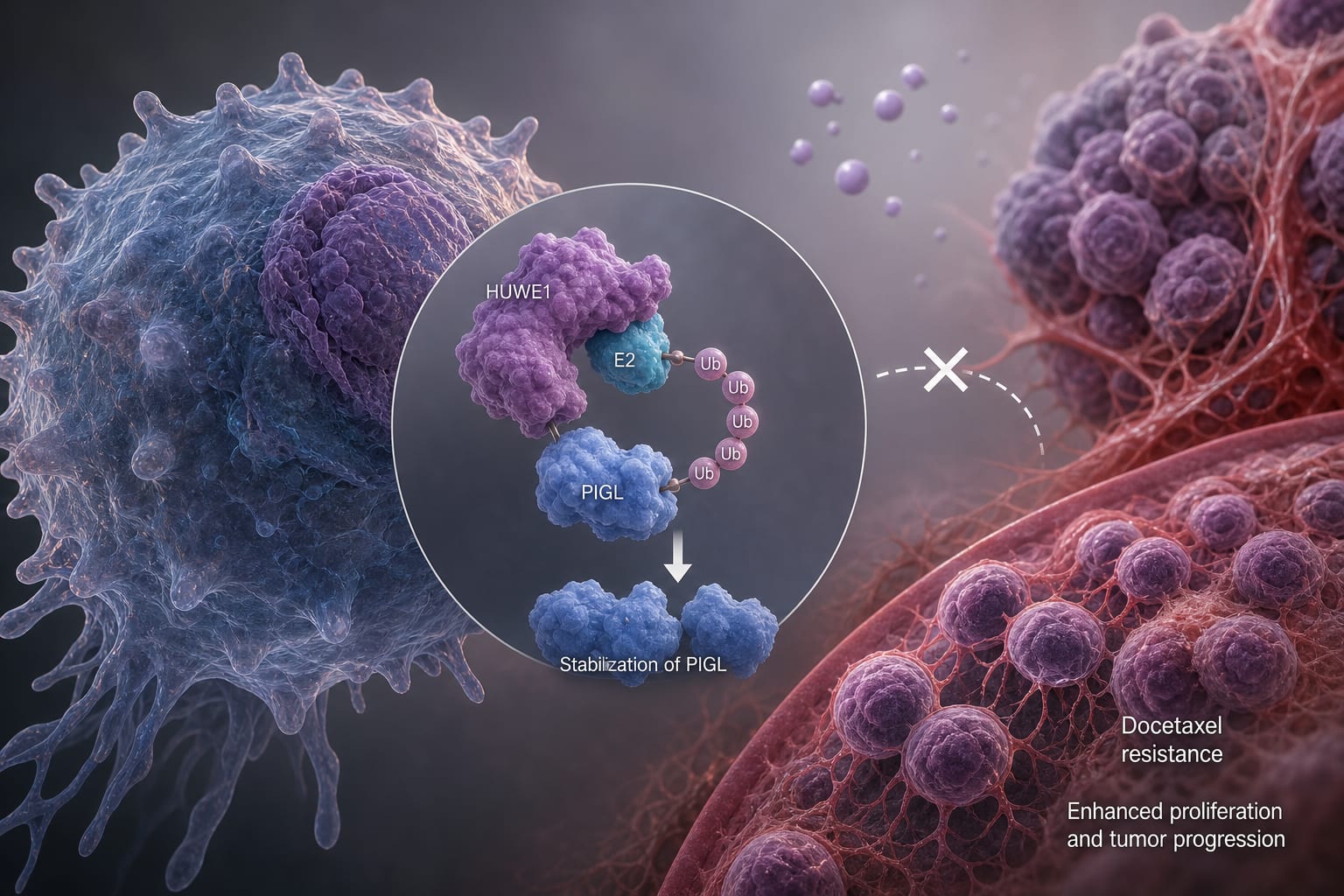
This study identifies PIGL as a key player in docetaxel resistance in prostate cancer (PCa), with high expression levels correlating with poor prognosis. The E3 ubiquitin ligase HUWE1 negatively regulates PIGL protein levels, suggesting a potential therapeutic target for overcoming docetaxel resistance.
Background
Prostate cancer (PCa) is a leading malignancy in men, with advanced stages posing significant treatment challenges. Docetaxel is a cornerstone in the chemotherapy regimen for advanced PCa; however, resistance to this drug is common and complicates treatment outcomes. Understanding the mechanisms of docetaxel resistance is crucial for improving therapeutic strategies and patient prognosis.
Data Highlights
Revise to clarify the absence of numerical data and mention any qualitative insights.
Key Findings
PIGL mRNA and protein levels are elevated in prostate cancer and associated with poor prognosis.
High PIGL protein expression promotes proliferation, migration, invasion, and docetaxel resistance in PCa cells.
HUWE1 is identified as a binding partner of PIGL and acts as an E3 ubiquitin ligase that negatively regulates PIGL protein expression.
Low HUWE1 expression is linked to docetaxel resistance in PCa.
Knockdown of HUWE1 enhances docetaxel resistance, which can be reversed by silencing PIGL.
Clinical Implications
Targeting the PIGL-HUWE1 axis may provide a novel approach to mitigate docetaxel resistance in prostate cancer. Clinicians should consider the potential of HUWE1 as a therapeutic target to enhance treatment efficacy in patients with advanced PCa.
Conclusion
The findings underscore the importance of PIGL and HUWE1 in the development of docetaxel resistance in prostate cancer, highlighting new avenues for therapeutic intervention.