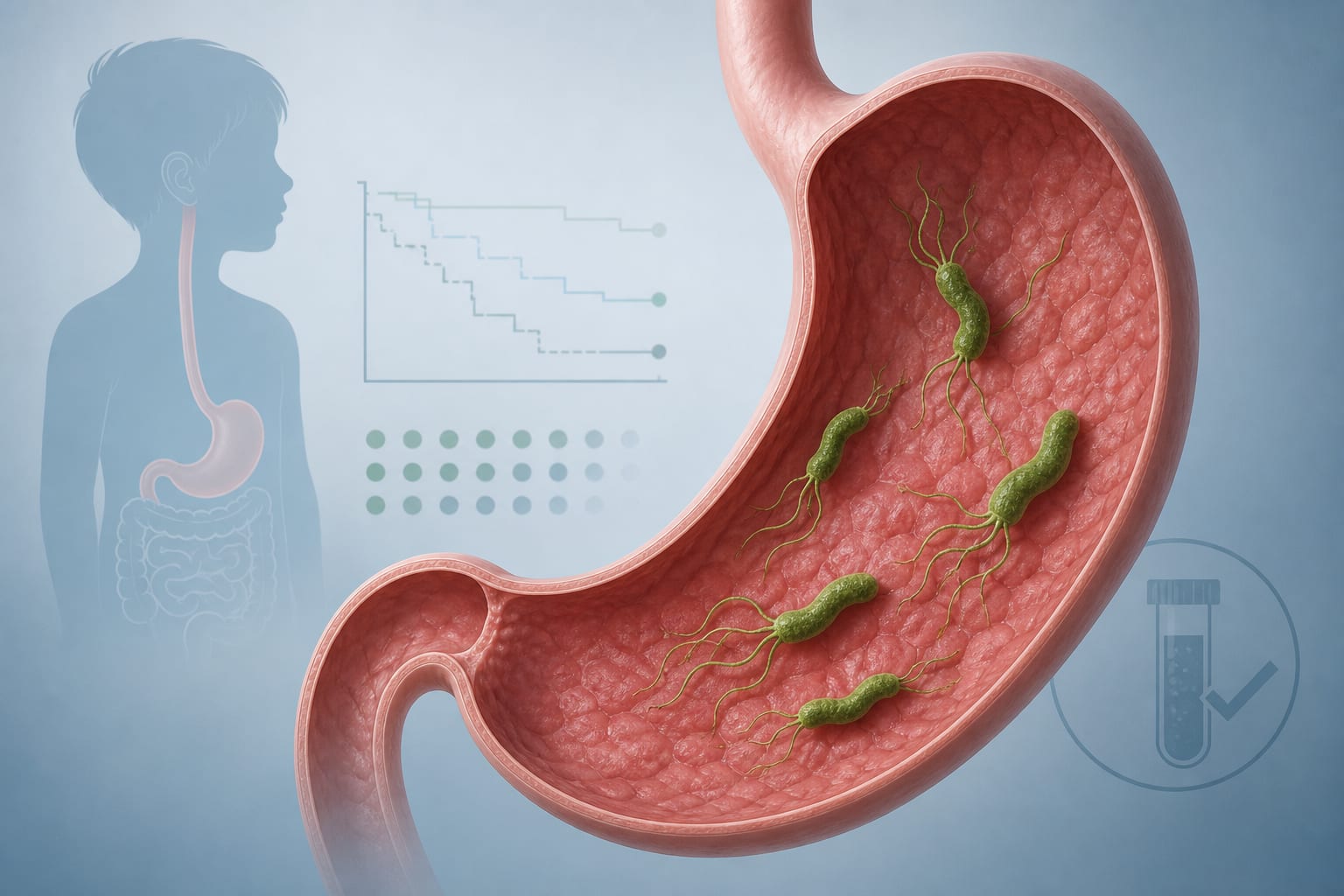
HCV Testing Recommendations and Outcomes for Perinatally Exposed Children
Overview
Hepatitis C virus (HCV) prevalence among pregnant persons has increased significantly, leading to higher perinatal exposure rates. Recent CDC guidelines recommend earlier RNA testing between 2 and 6 months to reduce loss to follow-up, yet testing rates remain suboptimal. Using Massachusetts statewide data, factors influencing infant HCV testing and care were analyzed to inform interventions.
Background
HCV prevalence in pregnant persons rose tenfold since 2000, with perinatal transmission occurring in about 8% of exposed infants, making it the most common transmission mode in children. Historically, antibody testing at 18 months was recommended due to maternal antibody persistence and cost considerations. Direct-acting antivirals (DAAs) have been approved for children aged 3 years and older since 2021, but no treatment exists for those under 3. Despite guidelines, only about 30% of exposed infants were tested appropriately, often due to loss to follow-up. The CDC updated recommendations in 2023 to include RNA testing at 2 to 6 months to improve early detection.
Data Highlights
Metric
Value/Trend
HCV prevalence among pregnant persons (2019)
4.9 cases per 1000 live deliveries
Perinatal transmission rate
Approximately 8%
Proportion of exposed infants appropriately tested (historical)
30.1% (range 8.6%-53.1%)
CDC 2023 recommendation
RNA testing at 2-6 months to reduce loss to follow-up
DAA approval timeline
2017 for ages 12-17; 2019 for ages 3-11; 2021 pangenotypic for ≥3 years
Key Findings
HCV prevalence among pregnant persons increased tenfold from 2000 to 2019.
Perinatal transmission occurs in about 8% of infants born to HCV-infected parents.
Only approximately 30% of exposed infants were tested appropriately under prior guidelines, largely due to loss to follow-up.
CDC updated 2023 guidelines recommend earlier RNA testing between 2 and 6 months to improve detection and reduce missed diagnoses.
Direct-acting antivirals are approved for children aged 3 years and older, but no FDA-approved treatment exists for children under 3 years.
Statewide linked data from Massachusetts enables identification of sociodemographic and healthcare factors associated with infant testing and treatment gaps.
Clinical Implications
Early RNA testing between 2 and 6 months can reduce loss to follow-up and enable timely diagnosis of perinatal HCV infection. Clinicians should be aware of the updated CDC recommendations and ensure infants born to HCV-infected parents receive appropriate testing. Understanding sociodemographic factors influencing testing can help tailor interventions to improve care cascade completion and support national HCV elimination goals.
Conclusion
Rising HCV prevalence in pregnancy and suboptimal infant testing highlight the need for updated testing strategies. The 2023 CDC recommendation for earlier RNA testing offers a promising approach to improve detection and linkage to care in perinatally exposed children.
Related Resources & Content
CDC and American Academy of Pediatrics Recommendations (1998) -- HCV antibody testing at 18 months
CDC Updated Guidelines (2023) -- RNA testing at 2-6 months for exposed infants
FDA Approvals (2017-2021) -- DAA treatment for children aged 3 years and older
Massachusetts Public Health Data Warehouse Study -- Perinatal HCV exposure and testing analysis
by Rachel L. Epstein, Sarah Munroe, Elizabeth A. Erdman, Amy Bettano, Megan R. Curtis, Laura White, Elisha M. Wachman, Anthony Osinski, Alexander Y. Walley, Benjamin P. Linas